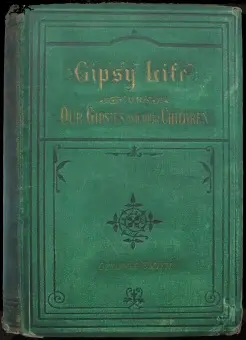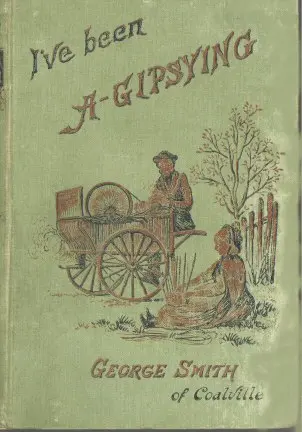
I’ve been a Gipsying or, Rambles among our Gipsies and their children in their tents and vans
George Smith
THE CLASSIC COLLECTION · 1892
"Henry Martyn, Saint and Scholar" by George Smith is a historical account written in the late 19th century. The work chronicles the life and legacy of Henry Martyn, who is remembered as the first modern missionary to the Mohammedans during the late 18th and early 19th centuries. The narrative focuses on his spiritual journey, his commitment to Christianity, and his mission work across cultures, particularly in India and Persia. The opening of the book sets the stage for Martyn's early life, detailing his upbringing in Cornwall and education at St. John's College, Cambridge. It discusses the influences that shaped his character, including his family's background and the religious environment of the time, particularly Methodism under John Wesley. The text emphasizes Martyn's struggle between his academic ambitions and his growing sense of calling to missionary work, reflecting on his intellectual pursuits and personal challenges as he moves toward a life dedicated to serving God and evangelizing, particularly among Muslims in the regions where he traveled.
Introduction adapted from the source catalogue; source summaries may be automatically generated.
Free to read · English · 186,043 words · No account needed
MAKE TIME FOR A GOOD BOOK
On by default. Untick to stop anonymous reading totals. Each page counts after 10 seconds in view. How this works.
Anonymous counting is on unless you have switched it off.
March 18.--Sat a good part of the day with Abul Kasim, the Soofi sage, Mirza Seyd Ali, and Aga Mohammed Hasan, who begins to be a disciple of the old man's. On my expressing a wish to see the Indian book, it was proposed to send for it, which they did, and then read it aloud. The stoicism of it I controverted, and said that the entire annihilation of the passions, which the stupid Brahman described as perfection, was absurd. On my continuing to treat other parts of the book with contempt, the old man was a little roused, and said that this was the way that pleased them, and my way pleased me. That thus God provided something for the tastes of all, and as the master of a feast provides a great variety, some eat pilao, others prefer kubab, etc. On my again remarking afterwards how useless all these descriptions of perfection were, since no rules were given for attaining it, the old man asked what in my opinion was the way. I said we all agreed in one point, namely, that union with God was perfection; that in order to that we must receive the Spirit of God, which Spirit was promised on condition of believing in Jesus. There was a good deal of disputing about Jesus, His being exclusively the visible God. Nothing came of it apparently, but that Mirza Seyd Ali afterwards said, 'There is no getting at anything like truth or certainty. We know nothing at all; you are in the right, who simply believe because Jesus had said so.'
March 22.--These two days I have been thinking from morning to night about the Incarnation; considering if I could represent it in such a way as to obviate in any degree the prejudices of the Mohammedans; not that I wished to make it appear altogether agreeable to reason, but I wanted to give a consistent account of the nature and uses of this doctrine, as they are found in the different parts of the Holy Scriptures. One thing implied another to such an extent that I thought necessarily of the nature of life, death, spirit, soul, animal nature, state of separate spirits, personality, the person of Christ, etc., that I was quite worn out with fruitless thought. Towards evening Carapiet with another Armenian came and conversed on several points of theology, such as whether the fire of hell were literally fire or only remorse, whether the Spirit proceeded from the Father and the Son, or from the Father only, and how we are to reconcile those two texts, that 'for every idle word that men shall speak,' etc., with the promises of salvation through faith? Happening to speak in praise of some person who practised needless austerities, I tried to make him understand that this was not the way of the Gospel. He urged these texts--'Blessed are they that mourn,' 'Blessed are ye that weep now,' etc. While we were discussing this point, Mohammed Jaffir, who on a former occasion had conversed with me a good deal about the Gospel, came in. I told him the question before us was an important one, namely, how the love of sin was to be got out of the heart. The Armenian proceeded, 'If I wish to go to a dancing or drinking, I must deny myself.' Whether he meant to say that this was sufficient I do not know, but the Mohammedan understanding him so, replied that he had read yesterday in the Gospel, 'that whosoever looketh upon a woman,' etc., from which he inferred that obedience of the heart was requisite. This he expressed with such propriety and gracefulness, that, added to the circumstance of his having been reading the Gospel, I was quite delighted, and thought with pleasure of the day when the Gospel should be preached by Persians. After the Armenians were gone we considered the doctrines of the Soofis a little. Finding me not much averse to what he thought some of their most exceptionable tenets, such as union with God, he brought this argument: 'You will allow that God cannot bind, compel, command Himself.' 'No, He cannot.' 'Well, if we are one with God, we cannot be subject to any of His laws.' I replied: 'Our union with God is such an union as exists between the members of a body. Notwithstanding the union of the hand with the heart and head, it is still subject to the influence and control of the ruling power in the person.' We had a great deal of conversation afterwards on the Incarnation. All his Mohammedan prejudices revolted. 'Sir, what do you talk of? the self-existent become contained in space, and suffer need!' I told him that it was the manhood of Christ that suffered need, and as for the essence of the Deity, if he would tell me anything about it, where or how it was, I would tell him how the Godhead was in Christ. After an effort or two he found that every term he used implied our frightful doctrine, namely, personality, locality, etc. This is a thought that is now much in my mind--that it is so ordered that, since men never can speak of God but through the medium of language, which is all material, nor think of God but through the medium of material objects, they do unwillingly come to God through the Word, and think of God by means of an Incarnation.
Your reading position is saved on this browser. Take it to another device with a library code. Reading pages adapt to text, rather than matching a printed edition.
BEHIND THE BOOK
This eBook is for the use of anyone anywhere in the United States and most other parts of the world at no cost and with almost no restrictions whatsoever. You may copy it, give it away or re-use it under the terms of the Project Gutenberg License included with this eBook or online at www.gutenberg.org. If you are not located in the United States, you will have to check the laws of the country where you are located before using this eBook. Read the source licence.
The original source file, including credits and licence, is retained by this library. Request an original-format copy at no charge. Please include the book title and Project Gutenberg identifier #35873.
KEEP YOUR CURIOSITY GOING
Cécile Tormay

Moritz Busch
John L. Ransom
Frances Wright
Cécile Tormay

Mabel Potter Daggett