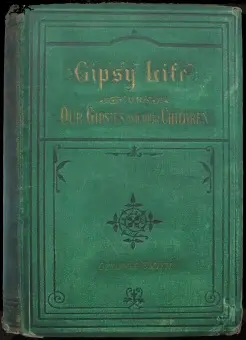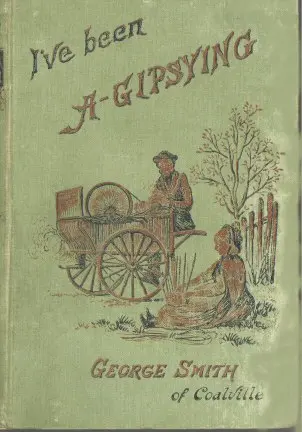
I’ve been a Gipsying or, Rambles among our Gipsies and their children in their tents and vans
George Smith
THE CLASSIC COLLECTION · 1892
"Henry Martyn, Saint and Scholar" by George Smith is a historical account written in the late 19th century. The work chronicles the life and legacy of Henry Martyn, who is remembered as the first modern missionary to the Mohammedans during the late 18th and early 19th centuries. The narrative focuses on his spiritual journey, his commitment to Christianity, and his mission work across cultures, particularly in India and Persia. The opening of the book sets the stage for Martyn's early life, detailing his upbringing in Cornwall and education at St. John's College, Cambridge. It discusses the influences that shaped his character, including his family's background and the religious environment of the time, particularly Methodism under John Wesley. The text emphasizes Martyn's struggle between his academic ambitions and his growing sense of calling to missionary work, reflecting on his intellectual pursuits and personal challenges as he moves toward a life dedicated to serving God and evangelizing, particularly among Muslims in the regions where he traveled.
Introduction adapted from the source catalogue; source summaries may be automatically generated.
Free to read · English · 186,043 words · No account needed
MAKE TIME FOR A GOOD BOOK
On by default. Untick to stop anonymous reading totals. Each page counts after 10 seconds in view. How this works.
Anonymous counting is on unless you have switched it off.
January 24.--Found Seyd Ali rather serious this evening. He said he did not know what to do to have his mind made up about religion. Of all the religions Christ's was the best, but whether to prefer this to Soofi-ism he could not tell. In these doubts he was tossed to and fro, and is often kept awake the whole night in tears. He and his brother talk together on these things till they are almost crazed. Before he was engaged in this work of translation, he says, he used to read about two or three hours a day; now he can do nothing else; has no inclination for anything else, and feels unhappy if he does not correct his daily portion. His late employment has given a new turn to his thoughts as well as to those of his friends; they had not the most distant conception of the contents of the New Testament. He says his Soofi friends are exceedingly anxious to see the Epistles, from the accounts he gives of them, and also he is sure that almost the whole of Shiraz are so sensible of the load of unmeaning ceremonies in which their religion consists, that they will rejoice to see or hear of anything like freedom, and that they would be more willing to embrace Christ than the Soofis, who, after taking so much pains to be independent of all law, would think it degrading to submit themselves to any law again, however light.
February 4.--Mirza Seyd Ali, who has been enjoying himself in idleness and dissipation these two days instead of translating, returned full of evil and opposition to the Gospel. While translating 2 Peter iii., 'Scoffers ... saying, Where is the promise of his coming?' he began to ask 'Well, they are in the right; where are any of His promises fulfilled?' I said the heathen nations have been given to Christ for an inheritance. He said No; it might be more truly said that they are given to Mohammed, for what are the Christian nations compared with Arabia, Persia, India, Tartary, etc.? I set in opposition all Europe, Russia, Armenia, and the Christians in the Mohammedan countries. He added, at one time when the Abbasides carried their arms to Spain, the Christian name was almost extinct. I rejoined, however, that he was not yet come to the end of things, that Mohammedanism was in itself rather a species of heretical Christianity, for many professing Christians denied the Divinity of our Lord, and treated the Atonement as a fable. 'They do right,' said he; 'it is contrary to reason that one person should be an atonement for all the rest. How do you prove it? it is nowhere said in the Gospels. Christ said He was sent only to the lost sheep of the house of Israel.' I urged the authority of the Apostles, founded upon His word, 'Whatsoever ye shall bind on earth shall be bound in heaven, and whatsoever ye shall loose on earth,' etc. 'Why, what are we to think of them,' said he, 'when we see Paul and Barnabas quarrelling; Peter acting the hypocrite, sometimes eating with the Gentiles, and then withdrawing from fear; and again, all the Apostles, not knowing what to do about the circumcision of the Gentiles, and disputing among themselves about it?' I answered, 'The infirmities of the Apostles have nothing to do with their authority. It is not everything they do that we are commanded to imitate, nor everything they might say in private, if we knew it, that we are obliged to attend to, but the commands they leave for the Church; and here there is no difference among them. As for the discussions about circumcision, it does not at all appear that the Apostles themselves were divided in their opinions about it; the difficulty seems to have been started by those believers who had been Pharisees.' 'Can you give me a proof,' said he, 'of Christianity, that I may either believe, or be left without excuse if I do not believe--a proof like that of one of the theorems of Euclid?' I said it is not to be expected, but enough may be shown to leave every man inexcusable. 'Well,' said he, 'though this is only probability, I shall be glad of that.' 'As soon as our Testament is finished,' I replied, 'we will, if you please, set about our third treatise, in which, if I fail to convince you, I can at least state the reasons why I believed.' 'You had better,' said he, 'begin with Soofi-ism, and show that that is absurd'--meaning, I suppose, that I should premise something about the necessity of revelation. After a little pause, 'I suppose,' said he, 'you think it sinful to sport with the characters of those holy men?' I said I had no objection to hear all their objections and sentiments, but I could not bear anything spoken disrespectfully of the Lord Jesus; 'and yet there is not one of your Soofis,' I added, 'but has said something against Him. Even your master, Mirza Abul Kasim, though he knows nothing of the Gospel or law, and has not even seen them, presumed to say that Moses, Christ, Mohammed, etc., were all alike. I did not act in this way. In India I made every inquiry, both about Hinduism and Mohammedanism. I read the Koran through twice. On my first arrival here I made it my business to ask for your proofs, so that if I condemned and rejected it, it was not without consideration. Your master, therefore, spoke rather precipitately.' He did not attempt to defend him, but said, 'You never heard me speak lightly of Jesus.' 'No; there is something so awfully pure about Him that nothing is to be said.'
Your reading position is saved on this browser. Take it to another device with a library code. Reading pages adapt to text, rather than matching a printed edition.
BEHIND THE BOOK
This eBook is for the use of anyone anywhere in the United States and most other parts of the world at no cost and with almost no restrictions whatsoever. You may copy it, give it away or re-use it under the terms of the Project Gutenberg License included with this eBook or online at www.gutenberg.org. If you are not located in the United States, you will have to check the laws of the country where you are located before using this eBook. Read the source licence.
The original source file, including credits and licence, is retained by this library. Request an original-format copy at no charge. Please include the book title and Project Gutenberg identifier #35873.
KEEP YOUR CURIOSITY GOING
Cécile Tormay

Moritz Busch
John L. Ransom
Frances Wright
Cécile Tormay

Mabel Potter Daggett