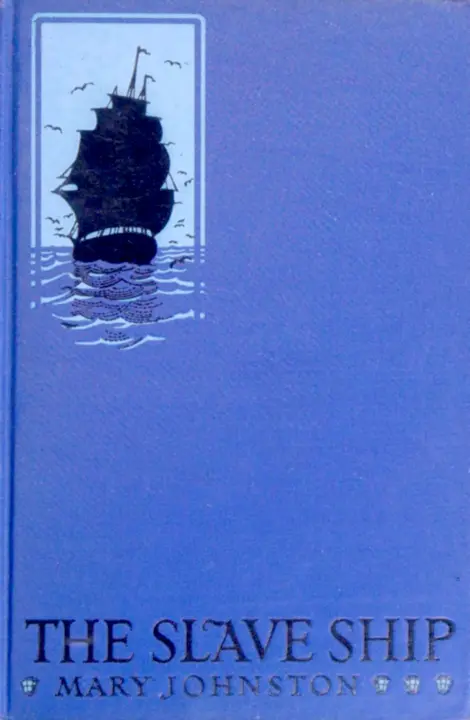
The slave ship
Mary Johnston
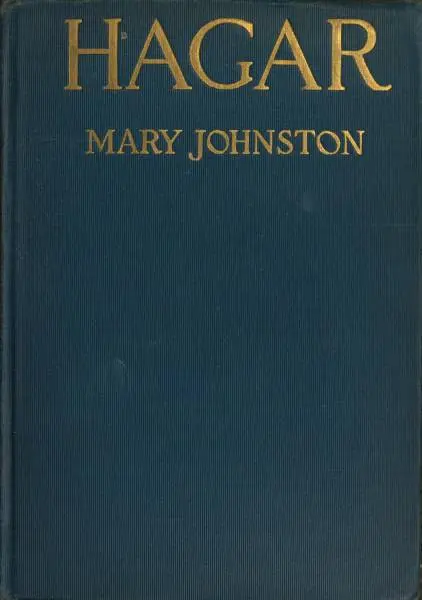
THE CLASSIC COLLECTION · 1913
"Hagar" by Mary Johnston is a novel written in the early 20th century. The story revolves around a young girl named Hagar Ashendyne, who experiences the complexities of life within her family and society, particularly as they pertain to concepts of morality, individuality, and the constraints imposed on women. The opening of the novel introduces readers to Hagar, a dark-haired, thoughtful girl, as she travels on a packet boat with her family and engages in curious conversations about literature and the world. Through her interactions with her Aunt Serena and the other passengers, we catch glimpses of her inquisitive nature and reflections on society's restrictions, particularly concerning women’s education and freedom. As she ponders over ideas like evolution and confronts the harsh realities of her environment—including a convict she observes from the boat—Hagar's longing for knowledge and understanding shines through, setting the stage for her growth throughout the story. The atmosphere is rich with the social dynamics of her family and the changing world around them, laying a foundation for Hagar's journey towards self-discovery.
Introduction adapted from the source catalogue; source summaries may be automatically generated.
Free to read · English · 105,849 words · No account needed
MAKE TIME FOR A GOOD BOOK
On by default. Untick to stop anonymous reading totals. Each page counts after 10 seconds in view. How this works.
Anonymous counting is on unless you have switched it off.
She looked with hot, sombre eyes at Gilead Balm. It was the home she had always known and she loved it; it was home,--yes, it was home; but it was not so pleasant at home just now. March--and the Colonel had withdrawn her from Eglantine, ordered her home, the first of January! January, February, a part of March--and her grandfather still eaten with a cold anger every time he looked at her, and her grandmother, outraged at her suddenly manifested likeness to Maria and Maria's "ways," almost as bad! Aunt Serena gave her no sympathy; Aunt Serena had become almost violent on the subject. If you were going to rebel and disobey, Aunt Serena told her, if you were going to be forward and almost fast, and rebel and disobey, you needn't look for any sympathy from her! Colonel Ashendyne had been explicit enough back in January. "When you send about his business that second-rate person you've chosen to entangle yourself with, then and not till then will you be 'Gipsy' again to me!"
Hagar put out her arms to the wind. "I want to go away! I want to go away! I'm tired of it all--tired of living here--"
The wind blew past her with its long cry; then it suddenly sank, and there came almost a half-hour of bright calm, warm stillness, astral gold. Hagar sat down between the roots of the cucumber tree and took her head within her arms. By degrees, in the sunshine, emotion subsided; she began to think and dream. Her mind sent the shuttle far and fast, it touched here and touched there, and in the course of its weaving it touched Eglantine, touched and quit and touched again. Laydon was still at Eglantine. He had been a very satisfactory Professor of Belles-Lettres; Mrs. LeGrand really did not know where, in mid-season, to find such another. He had behaved wretchedly, but the mischief was done, and there was--on consideration--no need to tell the world about it, no especial need, indeed, of proclaiming it at Eglantine or to Eglantine patrons at large. He was not--Mrs. LeGrand did him that justice--he was not at all a "fast" man or likely to give further trouble upon this line. And he was a good teacher, a good talker, in demand for lectures on cultural subjects before local literary societies, popular and pleasing, a creditable figure among the Eglantine faculty. Much of this matter was probably Hagar's fault. She had made eyes at him, little fool! When the Colonel declared his determination,--with no reflections on Eglantine, my dear friend!--to bring to an end his granddaughter's formal education, and to take her back to Gilead Balm where this infatuation would soon disappear,--Mrs. LeGrand saw daylight. She had an interview with Colonel Ashendyne. He was profoundly contemptuous of what Mr. Laydon did for a living or where he did it, of whom he taught or what he taught, so long as there was distance between him and an Ashendyne. "You know--you know, my dear friend, that I have always had in mind Ralph Coltsworth!" She had an interview--concert pitch--with Laydon. She had a smooth, quiet talk with her teachers. She mentioned casually, to one after another of the girls, that Mrs. Ashendyne at Gilead Balm was not as young as she had been, nor as strong, and that Colonel Ashendyne thought that Hagar should be at home with her grandmother. She, Mrs. LeGrand, regretted it, but every girl's duty to her family was paramount. They would miss Hagar sadly,--she was a dear girl and a clever girl,--but it seemed right that she should go. Hagar went and Laydon stayed, and without a word from any principal in the affair, every girl at Eglantine knew that Mr. Laydon had kissed Hagar, and that Hagar had said that she would love him forever, and that Colonel Ashendyne was very angry, and was probably keeping Hagar on bread and water at that instant, and that it was all very romantic.... And then at Eglantine examinations came on, and dreams of Easter holiday, and after that of Commencement, and Mr. Laydon taught with an entire correctness and an impassive attitude toward all young ladies; and Miss Bedford, who had been very bitter at first and had said things, grew amiable again and reopened her Browning. The ripple smoothed out as all things smoothed out at Eglantine. The place resumed its pristine "sweetness." It was believed among the girls that Mr. Laydon and Hagar "corresponded," but it was not certainly known. Mr. Laydon wrapped himself in dignity as in a mantle. As for Hagar, she had always been rather far away.
Your reading position is saved on this browser. Take it to another device with a library code. Reading pages adapt to text, rather than matching a printed edition.
Mary Johnston
Mary Johnston
Mary Johnston
Mary Johnston
BEHIND THE BOOK
This eBook is for the use of anyone anywhere in the United States and most other parts of the world at no cost and with almost no restrictions whatsoever. You may copy it, give it away or re-use it under the terms of the Project Gutenberg License included with this eBook or online at www.gutenberg.org. If you are not located in the United States, you will have to check the laws of the country where you are located before using this eBook. Read the source licence.
The original source file, including credits and licence, is retained by this library. Request an original-format copy at no charge. Please include the book title and Project Gutenberg identifier #49772.
KEEP YOUR CURIOSITY GOING
Cécile Tormay

Moritz Busch
Coulson Kernahan
John L. Ransom

Maurice Baring
Frances Wright