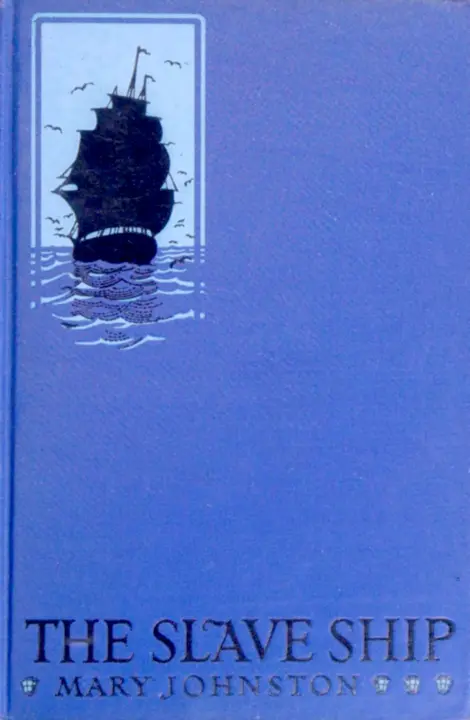
The slave ship
Mary Johnston
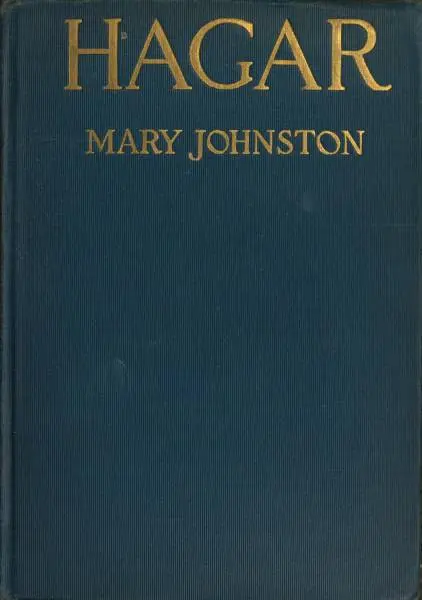
THE CLASSIC COLLECTION · 1913
"Hagar" by Mary Johnston is a novel written in the early 20th century. The story revolves around a young girl named Hagar Ashendyne, who experiences the complexities of life within her family and society, particularly as they pertain to concepts of morality, individuality, and the constraints imposed on women. The opening of the novel introduces readers to Hagar, a dark-haired, thoughtful girl, as she travels on a packet boat with her family and engages in curious conversations about literature and the world. Through her interactions with her Aunt Serena and the other passengers, we catch glimpses of her inquisitive nature and reflections on society's restrictions, particularly concerning women’s education and freedom. As she ponders over ideas like evolution and confronts the harsh realities of her environment—including a convict she observes from the boat—Hagar's longing for knowledge and understanding shines through, setting the stage for her growth throughout the story. The atmosphere is rich with the social dynamics of her family and the changing world around them, laying a foundation for Hagar's journey towards self-discovery.
Introduction adapted from the source catalogue; source summaries may be automatically generated.
Free to read · English · 105,849 words · No account needed
MAKE TIME FOR A GOOD BOOK
On by default. Untick to stop anonymous reading totals. Each page counts after 10 seconds in view. How this works.
Anonymous counting is on unless you have switched it off.
The second letter from Old Miss came in February. The Colonel had suddenly failed and taken to his bed. Old Miss believed that he would get up again,--there was, she said, no reason why he shouldn't,--but in the mean time there he lay. He was a little wandering in his mind, and he had taken to thinking that Hagar was in the house, and a little girl still, and demanding to see her. Old Miss suggested that she should come to Gilead Balm.
She went at once. On the train, thundering south through a snowy night, she lay awake until half of her journey was over. Scenes and moments, occurrences of the outer and inner life, went by her mind like some endless, shifting tapestry. Childhood, girlhood, womanhood, work and play, the daily, material task and the inner lift, lift, and ever-strengthening knowledge of the impalpable--that last was not tapestry; it was height and breadth and depth, and something more. The old, wide travel came back to her; shifting gleams of Eastern cities, deserts, time-broken temples, mountains, vineyards, haunted groves, endless surrounding, azure, murmuring seas.... Medway, white-clothed and helmeted, in his rolling chair.... The whistle shrieked; the train stopped with a jar at some lighted station, then, regathering its forces, rushed and roared on through the February night. Now it was the last three years and more: they passed in panorama before her. Stages and stairways and scaffoldings by which the world-spirit might mount an inch: ferments and leavens: voices telling of democracy and fair play and care for your neighbour's freedom as for your own, your woman-neighbour and your man-neighbour. Through her mind ran all the enormous detail of the work being pursued over all the country; countless meetings, speeches, appeals, talks to a dozen gathered together or to two or three; letters and letters and letters, press and magazine utterances, organization, the difficult raising of money, legislative work, petitions, canvassing; drudgery in myriad detail, letters and letters, voice and pen.... And all the opposition--blind bigotry to be met, and a maniac fear of change, inertia, tradition, habit, the dead past's hand, cold and heavy--and all the interested opposition, the things whose book the movement did not suit--and all the lethargy of womankind itself.... And in the very camp, in the huge, chaotic movement itself, as in all the past's vast human movements, recurring frictions, antagonisms, small jealousies, flags set up by individuals, pacifications and smoothings, bringing compatibles together, keeping incompatibles apart.... A contending with outer oppositions and inner weaknesses, resisting discouragement, fighting cynicism, acknowledging the vast road to travel, keeping on.... She knew nothing that was at once so weak and so mighty as the Woman Movement. One who was deep within it might feel at times a vast weariness, impatience, and despair ... but deep within it you never left it. Here you dealt with clay that was so cold and lumpish it seemed that no generous idea could germinate within; here you dealt with stuff so friable, light, and disintegrative that the thought would come that it were better to cast it to the winds ... but you did not; you comforted your soul with the very much that was noble, and you hoped for the other that was not yet noble, and you went on--went on. It was all you yourself--you had within you the intractable clay and the stuff light as chaff, inconsequent; but you went on transmuting, lifting.... There was no other hope, no other course, deep down no other wish. So with the Woman Movement.... Another station. Hagar looked out at the lights and the hurrying forms; then, as the train roared into the white countryside, at what could be seen of the fields and hills and storm-bent trees. She was thinking now of Gilead Balm and her childhood and her mother. She seemed to lie again, close beside Maria, on the big, chintz-covered sofa. At last she slept, lying so.
Your reading position is saved on this browser. Take it to another device with a library code. Reading pages adapt to text, rather than matching a printed edition.
Mary Johnston
Mary Johnston
Mary Johnston
Mary Johnston
BEHIND THE BOOK
This eBook is for the use of anyone anywhere in the United States and most other parts of the world at no cost and with almost no restrictions whatsoever. You may copy it, give it away or re-use it under the terms of the Project Gutenberg License included with this eBook or online at www.gutenberg.org. If you are not located in the United States, you will have to check the laws of the country where you are located before using this eBook. Read the source licence.
The original source file, including credits and licence, is retained by this library. Request an original-format copy at no charge. Please include the book title and Project Gutenberg identifier #49772.
KEEP YOUR CURIOSITY GOING
Cécile Tormay

Moritz Busch
Coulson Kernahan
John L. Ransom

Maurice Baring
Frances Wright