THE CLASSIC COLLECTION✦My diaries, being a personal narrative of events 1888-1914, Part 2 (1900-1914)CLASSIC FREE BOOKS
My diaries, being a personal narrative of events 1888-1914, Part 2 (1900-1914)
Wilfrid Scawen Blunt
THE CLASSIC COLLECTION · 1920
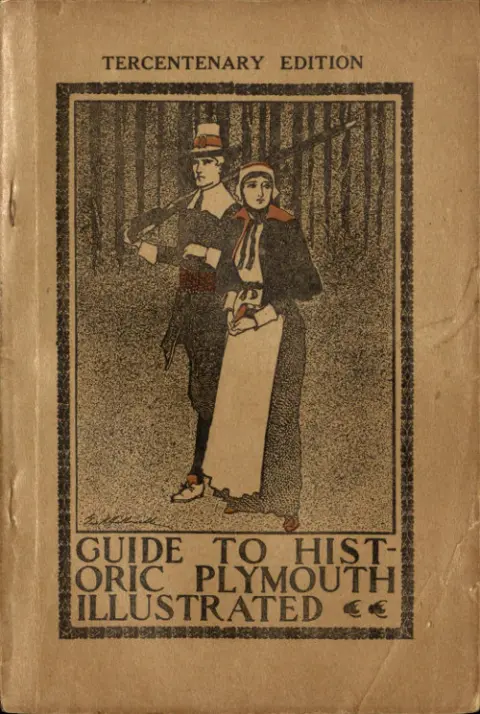
"Guide to Historic Plymouth: Localities and Objects of Interest" by A. S. Burbank is a historical account written in the early 20th century. The work serves as a comprehensive guidebook for visitors wanting to explore and understand significant sites related to the Pilgrims and early colonial history in Plymouth, Massachusetts. The text likely covers various localities of interest, including prominent buildings, historical monuments, and noteworthy events from the time of the Pilgrims. The opening portion of the guide introduces readers to Plymouth, highlighting its scenic harbor and the significant landmarks that can be seen upon arrival by train. It describes Captain’s Hill, which features a statue of Myles Standish, along with Clark’s Island where the Pilgrims celebrated their first Sabbath, and the various enhancements made to the harbor to accommodate shipping. Additionally, the guide delves into the history of the area, including references to various monuments, like the National Monument to the Forefathers, and mentions of Pilgrim Hall, which houses relics of the Pilgrims. This portion effectively sets the stage for a detailed exploration of Plymouth in the subsequent chapters, emphasizing both the historical and natural beauty of the area.
Introduction adapted from the source catalogue; source summaries may be automatically generated.
Free to read · English · 19,708 words · No account needed
MAKE TIME FOR A GOOD BOOK
On by default. Untick to stop anonymous reading totals. Each page counts after 10 seconds in view. How this works.
Anonymous counting is on unless you have switched it off.
The spider’s most attenuated thread
Is cord, is cable, to man’s tender tie.
MARTHA COTTON, 1796.
Many years I lived
Many painful scenes I passed,
Till God at last
Called me home.
In a long lot enclosed with an iron fence:—
F. W. Jackson. obit M. C. H. 23, 1797, 1 yr. 7 dys,
Heav’n knows what man
He might have made. But we
He died a most rare boy.
As young as beautiful; and soft as young,
And gay as soft; and innocent as gay.
A little farther on in this path is the stone to Tabitha Plasket, 1807, the epitaphs, on which, written supposedly by herself, breaths such a spirit of defiance that it attracts much attention:—
Adieu, vain world, I’ve seen enough of thee;
And I am careless what thou say’st of me;
Thy smiles I wish not,
Nor thy frowns I fear,
I am now at rest, my head lies quiet here,
Mrs. Plasket, in her widowhood, taught a private school for small children, at the same time, as was the custom of her day, doing her spinning. Her mode of punishment was to pass skeins of yarn under the arms of the little culprits, and hang them upon pegs. A suspended row was a ludicrous sight.
Mr. Joseph Plasket (husband of Tabitha) died in 1794, at the age of forty-eight years. The widow wrote his epitaph as follows:—
All you that doth behold my stone,
Consider how soon I was gone.
Death does not always warning give,
Therefore be careful how you live.
Repent in time, no time delay,
I in my prime was called away.
Nearly opposite this is one on a very young child:—
The babe that’s caught from womb and breast,
Claim right to sing above the rest,
Because they found the happy shore
They never saw or sought below.
As this path comes out on the brow of the hill, near a white fence, is a stone to Elizabeth Savery, 1831:—
Remember me as you pass by,
As you are now, so once was I;
As I am now, so you will be,
Therefore prepare to follow me.
On the path by the fence in the rear of the hill:—
The father and the children dead,
We hope to Heaven their souls have fled.
The widow now alone is left,
Of all her family bereft.
May she now put her trust in God,
To heal the wound made by His rod.
On a stone raised to the memory of a child:—
He listened for a while to hear
Our mortal griefs; then turned his ear
To angel harps and songs, and cried
To join their notes celestial, sigh’d and died.
Your reading position is saved on this browser. Take it to another device with a library code. Reading pages adapt to text, rather than matching a printed edition.
BEHIND THE BOOK
This eBook is for the use of anyone anywhere in the United States and most other parts of the world at no cost and with almost no restrictions whatsoever. You may copy it, give it away or re-use it under the terms of the Project Gutenberg License included with this eBook or online at www.gutenberg.org. If you are not located in the United States, you will have to check the laws of the country where you are located before using this eBook. Read the source licence.
The original source file, including credits and licence, is retained by this library. Request an original-format copy at no charge. Please include the book title and Project Gutenberg identifier #57135.
KEEP YOUR CURIOSITY GOING
Wilfrid Scawen Blunt
Wilfrid Scawen Blunt

E. W. (Edgar Watson) Howe
Cécile Tormay

Moritz Busch
John L. Ransom