THE CLASSIC COLLECTION✦My diaries, being a personal narrative of events 1888-1914, Part 2 (1900-1914)CLASSIC FREE BOOKS
My diaries, being a personal narrative of events 1888-1914, Part 2 (1900-1914)
Wilfrid Scawen Blunt
THE CLASSIC COLLECTION · 1920
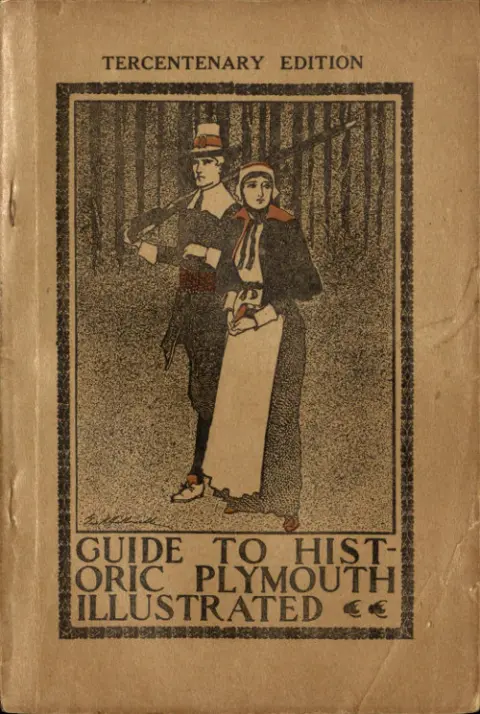
"Guide to Historic Plymouth: Localities and Objects of Interest" by A. S. Burbank is a historical account written in the early 20th century. The work serves as a comprehensive guidebook for visitors wanting to explore and understand significant sites related to the Pilgrims and early colonial history in Plymouth, Massachusetts. The text likely covers various localities of interest, including prominent buildings, historical monuments, and noteworthy events from the time of the Pilgrims. The opening portion of the guide introduces readers to Plymouth, highlighting its scenic harbor and the significant landmarks that can be seen upon arrival by train. It describes Captain’s Hill, which features a statue of Myles Standish, along with Clark’s Island where the Pilgrims celebrated their first Sabbath, and the various enhancements made to the harbor to accommodate shipping. Additionally, the guide delves into the history of the area, including references to various monuments, like the National Monument to the Forefathers, and mentions of Pilgrim Hall, which houses relics of the Pilgrims. This portion effectively sets the stage for a detailed exploration of Plymouth in the subsequent chapters, emphasizing both the historical and natural beauty of the area.
Introduction adapted from the source catalogue; source summaries may be automatically generated.
Free to read · English · 19,708 words · No account needed
MAKE TIME FOR A GOOD BOOK
On by default. Untick to stop anonymous reading totals. Each page counts after 10 seconds in view. How this works.
Anonymous counting is on unless you have switched it off.
A row of stones on the top of the hill, near the marble tablet marking the locality of the Watch Tower, is raised to the memory of the ministers of the First Parish. Back of these is the Judson lot, where the sculptor’s chisel has perpetuated the remembrance of Rev. Adoniram Judson, the celebrated missionary to Burmah, whose body was committed to the keeping of Old Ocean. On the westerly side of the hill is a monument erected by Stephen Gale of Portland, Me:—
To the memory of seventy-two seamen, who perished in Plymouth Harbor, on the 26th and 27th days of December, 1778, on board the private armed brig, General Arnold, of twenty guns, James Magee, of Boston, Commander; sixty of whom were buried in this spot.
About midway on the easterly slope a little to the north of the main path up the hill, on the stone to a child aged one month:—
He glanced into our world to see
A sample of our miserie.
On a stone a little farther north, to the memory of four children, aged respectively thirty-six, twenty-one, seventeen and two years:—
Stop traveller and shed a tear
Upon the fate of children dear.
On the path towards the schoolhouse on a stone to a woman with an infant
child by her side:—
Come view the seen, ’twill fill you with surprise,
Behold the loveliest form in nature dies;
At noon she flourished, blooming, fair and gay;
At evening an extended corpse she lay.
Near the entrance to this path is the grave of a Revolutionary soldier, Capt. Jacob Taylor, died 1788:—
Through life he braved her foe, if great or small, And marched out foremust at his country’s call.
On this path is the grave of Joseph Bartlett, who died in 1703:—
Thousands of years after blest Abel’s fall,
’Twas said of him, being dead he speaketh yet;
From silent grave methinks I hear a call:—
Pray, fellow mortals, don’t your death forget.
You that your eyes cast on this grave,
Know you a dying time must have.
Near the same place is a curious stone, to the memory of John Cotton:—
Here lyes interred three children, viz., three sons of Rev. Mr. John Cotton, who died in the work of the gospel ministry at Charlestown, South Carolina, Sept. ye 18th, 1869, where he had great success, and seven sons of Josiah Cotton, Esq., who died in their infancy.
On the southerly slope of the hill, near a pine grove, is a stone to a
child:—
The fathers have eaten sour grapes, and the children’s teeth are set
on edge.
On the stone to the memory of Thomas Jackson, died in 1794:—
Your reading position is saved on this browser. Take it to another device with a library code. Reading pages adapt to text, rather than matching a printed edition.
BEHIND THE BOOK
This eBook is for the use of anyone anywhere in the United States and most other parts of the world at no cost and with almost no restrictions whatsoever. You may copy it, give it away or re-use it under the terms of the Project Gutenberg License included with this eBook or online at www.gutenberg.org. If you are not located in the United States, you will have to check the laws of the country where you are located before using this eBook. Read the source licence.
The original source file, including credits and licence, is retained by this library. Request an original-format copy at no charge. Please include the book title and Project Gutenberg identifier #57135.
KEEP YOUR CURIOSITY GOING
Wilfrid Scawen Blunt
Wilfrid Scawen Blunt

E. W. (Edgar Watson) Howe
Cécile Tormay

Moritz Busch
John L. Ransom