THE CLASSIC COLLECTION✦My diaries, being a personal narrative of events 1888-1914, Part 2 (1900-1914)CLASSIC FREE BOOKS
My diaries, being a personal narrative of events 1888-1914, Part 2 (1900-1914)
Wilfrid Scawen Blunt
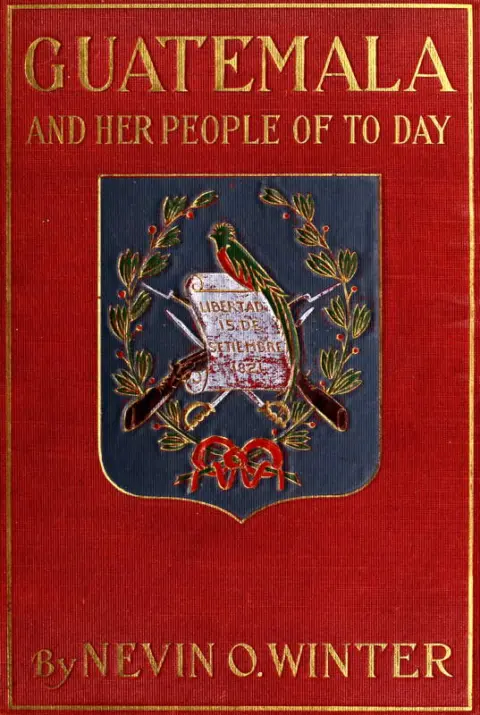
THE CLASSIC COLLECTION · 1909
"Guatemala and Her People of To-day" by Nevin O. Winter is a historical account written in the early 20th century. The book delves into the geography, history, and culture of Guatemala, as well as its surrounding regions, such as British Honduras and the Republic of Honduras. The author explores the Latin American identity, discussing the pride of the Guatemalan people and their journey toward self-governance amidst political challenges, thus offering readers insights into the socio-political environment of the time. The opening of the book sets the stage by highlighting the misconceptions about Central America, particularly Guatemala's cultural and geographical significance. Winter emphasizes the harsh realities faced by the Guatemalan people while correcting the popular narratives surrounding their political endeavors. He describes the diverse landscapes of Guatemala, including its mountains, lakes, and tropical environment, also mentioning the socioeconomic issues stemming from its history of colonization and contemporary struggles for self-governance. Winter intends to foster a deeper understanding and appreciation of Guatemala, moving beyond caricatural portrayals found in popular culture.
Introduction adapted from the source catalogue; source summaries may be automatically generated.
Free to read · English · 61,374 words · No account needed
MAKE TIME FOR A GOOD BOOK
On by default. Untick to stop anonymous reading totals. Each page counts after 10 seconds in view. How this works.
Anonymous counting is on unless you have switched it off.
THE Republic of Honduras is composed of sixteen departments, or provinces, and one territorial district. The territory of Mosquitia is situated in the extreme northeastern section of the country and is the second largest political division in the republic, comprising about one-fifth of the entire landed surface and with a population of four thousand, mostly a mixed race of negroes and Indians. This is an average of about one person for every two square miles. The country is covered with a dense forest of tropical verdure, through which the waters of several rivers course. Along the rivers the lands have been partially explored but much of the interior is still unknown. The Bay Islands department comprises a group of five low islands lying at a distance of from twenty-five to fifty miles from the northern shore. The names of the islands are Utila, Roatan, Elena, Barbareta and Bonaca, and they contain a total population of about five thousand whites, negroes and Indians. The English language is quite commonly used on those islands for they were long under the sovereignty of England.
The names of the different departments, together with the capital city, its population and elevation, according to the best and most recent statistics available, are as follows:—
DEPARTMENT CAPITAL POPULATION ELEVATION (feet)
Tegucigalpa Tegucigalpa 12,000 3,200
Copan Santa Rosa 10,000 3,400
Choluteca Choluteca 8,636 250
Gracias Gracias 5,324 2,520
Olancho Juticalpa 11,103 1,500
El Paraiso Danli 8,878 2,300
Santa Santa 3,593 750
Barbara Barbara
Valle Nacaome 8,913 110
Comayagua Comayagua 7,206 1,650
La Paz La Paz 4,490 2,000
Intibuca La Esperanza 4,026 4,950
Cortes San Pedro 7,182 255
Sula
Yoro Yoro 6,127 2,000
Colon Truxillo l4,040 sea level
Atlantida La Ceiba 3,379 sea level
Bay Islands Coxin Hole l500 sea level
The uneven character of the configuration of the earth’s surface and the effect of the trade winds gives the Central American republics a great variety of climate. The so-called “seasons,” the wet and dry, do not always express the real conditions, for local conditions influence the temperature and amount of rainfall. There is a wide difference, for instance, between the Atlantic and Pacific slopes. On the Atlantic coast there is literally no dry season. The central plateaus have a climate of their own subject neither to excessive droughts or heavy rains. When you consider that the highest temperature inland rarely exceeds 90° F. and does not go below 50° F. it will be seen that the land is quite inhabitable, for there are no great extremes. The “wet” season from May to November is called invierno, or winter, and the “dry” season from November to May is termed verano, or summer.
Your reading position is saved on this browser. Take it to another device with a library code. Reading pages adapt to text, rather than matching a printed edition.
BEHIND THE BOOK
This eBook is for the use of anyone anywhere in the United States and most other parts of the world at no cost and with almost no restrictions whatsoever. You may copy it, give it away or re-use it under the terms of the Project Gutenberg License included with this eBook or online at www.gutenberg.org. If you are not located in the United States, you will have to check the laws of the country where you are located before using this eBook. Read the source licence.
The original source file, including credits and licence, is retained by this library. Request an original-format copy at no charge. Please include the book title and Project Gutenberg identifier #59367.
KEEP YOUR CURIOSITY GOING
Wilfrid Scawen Blunt
Wilfrid Scawen Blunt

E. W. (Edgar Watson) Howe
Cécile Tormay

Moritz Busch
John L. Ransom