THE CLASSIC COLLECTION✦My diaries, being a personal narrative of events 1888-1914, Part 2 (1900-1914)CLASSIC FREE BOOKS
My diaries, being a personal narrative of events 1888-1914, Part 2 (1900-1914)
Wilfrid Scawen Blunt
THE CLASSIC COLLECTION · 1909
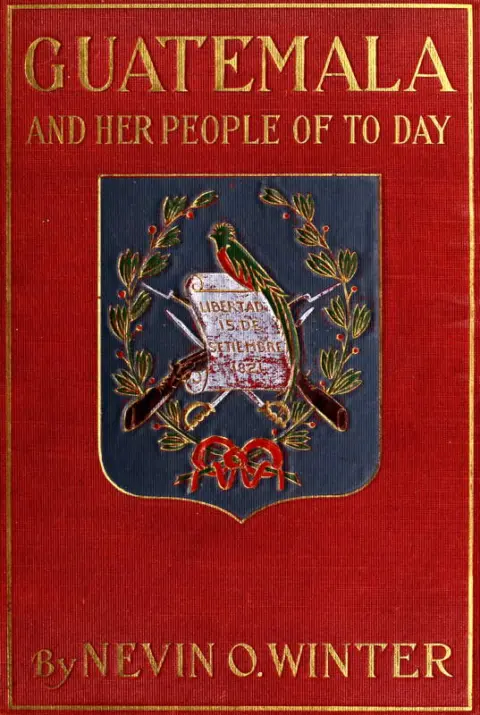
"Guatemala and Her People of To-day" by Nevin O. Winter is a historical account written in the early 20th century. The book delves into the geography, history, and culture of Guatemala, as well as its surrounding regions, such as British Honduras and the Republic of Honduras. The author explores the Latin American identity, discussing the pride of the Guatemalan people and their journey toward self-governance amidst political challenges, thus offering readers insights into the socio-political environment of the time. The opening of the book sets the stage by highlighting the misconceptions about Central America, particularly Guatemala's cultural and geographical significance. Winter emphasizes the harsh realities faced by the Guatemalan people while correcting the popular narratives surrounding their political endeavors. He describes the diverse landscapes of Guatemala, including its mountains, lakes, and tropical environment, also mentioning the socioeconomic issues stemming from its history of colonization and contemporary struggles for self-governance. Winter intends to foster a deeper understanding and appreciation of Guatemala, moving beyond caricatural portrayals found in popular culture.
Introduction adapted from the source catalogue; source summaries may be automatically generated.
Free to read · English · 61,374 words · No account needed
MAKE TIME FOR A GOOD BOOK
On by default. Untick to stop anonymous reading totals. Each page counts after 10 seconds in view. How this works.
Anonymous counting is on unless you have switched it off.
What shall be done with this great unimproved country? That question is reserved for the future to decide. I believe that the influence of America and Americans will do far more toward the settlement of the turmoil which has been so general in that country and the development of the natural resources than any other one influence. The number of Americans residing in Honduras is increasing each year, and their influence is already being felt wherever they reside. Sometime the people themselves may awaken to the fact that they have been living in poverty with wealth at their very doors. The eastern coast is developing more rapidly than the western because of the nearness to the markets of the United States. Good steamship service is now maintained so that it is only a four or five days’ journey to New Orleans and Mobile. Let Americans waken up to the great possibilities of trade and development that lie at their very door. Let American merchants and manufacturers exploit their goods and secure the trade of this country that is now controlled by British and German merchants. The people generally prefer American goods, but the merchants of this country have never learned the art of dealing with the Spanish-American. It is a situation that must be studied, but success is worth the effort.
“Adios,” with the Spaniard means “how do you do,” “good-bye,” and “a pleasant journey to you.”
I close this narrative with this one word to the reader which is greeting, benediction and farewell, all three combined, trusting that our acquaintance has been mutually beneficial.
THE following table gives the names of the departments in Guatemala, the name of the chief town, or capital, and the number of inhabitants and elevation of that city, the compilation being made from the latest and most reliable statistics available:—
DEPARTMENTS CHIEF TOWN INHABITANTS ELEVATION (feet)
Alta Verapaz Coban 24,475 4,010
Amatitlan Amatitlan 10,000 4,212
Baja Verapaz Salamá 7,125 2,831
Chimaltenango Chimaltenango 14,000 5,365
Chiquimula Chiquimula 10,602 1,232
Escuintla Escuintla 12,000 1,248
Guatemala Guatemala 85,000 4,810
City
Huehuetenango Huehuetenango 10,000 7,052
Izabal Livingston 1,500 45
Jalapa Jalapa 10,000 4,777
Jutiapa Jutiapa 12,000 2,821
Peten Flores 6,000 478
Quezaltenango Quezaltenango 22,265 7,351
Quiché Sante Rosa 6,237 5,492
del Quiché
Retalhuleu Retalhuleu 10,000 968
Sacatepequez Antigua 8,000 5,314
San Marcos San Marcos 10,000 7,150
Santa Rosa Cuajinicuilapa 2,000 3,214
Sololá Sololá 15,000 6,974
Suchitepequez Mazatenango 10,000 1,085
Totonicapan Totonicapan 25,196 7,894
Zacapa Zacapa 12,000 536
Your reading position is saved on this browser. Take it to another device with a library code. Reading pages adapt to text, rather than matching a printed edition.
BEHIND THE BOOK
This eBook is for the use of anyone anywhere in the United States and most other parts of the world at no cost and with almost no restrictions whatsoever. You may copy it, give it away or re-use it under the terms of the Project Gutenberg License included with this eBook or online at www.gutenberg.org. If you are not located in the United States, you will have to check the laws of the country where you are located before using this eBook. Read the source licence.
The original source file, including credits and licence, is retained by this library. Request an original-format copy at no charge. Please include the book title and Project Gutenberg identifier #59367.
KEEP YOUR CURIOSITY GOING
Wilfrid Scawen Blunt
Wilfrid Scawen Blunt

E. W. (Edgar Watson) Howe
Cécile Tormay

Moritz Busch
John L. Ransom