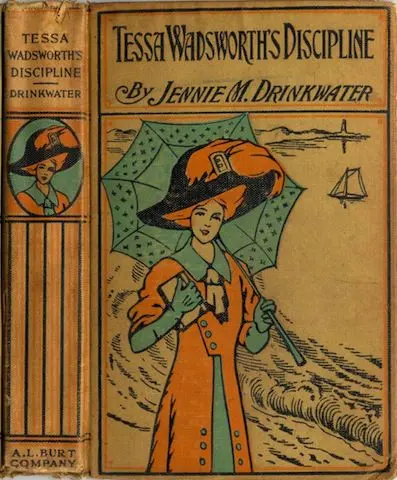
Tessa Wadsworth’s Discipline: A Story of the Development of a Young Girl’s Life
Nathaniel, Mrs. Conklin
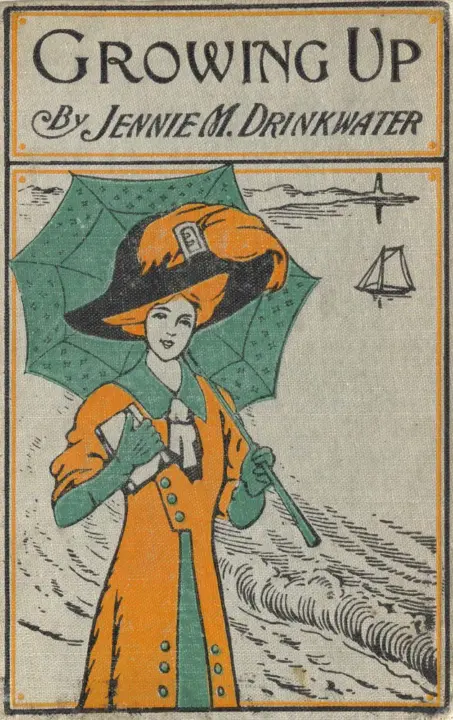
THE CLASSIC COLLECTION · 1894
"Growing Up: A Story of the Girlhood of Judith Mackenzie" by Jennie M. Drinkwater is a fictional novel written in the late 19th century. The story revolves around the life of young Judith Mackenzie, exploring her experiences and thoughts as she navigates the complexities of girlhood while caring for her bedridden mother. The narrative is steeped in themes of love, family, and personal growth, as Judith's character develops and matures through her interactions with her mother and other relatives. The opening of the story presents a tender scene between Judith and her mother, where Judith takes joy in sharing her imaginative "pictures" with her mother while she is confined to a wheelchair. The dialogue reveals their strong bond and Judith's ambitions, dreams, and curiosity about the world. Through Judith's storytelling, we see her growing independence and aspirations for the future, including the desire to help her mother gain strength. This introduction sets the tone for a narrative rich in emotional depth and life lessons as Judith learns about love, responsibility, and growing up in a world filled with expectations and challenges.
Introduction adapted from the source catalogue; source summaries may be automatically generated.
Free to read · English · 81,489 words · No account needed
MAKE TIME FOR A GOOD BOOK
On by default. Untick to stop anonymous reading totals. Each page counts after 10 seconds in view. How this works.
Anonymous counting is on unless you have switched it off.
“Well, Joe,” welcomed the old man, unlatching the gate and throwing it wide open, “come in and stay with me awhile. I guess I want you and you want me.”
But Joe begun to cry, and rub his eyes with the back of his dirty brown hand: “I am sixteen years old, and I am a stump of a thing, and will eat you out of house and home, and shan’t never amount to much.”
“Tut, nonsense!” exclaimed the old man; “don’t you like to work?”
“I never did nothing else; I don’t like nothing else,” replied Joe, dropping his hand, somewhat reassured.
“Who said you are sixteen? Come in and let me have a look at you.”
Joe stepped inside the gate; kind, strong hands drew him within the light that streamed from the kitchen windows and open door.
“Good night, Joe,” said Mrs. Evans.
“Good night,” said Joe.
He had not learned how to say “thank you.”
“They said so,” he replied to the latest question.
“Those men. The Tucker twins. They are seventy, and hale old fellows. I’ll warrant you know how to work. You are not fourteen. You shall do a boy’s work and be a boy. You may grow to be as tall as old Christopher himself. There’s plenty of man-timber in you. Now come and see what the women-folks will say to you.”
Joe shrank back.
“I thought I was going to live with you.”
“And you thought I lived alone like the other old men? I’m a miserable old bachelor, but I’ve got plenty of women-folks, thank the Lord.”
A little girl rushed to the door, and a barking Scotch terrier made a
spring at the new-comer.
“Oh, what a dog,” Joe exclaimed, stooping to catch frisking, curly Doodles into his arms. Homesick for Mrs. Evans, frightened and glad, he followed the old man into the kitchen with the curly dog in his arms.
“Affy, here’s the boy I’ve been looking for, and you’ve been praying for, I’ve no doubt.”
Aunt Affy turned and looked at the boy: short, stout, dirty, ragged, with a shock of uncombed black hair, a lock falling over his forehead, long black eyelashes concealed the eyes he kept shyly fixed upon the curly bundle in his arms.
“What is your name, dear?” she inquired.
Joe had never heard “dear” before, but supposed she must be speaking to him; he raised his eyes and smiled; they were shy, honest eyes; Aunt Affy smiled too.
“I am Joe,” he said, pulling Doodles’ ears.
“Do you remember your father and mother?”
Your reading position is saved on this browser. Take it to another device with a library code. Reading pages adapt to text, rather than matching a printed edition.
Nathaniel, Mrs. Conklin
BEHIND THE BOOK
This eBook is for the use of anyone anywhere in the United States and most other parts of the world at no cost and with almost no restrictions whatsoever. You may copy it, give it away or re-use it under the terms of the Project Gutenberg License included with this eBook or online at www.gutenberg.org. If you are not located in the United States, you will have to check the laws of the country where you are located before using this eBook. Read the source licence.
The original source file, including credits and licence, is retained by this library. Request an original-format copy at no charge. Please include the book title and Project Gutenberg identifier #42408.
KEEP YOUR CURIOSITY GOING
Coulson Kernahan

Maurice Baring
Frances Wright
Cécile Tormay

Frederic Jesup Stimson

W. H. P. (William Henry Pope) Jarvis