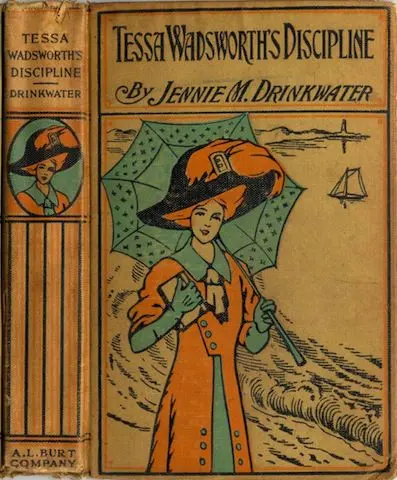
Tessa Wadsworth’s Discipline: A Story of the Development of a Young Girl’s Life
Nathaniel, Mrs. Conklin
THE CLASSIC COLLECTION · 1894
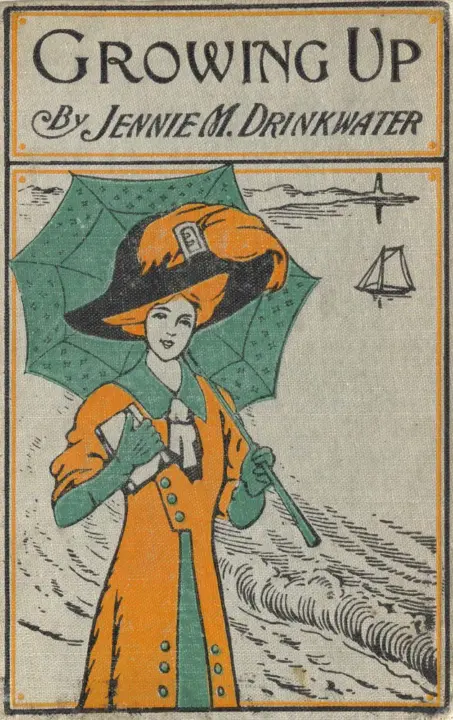
"Growing Up: A Story of the Girlhood of Judith Mackenzie" by Jennie M. Drinkwater is a fictional novel written in the late 19th century. The story revolves around the life of young Judith Mackenzie, exploring her experiences and thoughts as she navigates the complexities of girlhood while caring for her bedridden mother. The narrative is steeped in themes of love, family, and personal growth, as Judith's character develops and matures through her interactions with her mother and other relatives. The opening of the story presents a tender scene between Judith and her mother, where Judith takes joy in sharing her imaginative "pictures" with her mother while she is confined to a wheelchair. The dialogue reveals their strong bond and Judith's ambitions, dreams, and curiosity about the world. Through Judith's storytelling, we see her growing independence and aspirations for the future, including the desire to help her mother gain strength. This introduction sets the tone for a narrative rich in emotional depth and life lessons as Judith learns about love, responsibility, and growing up in a world filled with expectations and challenges.
Introduction adapted from the source catalogue; source summaries may be automatically generated.
Free to read · English · 81,489 words · No account needed
MAKE TIME FOR A GOOD BOOK
On by default. Untick to stop anonymous reading totals. Each page counts after 10 seconds in view. How this works.
Anonymous counting is on unless you have switched it off.
In her own chamber she found the darkness and solitude she craved; the darkness and solitude she thought she would crave forever. The voices in the front parlor went on low and steadily, planning a best thing for Marion for whom no best was possible.
“Yes, it will certainly be a good thing,” her father answered in a relieved tone; “she hasn’t been herself since Donald Mackenzie went away.”
“I was afraid when he came,” was the low uttered response.
“Mothers are always afraid,” returned the father, who had urged his
coming.
“But I was specially afraid; Don is so attractive, so unconscious of himself, and I know Marion well enough to know that she would make an ideal of him—”
“Nonsense,” was the sharp interruption.
“It may be nonsense, but it is true; it has proved true. Marion is imaginative, as I was at her age: I know how I idealized you—”
“And the reality of me broke your heart,” he said, with a light, fond
laugh.
“Yes. Sometimes it did. But I lived through it and learned that you were human, and deliciously human, and, if you will allow me to say so, a great improvement on my girlish ideal.”
“At any rate, I was not afraid to let you try,” he answered; “but Don has gone without giving her the trial. I suspect he saw it and went.”
“I know he did,” said Marion’s mother.
“Does Roger know it?” asked Marion’s father.
“Roger always knows everything and looks as if he knew nothing,” replied the motherly voice; “I think he was relieved when Don went away.”
“You think she will soon get over it?” her father asked. It would have broken Marion’s heart to hear the solicitude in her father’s voice.
“I’m afraid there’s no ‘over it’ for a girl like her; but she is plucky enough to get through it; the worst of it is, Don is such a fine fellow.”
“He had no right to care for her—” her father began angrily.
“He couldn’t help that,” argued her mother.
“Then he should care more, and be a man, and speak his mind—”
“I think he must care for some one else; if he hadn’t he couldn’t
resist Marion.”
“Marion is like other girls,” said Marion’s father impatiently; “not a whit prettier—”
“No, not prettier,” she assented, with protest in her tone.
“Or more accomplished,” he insisted.
“She hasn’t accomplishments, beside her fine education, and music—”
“All girls play, I suppose he sees other girls—”
Your reading position is saved on this browser. Take it to another device with a library code. Reading pages adapt to text, rather than matching a printed edition.
Nathaniel, Mrs. Conklin
BEHIND THE BOOK
This eBook is for the use of anyone anywhere in the United States and most other parts of the world at no cost and with almost no restrictions whatsoever. You may copy it, give it away or re-use it under the terms of the Project Gutenberg License included with this eBook or online at www.gutenberg.org. If you are not located in the United States, you will have to check the laws of the country where you are located before using this eBook. Read the source licence.
The original source file, including credits and licence, is retained by this library. Request an original-format copy at no charge. Please include the book title and Project Gutenberg identifier #42408.
KEEP YOUR CURIOSITY GOING
Coulson Kernahan

Maurice Baring
Frances Wright
Cécile Tormay

Frederic Jesup Stimson

W. H. P. (William Henry Pope) Jarvis