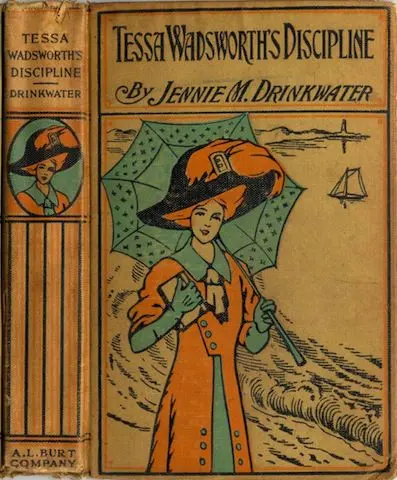
Tessa Wadsworth’s Discipline: A Story of the Development of a Young Girl’s Life
Nathaniel, Mrs. Conklin
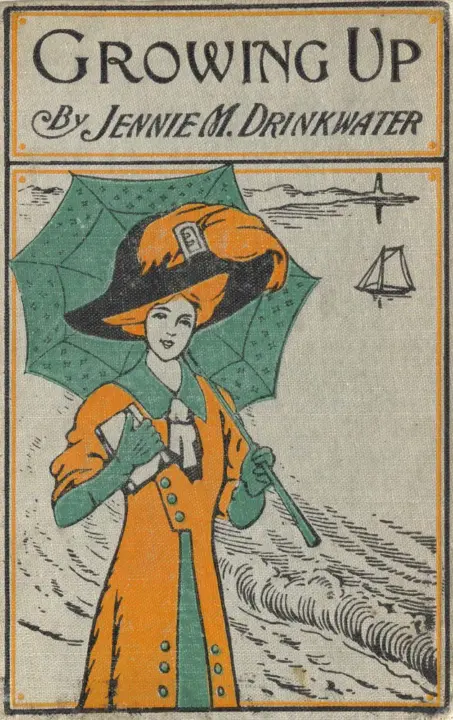
THE CLASSIC COLLECTION · 1894
"Growing Up: A Story of the Girlhood of Judith Mackenzie" by Jennie M. Drinkwater is a fictional novel written in the late 19th century. The story revolves around the life of young Judith Mackenzie, exploring her experiences and thoughts as she navigates the complexities of girlhood while caring for her bedridden mother. The narrative is steeped in themes of love, family, and personal growth, as Judith's character develops and matures through her interactions with her mother and other relatives. The opening of the story presents a tender scene between Judith and her mother, where Judith takes joy in sharing her imaginative "pictures" with her mother while she is confined to a wheelchair. The dialogue reveals their strong bond and Judith's ambitions, dreams, and curiosity about the world. Through Judith's storytelling, we see her growing independence and aspirations for the future, including the desire to help her mother gain strength. This introduction sets the tone for a narrative rich in emotional depth and life lessons as Judith learns about love, responsibility, and growing up in a world filled with expectations and challenges.
Introduction adapted from the source catalogue; source summaries may be automatically generated.
Free to read · English · 81,489 words · No account needed
MAKE TIME FOR A GOOD BOOK
On by default. Untick to stop anonymous reading totals. Each page counts after 10 seconds in view. How this works.
Anonymous counting is on unless you have switched it off.
“She is, in her small province,” replied Mrs. Lane. “I have something for her; I think I can help her step out into as wide a world as she cares to live in. No; don’t ask me; it is to be her secret and my own. Now, Judith, tell me, what is the secret of the happy and useful lives you know?”
“I don’t know,” replied Judith, truthfully. “But they are all married. I am thinking of girls—like me. Their work came to them.”
“As mine did,” said Jean, contentedly, with a glance from her work out the window where the blacksmith was shoeing a horse.
“Your Aunt Affy was not married—”
“No, she was not. She had her work. It was in her home. She was born among her work. But I have not a home like that,” Judith answered in short, sharp sentences.
“Why, Judith,” reproached Jean, “what would Aunt Affy say to that?”
“It would hurt her. She would look sorry. I do not know what gets into me, sometimes. She would adopt me and be like my own mother.”
“Do you resist such a sweet mothering as that?” rebuked Mrs. Lane. “I think I lost some of the sermon Sunday morning by looking at her face.”
“I do not mean to resist her,” said Judith, not able to keep the
tears back.
“She told mother her heart ached to have you back,” persuaded Jean, “since her sister died she had so longed for her little girl.”
“I’m afraid I am not doing right,” confessed Judith, “but I was almost homesick there, when Aunt Rody was sick. And then, I think I must learn to support myself, and not be dependent.”
“Oh, you American girl,” said Mrs. Lane.
“And with Aunt Affy for your mother,” added Jean; “I told Mrs. Lane
you had ideas.”
“I should think I had,” said Judith, laughing to keep the tears back. “I’m afraid I’ve forgotten Aunt Affy. She loves two people in me, she says; my mother and me. I don’t know what has possessed me.”
“Ambition, perhaps,” Mrs. Lane suggested, taking up her knitting,—a long black stocking for her only grandchild.
“Not just that,” Judith reasoned; “it is more making something of myself for myself. Culture for its own sake,” she quoted from Roger, who had warned her against her devotion to self-culture; “and I give it a self-sacrificing name; the desire to be independent. I do not know why I should not be dependent on Aunt Affy. My mother was—and loved it.”
Your reading position is saved on this browser. Take it to another device with a library code. Reading pages adapt to text, rather than matching a printed edition.
Nathaniel, Mrs. Conklin
BEHIND THE BOOK
This eBook is for the use of anyone anywhere in the United States and most other parts of the world at no cost and with almost no restrictions whatsoever. You may copy it, give it away or re-use it under the terms of the Project Gutenberg License included with this eBook or online at www.gutenberg.org. If you are not located in the United States, you will have to check the laws of the country where you are located before using this eBook. Read the source licence.
The original source file, including credits and licence, is retained by this library. Request an original-format copy at no charge. Please include the book title and Project Gutenberg identifier #42408.
KEEP YOUR CURIOSITY GOING
Coulson Kernahan

Maurice Baring
Frances Wright
Cécile Tormay

Frederic Jesup Stimson

W. H. P. (William Henry Pope) Jarvis