READ · DISCOVER · ENJOYClassic literature · Always free
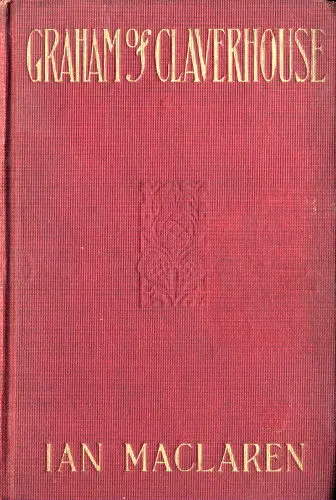
Graham of Claverhouse — digital edition cover

THE CLASSIC COLLECTION · 1907

Graham of Claverhouse

"Graham of Claverhouse" by Ian Maclaren is a historical novel written in the early 20th century. The book is set during a tumultuous period in European history, focusing on the life of John Graham of Claverhouse, a Scottish general. This narrative explores themes of loyalty, honor, and the complexities of identity amid the backdrop of religious and political strife, particularly revolving around Graham's conflicting allegiances and his relationship with Colonel Hugh MacKay. The opening portion introduces readers to the chaotic scene of a military camp during a dust storm, setting the stage for the character dynamics that will unfold. We meet a cast of soldiers, including the enigmatic Graham of Claverhouse, who is depicted as a strikingly beautiful man with a complex personality marked by loyalty to the Stuart line and disdain for the Covenanters. Another key character, Captain Hugh MacKay, stands in stark contrast to Graham, representing the Presbyterian perspective. Their initial interaction by the campfire hints at underlying tensions, foreshadowing the conflicts to come as they navigate their loyalties while serving under the Prince of Orange. Overall, the beginning lays a rich groundwork for both character development and the historical context of the conflicts that will shape their fates.

Introduction adapted from the source catalogue; source summaries may be automatically generated.

Start reading ↓

Free to read · English · 71,875 words · No account needed

MAKE TIME FOR A GOOD BOOK

Graham of Claverhouse

On by default. Untick to stop anonymous reading totals. Each page counts after 10 seconds in view. How this works.

Anonymous counting is on unless you have switched it off.

Graham of Claverhouse

Dundee was a man of many trials, and one on whom fortune seldom smiled; but the most cruel days of his life were the ride from Inverness by the Pass of Corryarrack to Blair Athole, and from Blair Athole by Perth to Dundee. He learned then, as many men have done in times of their distress, the horror of the night time and the blessing of the light. Had his mind not been affected by the universal treachery of the time, and the disappointments he had met on every side, till it seemed that every man except himself was hunting after his own interest, and no one, high or low, could be trusted, he had from the beginning treated Grimond's story with contempt and made it a subject of jest. He would no more have doubted Jean's honor than that of his mother. He would have known that Grimond never lied, and that he did not often drink, but he also would have been sure that even if it was Jean who met Livingstone, that there was some good explanation, and he never would have allowed his thoughts to dwell upon the matter. If Jean had been told that Graham had been seen with a lady of the Court at Whitehall, she would have scorned to question him, and indeed she had often laughed at the snares certain frail beauties of that day had laid for him in London. For she knew him, and he also knew her. But he was sorely tried in spirit and driven half crazy by the disloyalty of his friends, and it is in those circumstances of morbid, unhealthy feeling that the seeds of suspicion find a root and grow, as the microbes settle upon susceptible and disordered organs of the body.

As it was, he was divided in his mind, and it was the alternation of dark and bright moods which made his agony. Spring had only reached the Highlands as he rode southwards, but its first touches had made everything winsome and beautiful. While patches of snow lingered on the higher hills, and glittered in the sunlight, the grass in the hollows between the heather was putting on the first greenness of the season, and the heather was sprouting bravely; the burns were full-bodied with the melting snow from the higher levels and rushing with a pleasant noise to join the river. As he came down from the bare uplands at Dalnaspidal into the sheltered glen at Blair Castle, the trees made an arch of the most delicate emerald over his head, for the buds were beginning to open, and the wind blew gently upon his face. The sight of habitations as he came nearer to the Lowlands, the sound of the horses' feet upon the road, the gayety of his band of troopers, the children playing before their humble cottages, the exhilarating air, and the hope of the season when winter was gone, told upon his heart and reënforced him. The despair of the night before, when he tossed to and fro upon a wretched bed or paced up and down before the farmhouse door, imagining everything that was horrible, passed away as a nightmare. Was there ever such madness as that he, John Graham, should be doubting his wife, Jean Cochrane, whom he had won from the midst of his enemies, and who had left her mother and her mother's house to be his bride? How brave she had been, how self-sacrificing, how uncomplaining, how proud in heart and high in spirit; she had given up the whole world for him; she was the bravest and purest of ladies. That his wife of those years of storm and the mother a few weeks ago of his child should forget her vows and her love, and condescend to a base intrigue; that she should meet a lover in the orchard where they often used to walk, where the blossom would now be opening on the trees, that Livingstone, whom he knew and counted in a sense a friend, though he held King William's commission now, and had not stood by the right side, should take the opportunity of his absence to seduce his wife! It was a hideous and incredible idea, some mad mistake which could be easily explained. Dundee, throwing off his black and brooding burden of thought, would touch his horse with the spur and gallop for a mile in gayety of heart and then ride on his way, singing some Cavalier song, till Grimond, who kept away from his master those days and rode among the troopers, would shake his head, and say to himself, "God grant he be not fey" (possessed). Dundee would continue in high spirits till the evening shadows began to fall, and then the other shadow would lengthen across his soul. The night before he met his wife he spent in Glamis Castle, and the grim, austere beauty of that ancient house affected his imagination. Up its winding stairs with their bare, stern walls men had gone in their armor, through the thickness of the outer walls secret stairs connected mysterious chambers one with another. Strange deeds had been done in those low-roofed rooms with their dark carved furniture, and there were secret places in the castle where ghosts of the past had their habitation. Weird figures were said to flit through the castle at night, restless spirits which revisited the scene of former tragedies and crimes, and the room in which Graham slept was known to be haunted. Alas! he needed no troubled ancestor of the Strathmore house to visit him, for his own thoughts were sufficient torment, and through the brief summer night and then through the dawning light of the morning he threshed the question which gnawed his heart. Evil suggestions and suspicious remembrances of the past, which would have fled before the sunlight, surrounded him and looked out at him from the shadow with gibbering faces. Had he not been told that Jean laid traps for him in Paisley that she might secure the safety of her lover Pollock, and also of her kinsman, Sir John Cochrane? Had she not often spoken warmly of that Covenanting minister and expressed her bitter regret that her husband had compassed Pollock's death? She had tried to keep him from attending the Convention, and of late days had often suggested that he had better be at peace and not stir up the country. After all, can you take out of the life what is bred in the bone?--and Jean Cochrane was of a Covenanting stock, and her mother a very harridan of bigotry. Might there not have been some sense in the fear of his friends that he would no longer be loyal to the good cause, and was Jock Grimond's grudge against his marriage mere stupidity and jealousy? Everyone was securing his safety and adjusting himself to the new regime; there was hardly a Lowland gentleman who had irretrievably pledged himself to King James, and as for the chiefs, they would fight for their own hand as they had always done, and could only be counted on for one thing, and that was securing plunder. Was not he alone, and would not he soon be either on the scaffold or an exile? The Whigs would soon be reigning in their glory over Scotland, and it would be well with everyone that had their password. If he were out of the way, would there not be a strong temptation for her to make terms with her family and buy security by loyalty to their side? No doubt she was a strong woman, but, after all, she was only a woman, and was she able to stand alone and live forsaken at Glenogilvie, with friends neither among Cavaliers nor Covenanters? Could he blame her if she separated herself from a ruined cause and a discredited husband, for would she not be only doing what soldiers and courtiers had done, what everybody except himself was doing? Why should she, a young woman with life before her, tie herself up with a hopeless cause, and one who might be called commander-in-chief of James's army, but who had nothing to show for it but a handful of reckless troopers and a few hundred Highland thieves, a man whom all sensible people would be regarding as a mad adventurer? Would it not be a stroke of wisdom--the Whigs were a cunning crew, and he recalled that Lord Dundonald was an adroit schemer--to buy the future for herself and her child by selling him and returning to her old allegiance? There was enough reality in this ghost to give it, as it were, a bodily shape, and Graham, who had been flinging himself about, struck out with his fist as if at flesh and blood.

Your reading position is saved on this browser. Take it to another device with a library code. Reading pages adapt to text, rather than matching a printed edition.

More from this author

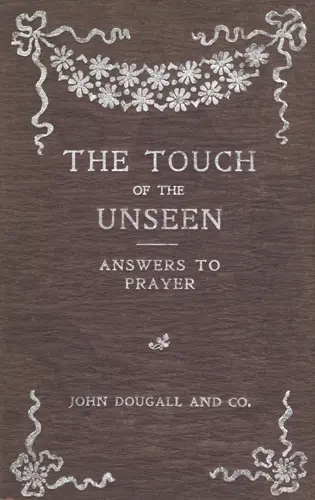
In Answer to Prayer — digital edition cover
Open book ↗
Essays & Ideas1898

In Answer to Prayer

William Boyd Carpenter & Theodore L. (Theodore Ledyard) Cuyler & W. J. (William John) Knox-Little & Ian Maclaren & William Quarrier
BEHIND THE WORDS

About Ian Maclaren

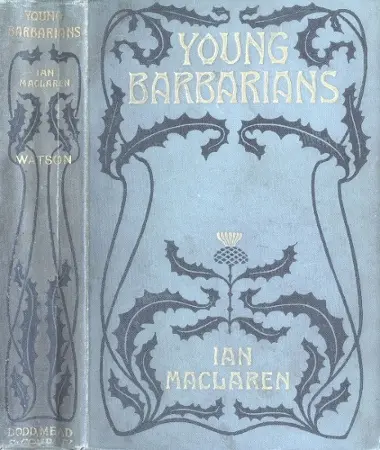
Ian Maclaren (1850–1907). Explore In Answer to Prayer, Young Barbarians, Graham of Claverhouse in this collection. These books span essays & ideas, religion & spirituality, children’s books.

Explore this author’s books →

THE READERS’ VERDICT

How did this story stay with you?

Not rated yet
Your rating for Graham of Claverhouse

Be the first to share your verdict.

One rating per browser, which you can change or remove. A necessary browser identifier remembers your vote. How ratings work

A GOOD STORY DESERVES COMPANY

Pass this book along.

A great read is even better when it’s shared.

SEND A LITTLE INSPIRATION

Share this book

BEHIND THE BOOK

Edition & source details.

Title
Graham of Claverhouse
Author
Ian Maclaren
Publication year
1907
Digital edition publisher
Project Gutenberg
Gutenberg release date
2009-09-18
Language
English
Source edition imprint
Not stated in source catalogue
Source identifier
Project Gutenberg #30022
Contributors
Frank T. Merrill (ill)

Public-domain source & licence

This eBook is for the use of anyone anywhere in the United States and most other parts of the world at no cost and with almost no restrictions whatsoever. You may copy it, give it away or re-use it under the terms of the Project Gutenberg License included with this eBook or online at www.gutenberg.org. If you are not located in the United States, you will have to check the laws of the country where you are located before using this eBook. Read the source licence.

Full source licence and obtaining an original copy

The original source file, including credits and licence, is retained by this library. Request an original-format copy at no charge. Please include the book title and Project Gutenberg identifier #30022.

the full Project Gutenberg License must appear
prominently whenever any copy of a Project Gutenberg work (any work
on which the phrase “Project Gutenberg” appears, or with which the
phrase “Project Gutenberg” is associated) is accessed, displayed,
performed, viewed, copied or distributed:

This eBook is for the use of anyone anywhere in the United States and most
other parts of the world at no cost and with almost no restrictions
whatsoever. You may copy it, give it away or re-use it under the terms
of the Project Gutenberg™ License included with this eBook or online
at www.gutenberg.org. If you
are not located in the United States, you will have to check the laws
of the country where you are located before using this eBook.

1.E.2. If an individual Project Gutenberg electronic work is
derived from texts not protected by U.S. copyright law (does not
contain a notice indicating that it is posted with permission of the
copyright holder), the work can be copied and distributed to anyone in
the United States without paying any fees or charges. If you are
redistributing or providing access to a work with the phrase “Project
Gutenberg” associated with or appearing on the work, you must comply
either with the requirements of paragraphs 1.E.1 through 1.E.7 or
obtain permission for the use of the work and the Project Gutenberg
trademark as set forth in paragraphs 1.E.8 or 1.E.9.

1.E.3. If an individual Project Gutenberg electronic work is posted
with the permission of the copyright holder, your use and distribution
must comply with both paragraphs 1.E.1 through 1.E.7 and any
additional terms imposed by the copyright holder. Additional terms
will be linked to the Project Gutenberg License for all works
posted with the permission of the copyright holder found at the
beginning of this work.

1.E.4. Do not unlink or detach or remove the full Project Gutenberg
License terms from this work, or any files containing a part of this
work or any other work associated with Project Gutenberg.

1.E.5. Do not copy, display, perform, distribute or redistribute this
electronic work, or any part of this electronic work, without
prominently displaying the sentence set forth in paragraph 1.E.1 with
active links or immediate access to the full terms of the Project
Gutenberg License.

1.E.6. You may convert to and distribute this work in any binary,
compressed, marked up, nonproprietary or proprietary form, including
any word processing or hypertext form. However, if you provide access
to or distribute copies of a Project Gutenberg work in a format
other than “Plain Vanilla ASCII” or other format used in the official
version posted on the official Project Gutenberg website
(www.gutenberg.org), you must, at no additional cost, fee or expense
to the user, provide a copy, a means of exporting a copy, or a means
of obtaining a copy upon request, of the work in its original “Plain
Vanilla ASCII” or other form. Any alternate format must include the
full Project Gutenberg License as specified in paragraph 1.E.1.

1.E.7. Do not charge a fee for access to, viewing, displaying,
performing, copying or distributing any Project Gutenberg works
unless you comply with paragraph 1.E.8 or 1.E.9.

1.E.8. You may charge a reasonable fee for copies of or providing
access to or distributing Project Gutenberg electronic works
provided that:

• You pay a royalty fee of 20% of the gross profits you derive from
the use of Project Gutenberg works calculated using the method
you already use to calculate your applicable taxes. The fee is owed
to the owner of the Project Gutenberg trademark, but he has
agreed to donate royalties under this paragraph to the Project
Gutenberg Literary Archive Foundation. Royalty payments must be paid
within 60 days following each date on which you prepare (or are
legally required to prepare) your periodic tax returns. Royalty
payments should be clearly marked as such and sent to the Project
Gutenberg Literary Archive Foundation at the address specified in
Section 4, “Information about donations to the Project Gutenberg
Literary Archive Foundation.”

• You provide a full refund of any money paid by a user who notifies
you in writing (or by e-mail) within 30 days of receipt that s/he
does not agree to the terms of the full Project Gutenberg™
License. You must require such a user to return or destroy all
copies of the works possessed in a physical medium and discontinue
all use of and all access to other copies of Project Gutenberg™
works.

• You provide, in accordance with paragraph 1.F.3, a full refund of
any money paid for a work or a replacement copy, if a defect in the
electronic work is discovered and reported to you within 90 days of
receipt of the work.

• You comply with all other terms of this agreement for free
distribution of Project Gutenberg™ works.


1.E.9. If you wish to charge a fee or distribute a Project
Gutenberg™ electronic work or group of works on different terms than
are set forth in this agreement, you must obtain permission in writing
from the Project Gutenberg Literary Archive Foundation, the manager of
the Project Gutenberg™ trademark. Contact the Foundation as set
forth in Section 3 below.

1.F.

1.F.1. Project Gutenberg volunteers and employees expend considerable
effort to identify, do copyright research on, transcribe and proofread
works not protected by U.S. copyright law in creating the Project
Gutenberg™ collection. Despite these efforts, Project Gutenberg™
electronic works, and the medium on which they may be stored, may
contain “Defects,” such as, but not limited to, incomplete, inaccurate
or corrupt data, transcription errors, a copyright or other
intellectual property infringement, a defective or damaged disk or
other medium, a computer virus, or computer codes that damage or
cannot be read by your equipment.

1.F.2. LIMITED WARRANTY, DISCLAIMER OF DAMAGES - Except for the “Right
of Replacement or Refund” described in paragraph 1.F.3, the Project
Gutenberg Literary Archive Foundation, the owner of the Project
Gutenberg™ trademark, and any other party distributing a Project
Gutenberg™ electronic work under this agreement, disclaim all
liability to you for damages, costs and expenses, including legal
fees. YOU AGREE THAT YOU HAVE NO REMEDIES FOR NEGLIGENCE, STRICT
LIABILITY, BREACH OF WARRANTY OR BREACH OF CONTRACT EXCEPT THOSE
PROVIDED IN PARAGRAPH 1.F.3. YOU AGREE THAT THE FOUNDATION, THE
TRADEMARK OWNER, AND ANY DISTRIBUTOR UNDER THIS AGREEMENT WILL NOT BE
LIABLE TO YOU FOR ACTUAL, DIRECT, INDIRECT, CONSEQUENTIAL, PUNITIVE OR
INCIDENTAL DAMAGES EVEN IF YOU GIVE NOTICE OF THE POSSIBILITY OF SUCH
DAMAGE.

1.F.3. LIMITED RIGHT OF REPLACEMENT OR REFUND - If you discover a
defect in this electronic work within 90 days of receiving it, you can
receive a refund of the money (if any) you paid for it by sending a
written explanation to the person you received the work from. If you
received the work on a physical medium, you must return the medium
with your written explanation. The person or entity that provided you
with the defective work may elect to provide a replacement copy in
lieu of a refund. If you received the work electronically, the person
or entity providing it to you may choose to give you a second
opportunity to receive the work electronically in lieu of a refund. If
the second copy is also defective, you may demand a refund in writing
without further opportunities to fix the problem.

1.F.4. Except for the limited right of replacement or refund set forth
in paragraph 1.F.3, this work is provided to you ‘AS-IS’, WITH NO
OTHER WARRANTIES OF ANY KIND, EXPRESS OR IMPLIED, INCLUDING BUT NOT
LIMITED TO WARRANTIES OF MERCHANTABILITY OR FITNESS FOR ANY PURPOSE.

1.F.5. Some states do not allow disclaimers of certain implied
warranties or the exclusion or limitation of certain types of
damages. If any disclaimer or limitation set forth in this agreement
violates the law of the state applicable to this agreement, the
agreement shall be interpreted to make the maximum disclaimer or
limitation permitted by the applicable state law. The invalidity or
unenforceability of any provision of this agreement shall not void the
remaining provisions.

1.F.6. INDEMNITY - You agree to indemnify and hold the Foundation, the
trademark owner, any agent or employee of the Foundation, anyone
providing copies of Project Gutenberg™ electronic works in
accordance with this agreement, and any volunteers associated with the
production, promotion and distribution of Project Gutenberg™
electronic works, harmless from all liability, costs and expenses,
including legal fees, that arise directly or indirectly from any of
the following which you do or cause to occur: (a) distribution of this
or any Project Gutenberg work, (b) alteration, modification, or
additions or deletions to any Project Gutenberg work, and (c) any
Defect you cause.

Section 2. Information about the Mission of Project Gutenberg

Project Gutenberg is synonymous with the free distribution of
electronic works in formats readable by the widest variety of
computers including obsolete, old, middle-aged and new computers. It
exists because of the efforts of hundreds of volunteers and donations
from people in all walks of life.

Volunteers and financial support to provide volunteers with the
assistance they need are critical to reaching Project Gutenberg’s
goals and ensuring that the Project Gutenberg collection will
remain freely available for generations to come. In 2001, the Project
Gutenberg Literary Archive Foundation was created to provide a secure
and permanent future for Project Gutenberg and future
generations. To learn more about the Project Gutenberg Literary
Archive Foundation and how your efforts and donations can help, see
Sections 3 and 4 and the Foundation information page at www.gutenberg.org.

Section 3. Information about the Project Gutenberg Literary Archive Foundation

The Project Gutenberg Literary Archive Foundation is a non-profit
501(c)(3) educational corporation organized under the laws of the
state of Mississippi and granted tax exempt status by the Internal
Revenue Service. The Foundation’s EIN or federal tax identification
number is 64-6221541. Contributions to the Project Gutenberg Literary
Archive Foundation are tax deductible to the full extent permitted by
U.S. federal laws and your state’s laws.

The Foundation’s business office is located at 41 Watchung Plaza #516,
Montclair NJ 07042, USA, +1 (862) 621-9288. Email contact links and up
to date contact information can be found at the Foundation’s website
and official page at www.gutenberg.org/contact

Section 4. Information about Donations to the Project Gutenberg
Literary Archive Foundation

Project Gutenberg™ depends upon and cannot survive without widespread
public support and donations to carry out its mission of
increasing the number of public domain and licensed works that can be
freely distributed in machine-readable form accessible by the widest
array of equipment including outdated equipment. Many small donations
($1 to $5,000) are particularly important to maintaining tax exempt
status with the IRS.

The Foundation is committed to complying with the laws regulating
charities and charitable donations in all 50 states of the United
States. Compliance requirements are not uniform and it takes a
considerable effort, much paperwork and many fees to meet and keep up
with these requirements. We do not solicit donations in locations
where we have not received written confirmation of compliance. To SEND
DONATIONS or determine the status of compliance for any particular state
visit www.gutenberg.org/donate.

While we cannot and do not solicit contributions from states where we
have not met the solicitation requirements, we know of no prohibition
against accepting unsolicited donations from donors in such states who
approach us with offers to donate.

International donations are gratefully accepted, but we cannot make
any statements concerning tax treatment of donations received from
outside the United States. U.S. laws alone swamp our small staff.

Please check the Project Gutenberg web pages for current donation
methods and addresses. Donations are accepted in a number of other
ways including checks, online payments and credit card donations. To
donate, please visit: www.gutenberg.org/donate.

Section 5. General Information About Project Gutenberg electronic works

Professor Michael S. Hart was the originator of the Project
Gutenberg concept of a library of electronic works that could be
freely shared with anyone. For forty years, he produced and
distributed Project Gutenberg eBooks with only a loose network of
volunteer support.

Project Gutenberg eBooks are often created from several printed
editions, all of which are confirmed as not protected by copyright in
the U.S. unless a copyright notice is included. Thus, we do not
necessarily keep eBooks in compliance with any particular paper
edition.

Most people start at our website which has the main PG search
facility: www.gutenberg.org.

This website includes information about Project Gutenberg,
including how to make donations to the Project Gutenberg Literary
Archive Foundation, how to help produce our new eBooks, and how to
subscribe to our email newsletter to hear about new eBooks.


KEEP YOUR CURIOSITY GOING

Your next chapter awaits.