THE CLASSIC COLLECTION✦An outlaw’s diary: the CommuneCLASSIC FREE BOOKS
An outlaw’s diary: the Commune
Cécile Tormay
THE CLASSIC COLLECTION · 1886
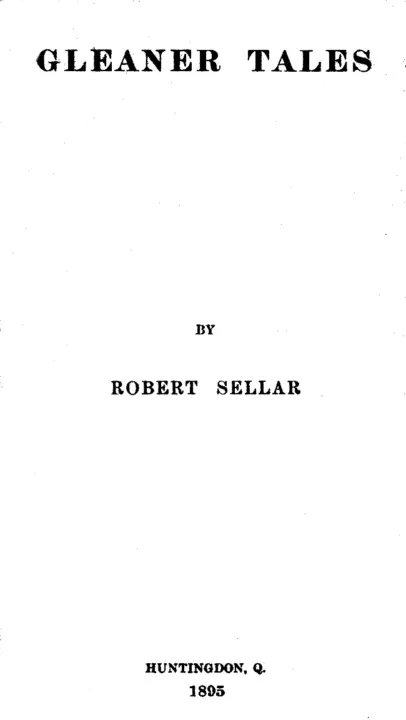
"Gleaner Tales" by Robert Sellar is a collection of historical tales written in the late 19th century. The work aims to capture pivotal moments in the early life of Canada, focusing on the experiences of settlers from the British Isles during the period of their first settlement. Among the characters are Lieutenant Morton and the Indigenous guide Hemlock, who navigate the complexities of war and survival against the backdrop of historical events involving the American invasion. The opening of "Gleaner Tales" presents a vivid and intense scene set in 1813, following Lieutenant Morton as he is ordered to escort an ammunition train during a time of conflict. We witness Morton's interactions with his comrades and the unfolding drama surrounding a spy's escape attempt and subsequent capture. As the narrative progresses, Morton's character develops amidst tension and action, particularly in his encounters with both the enemy and his companions. The stakes become dire when he is caught in a web of suspicion after an officer is found dead nearby, leading to his trial as a spy. The atmosphere of apprehension and the need for bravery resonate throughout the opening chapters, setting the stage for further exploration of themes like loyalty, sacrifice, and the turmoil of early Canadian history.
Introduction adapted from the source catalogue; source summaries may be automatically generated.
Free to read · English · 114,938 words · No account needed
MAKE TIME FOR A GOOD BOOK
On by default. Untick to stop anonymous reading totals. Each page counts after 10 seconds in view. How this works.
Anonymous counting is on unless you have switched it off.
“You have a British officer held as prisoner. You wrote to Major Stovin that you would set him free if the Indian who killed Slocum were given in exchange. Do you stand by that offer?”
“Morton goes free when the Indian is sent in.”
“Give me an order for his release; the Indian goes to your camp at
once.”
“That will not do, Mr Redskin. The exchange must be effected through the British commander. Let him send an accredited officer with a flag of truce and we will treat with him.”
“Before that can be done, Morton may be dead. If you get the Indian what care you for else? The Indian who killed Slocum passes into your hands the moment Morton is given liberty.”
“This is altogether irregular,” remarked an officer, “General Hampton cannot deal with an irresponsible redskin, who, for all he knows, has come here on some scheme of deviltry. See here, was it you that murdered Slocum?”
“I never murdered any man,” answered Hemlock proudly, “but I have killed many in war. Had you the Indian who slew him, what would you do to him?”
“Well, I guess, if the General let us have our way, we would hand him to the men of Slocum’s old regiment and they’d make him wish he had never been born.”
“The Indian might have had good cause for dealing with Slocum as he
did?”
“No, you red devil, he could have no cause. He carved him up out of
pure deviltry.”
“You are tired, General,” said Hemlock, with a courteous wave of the hand, “and while you rest, will you listen to me, for I have heard that Indian’s story? In the Mohawk valley lived an English family when you Americans rose against King George. A neighbor, who had come from Massachusetts, envied their farm, and, on the Englishman refusing to forswear his allegiance, had it confiscated and took possession. The Englishman had to fly and went through the woods, many days’ journey to Canada, guided by a band of loyal Oneidas. When they reached Canada, a young warrior of that band stayed with them and helped them to find food in the wilderness until crops grew. That Indian gave up his tribe, and lived with them and a daughter came to love him, and they were married and were happy many years, until the mist rose from the lake and she sickened and died. The Indian so loved her that he would have killed himself to follow her to the spirit land, had she not left a daughter, who was his joy and life. When she grew up, the Indian said, She shall be the equal of the best, and he took her to Albany to be taught all ladies learn. A young man saw her, met her, learned of the Indian blood in her veins, and doomed her as his spoil. He was aided by a companion in deceiving her by a false marriage, she lived with him for a while, was cast off, and her deceiver married the governor’s daughter. The Indian had gone on a far journey; he went to seek for furs in the West to get money for his daughter. In two years he came to Montreal with many canoe-loads, he sold them, he went to Albany, and found his child dying of a broken heart. He took her away with him, he nursed her by the Ottawa--he buried her there. He went back to Albany, and was told the law could not punish Slocum or his friend, who had gone away. Then he sought Slocum and twenty times he could have killed him, but he would not. In his heart he said, Slocum must die not by the knife or bullet, but by torture, and the chance came not until a moon ago, when he met Slocum face to face in the Chateaugay woods about to stab Morton. The Indian took Slocum, and for hours he made him feel part of the pain he had caused him and his child--only a part, for you who are fathers can guess what that Indian and his daughter suffered. Was that Indian to blame? Did he do more to him than he deserved? Will you give the father over to Slocum’s soldiers to be abused and killed?”
Your reading position is saved on this browser. Take it to another device with a library code. Reading pages adapt to text, rather than matching a printed edition.
BEHIND THE BOOK
This eBook is for the use of anyone anywhere in the United States and most other parts of the world at no cost and with almost no restrictions whatsoever. You may copy it, give it away or re-use it under the terms of the Project Gutenberg License included with this eBook or online at www.gutenberg.org. If you are not located in the United States, you will have to check the laws of the country where you are located before using this eBook. Read the source licence.
The original source file, including credits and licence, is retained by this library. Request an original-format copy at no charge. Please include the book title and Project Gutenberg identifier #66150.
KEEP YOUR CURIOSITY GOING
Cécile Tormay

Moritz Busch
Coulson Kernahan
John L. Ransom

Maurice Baring
Frances Wright