THE CLASSIC COLLECTION✦An outlaw’s diary: the CommuneCLASSIC FREE BOOKS
An outlaw’s diary: the Commune
Cécile Tormay
THE CLASSIC COLLECTION · 1886
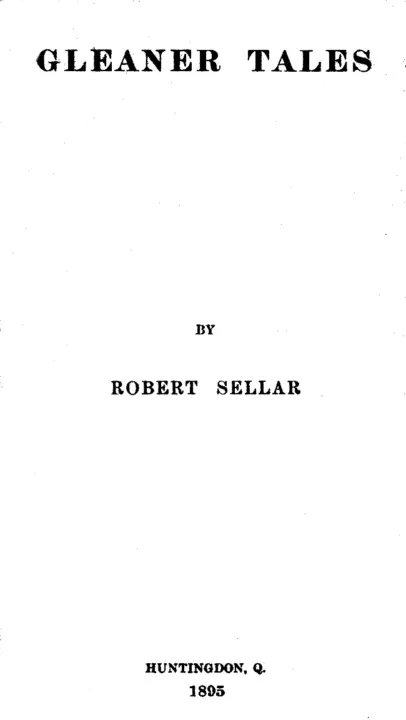
"Gleaner Tales" by Robert Sellar is a collection of historical tales written in the late 19th century. The work aims to capture pivotal moments in the early life of Canada, focusing on the experiences of settlers from the British Isles during the period of their first settlement. Among the characters are Lieutenant Morton and the Indigenous guide Hemlock, who navigate the complexities of war and survival against the backdrop of historical events involving the American invasion. The opening of "Gleaner Tales" presents a vivid and intense scene set in 1813, following Lieutenant Morton as he is ordered to escort an ammunition train during a time of conflict. We witness Morton's interactions with his comrades and the unfolding drama surrounding a spy's escape attempt and subsequent capture. As the narrative progresses, Morton's character develops amidst tension and action, particularly in his encounters with both the enemy and his companions. The stakes become dire when he is caught in a web of suspicion after an officer is found dead nearby, leading to his trial as a spy. The atmosphere of apprehension and the need for bravery resonate throughout the opening chapters, setting the stage for further exploration of themes like loyalty, sacrifice, and the turmoil of early Canadian history.
Introduction adapted from the source catalogue; source summaries may be automatically generated.
Free to read · English · 114,938 words · No account needed
MAKE TIME FOR A GOOD BOOK
On by default. Untick to stop anonymous reading totals. Each page counts after 10 seconds in view. How this works.
Anonymous counting is on unless you have switched it off.
When Morton opened his eyes he found the dell, or rather gorge, for the sides were almost precipitous though clad with vegetation, was lit up by the moon, and Hemlock by his side, sitting Indian fashion, clasping his knees. Without uttering a word, he rose on perceiving the young officer was awake and lifted his gun to move on. Morton obeyed the mute sign and they began to descend the bed of the stream. It was a task of some difficulty, for it abounded in rocks and often there was no foothold at the sides, the water laving the cliffs that formed the banks. Had it not been that the season was an unusually dry one, leaving the river bed largely bare, Morton could not have kept up with his companion. Chilled by his wet garments, the exercise was rather grateful to him and he exerted himself to overcome the obstacles in his path. As they went on, the banks grew higher and the gorge more narrow, until, turning a bend, Morton perceived the river dashed down a channel cleft out of a rock, which rose a pillared wall on one side and on the other had been rendered concave by the washing down of the debris of ages. High above, shafts of moonlight struggled thru’ the foliage and, falling irregularly on the sides, brought into ghastly relief the nakedness of the walls of the rocky prison. Deeply impressed Morton followed his guide down the gloomy chasm, whence the sound of falling water came, and they passed two small falls. Below the lower one, where the walls drew nearer, as if they grudged the scanty space they had been affording the tumultuous stream for its passage, the cliffs grew loftier. Hemlock halted, and pointing to a water-worn recess in the rocks, that afforded some covering, said, “Sleep there.” Morton lay down, but he was in no humor to sleep again. The magnificence of the rock-hewn chamber in which he lay, with a giant cliff bending over him, had excited his imagination, and his eyes wandered from the foaming falls in front of him to the solemn heights, whose walls were flecked with shrubs and topped by spruce trees. The contrast of the unceasing noise and motion of the river with the eternal silence and imperturbability of the rocks, deeply impressed him. Thus time passed and when he had scanned the scene to his satisfaction, his interest turned to his companion, who had left him and stood beneath a pillar of rock higher than its fellows, where the chasm narrowed into a mere tunnel. Evidently supposing that Morton was sound asleep, he was going through those motions of incantation by which Indian medicine-men profess to evoke the spirits. He writhed until his contortions were horrible, while the working of his features showed he was inwardly striving to induce an exalted and morbid condition of feeling. He smote his breast resounding blows, he flung himself downwards on the rock and shook himself until his body jerked with involuntary twitchings, he shrieked in hollow tones and plucked at his hair, until the sweat rolled down his cheeks. After a fit of hysterical laughter he sank in a swoon, which lasted so long that Morton was debating whether he should not go over to him. All this time the moon had been sailing upward and now stood directly over the chasm, its beams transforming the foaming river into a channel of milky whiteness and, where it broke into curls at the falls, into streams of pearls, while the foliage that tempered the stern outline of the rocks, bedewed by the spray that kept them constantly moist, glistened as if sprinkled with diamond-dust. The moonlight streamed on the prostrate body of the Indian, and as he awoke from his trance and slowly raised himself, Morton read in his face a wonderful change--a look of calmness and of supernatural ecstasy. With great dignity he drew himself up and stepped forward a few paces until he stood directly beneath the pillar of rock. Then he spoke: “Spirit of the wood and stream, who loves this best of all thine abodes, come to me. Hemlock seeks thee to help him. The wounded moose will never breathe again the morning-air, the stricken pine-tree never put forth fresh shoots, and Hemlock is wounded and stricken and growing old. Shall the hand grow feeble before the blow is dealt, the eye grow dim before mine enemy is slain, and my ear grow deaf before it hears his death-groan? The leaves that fall rot and the water that passeth returneth not; therefore, oh Spirit, grant to Hemlock his prayer, that before night comes he may find whom he seeks. Again, this day, has he escaped me, shielded by his medicine. Break the spell, O Spirit; take away the charm that holds my arm when I aim the blow, and pluck away the shield the evil ones hold over him! The eagle has his nest on the hill and the fox his lair in the valley, but Hemlock has no home. The doe fondles its fawn and the tired swallow is helped across the great water on the wings of its sons, but Hemlock has no children. The light of his eyes was taken from him, the joy of his heart was frozen. The Yankee stole his land, slew his brothers, bewitched his only daughter, and drove him away, and now he is a sick-struck man, whom none come near. Spirit, grant the prayer of Hemlock; break the spell that binds me, that I may taste the blood of mine enemy and I shall die happy.”
Your reading position is saved on this browser. Take it to another device with a library code. Reading pages adapt to text, rather than matching a printed edition.
BEHIND THE BOOK
This eBook is for the use of anyone anywhere in the United States and most other parts of the world at no cost and with almost no restrictions whatsoever. You may copy it, give it away or re-use it under the terms of the Project Gutenberg License included with this eBook or online at www.gutenberg.org. If you are not located in the United States, you will have to check the laws of the country where you are located before using this eBook. Read the source licence.
The original source file, including credits and licence, is retained by this library. Request an original-format copy at no charge. Please include the book title and Project Gutenberg identifier #66150.
KEEP YOUR CURIOSITY GOING
Cécile Tormay

Moritz Busch
Coulson Kernahan
John L. Ransom

Maurice Baring
Frances Wright