THE CLASSIC COLLECTION✦An outlaw’s diary: the CommuneCLASSIC FREE BOOKS
An outlaw’s diary: the Commune
Cécile Tormay
THE CLASSIC COLLECTION · 1886
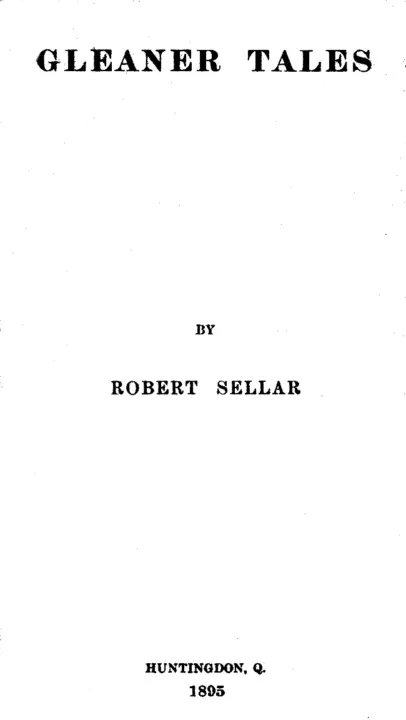
"Gleaner Tales" by Robert Sellar is a collection of historical tales written in the late 19th century. The work aims to capture pivotal moments in the early life of Canada, focusing on the experiences of settlers from the British Isles during the period of their first settlement. Among the characters are Lieutenant Morton and the Indigenous guide Hemlock, who navigate the complexities of war and survival against the backdrop of historical events involving the American invasion. The opening of "Gleaner Tales" presents a vivid and intense scene set in 1813, following Lieutenant Morton as he is ordered to escort an ammunition train during a time of conflict. We witness Morton's interactions with his comrades and the unfolding drama surrounding a spy's escape attempt and subsequent capture. As the narrative progresses, Morton's character develops amidst tension and action, particularly in his encounters with both the enemy and his companions. The stakes become dire when he is caught in a web of suspicion after an officer is found dead nearby, leading to his trial as a spy. The atmosphere of apprehension and the need for bravery resonate throughout the opening chapters, setting the stage for further exploration of themes like loyalty, sacrifice, and the turmoil of early Canadian history.
Introduction adapted from the source catalogue; source summaries may be automatically generated.
Free to read · English · 114,938 words · No account needed
MAKE TIME FOR A GOOD BOOK
On by default. Untick to stop anonymous reading totals. Each page counts after 10 seconds in view. How this works.
Anonymous counting is on unless you have switched it off.
“We have taken a prisoner!” cried one of the men in an exulting voice.
“The divil take you,” interrupted the old man with contentious manner. “Yees had no business wid me.”
“We found him hiding behind some brush watching our men. He is a spy,”
said the scout.
“Behind some brush! An’ whose brush was it? Me own, bedad.”
“You had no business there.”
“No business to be on my own farrum! Bad scran to ye, if I had yees in Wixford I’d get the constable to arrist every man o’ yees for trispass.”
“Come, hold your tongue,” said a scout roughly.
“Hould yer own whisht. Ye havn’t mended yer manners since I saw yer
backs at Brandywine.”
Col. Vanderberg smiled as he said to the scouts, “I am afraid you have been too hasty. We are now in Canada and must not molest its inhabitants. The old man is a non-combatant, and, as he declares, was on his own farm when taken.”
“If you had seen him kick and scratch and wriggle when we put hands upon him, you wouldn’t say he was a non-combatant, Colonel. He swore at the United States and said he kept one of our flags for his pocket-handkerchief.”
“Tut, tut,” exclaimed the Colonel, “we have not come to fight old men;
let him go.”
“Ye’d betther,” remarked the old man with a grin, “or I’ll make ye
sorry.”
“Now, what could you do?” asked the Colonel with an amused smile.
The old man sidled up beside the bridle of the Colonel’s horse, and in a tone of mock solemnity, while his eyes sparkled with fun, whispered, “I’d put the curse of Cramwell an ye.”
“Say, friend,” said Morton, “there is something about you that tells me you are an old soldier. Were you ever in the army?”
“Yis, but not in yer riffraff that ye’s call an army.”
“You are mistaken in me,” replied Morton, and drawing aside his cloak showed the scarlet coat of the British service.
“An’ how did ye fall in wid dem rebels? A prisoner are ye, God save us! You’ll be Leftenant Morton that was to be hanged, as I heard tell. Well, well, since ye wern’t born to be hanged, it is drownded ye may be. Av coorse I was in the army an’ got me discharge an’ a grant of land from King George, an’ may the divil catch a hould o’ dem that don’t wish him well.”
“Are all your neighbors of the same mind?” asked the Colonel.
Your reading position is saved on this browser. Take it to another device with a library code. Reading pages adapt to text, rather than matching a printed edition.
BEHIND THE BOOK
This eBook is for the use of anyone anywhere in the United States and most other parts of the world at no cost and with almost no restrictions whatsoever. You may copy it, give it away or re-use it under the terms of the Project Gutenberg License included with this eBook or online at www.gutenberg.org. If you are not located in the United States, you will have to check the laws of the country where you are located before using this eBook. Read the source licence.
The original source file, including credits and licence, is retained by this library. Request an original-format copy at no charge. Please include the book title and Project Gutenberg identifier #66150.
KEEP YOUR CURIOSITY GOING
Cécile Tormay

Moritz Busch
Coulson Kernahan
John L. Ransom

Maurice Baring
Frances Wright