THE CLASSIC COLLECTION✦An outlaw’s diary: the CommuneCLASSIC FREE BOOKS
An outlaw’s diary: the Commune
Cécile Tormay
THE CLASSIC COLLECTION · 1886
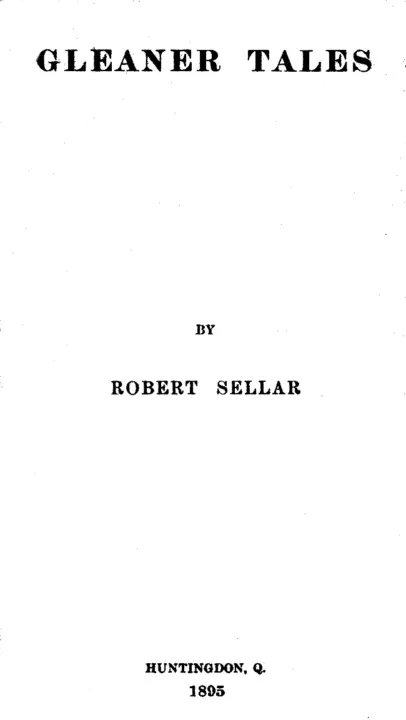
"Gleaner Tales" by Robert Sellar is a collection of historical tales written in the late 19th century. The work aims to capture pivotal moments in the early life of Canada, focusing on the experiences of settlers from the British Isles during the period of their first settlement. Among the characters are Lieutenant Morton and the Indigenous guide Hemlock, who navigate the complexities of war and survival against the backdrop of historical events involving the American invasion. The opening of "Gleaner Tales" presents a vivid and intense scene set in 1813, following Lieutenant Morton as he is ordered to escort an ammunition train during a time of conflict. We witness Morton's interactions with his comrades and the unfolding drama surrounding a spy's escape attempt and subsequent capture. As the narrative progresses, Morton's character develops amidst tension and action, particularly in his encounters with both the enemy and his companions. The stakes become dire when he is caught in a web of suspicion after an officer is found dead nearby, leading to his trial as a spy. The atmosphere of apprehension and the need for bravery resonate throughout the opening chapters, setting the stage for further exploration of themes like loyalty, sacrifice, and the turmoil of early Canadian history.
Introduction adapted from the source catalogue; source summaries may be automatically generated.
Free to read · English · 114,938 words · No account needed
MAKE TIME FOR A GOOD BOOK
On by default. Untick to stop anonymous reading totals. Each page counts after 10 seconds in view. How this works.
Anonymous counting is on unless you have switched it off.
By this time they had yoked the steamer to a string of oxen, which helped it up the current into the harbor, and in course of an hour we were in Sandy Shaw’s tavern. In answer to Braxton, the landlord told him of there being bush land easy to be had near to the city. Next day at sunrise he left to see it, and it was after dark on the third day when he came back. He had got a lot on the Chateaugay, and we were to start for it early next day. I had the children dressed soon after daylight, and the three youngest rode on the French cart that was hired to take our chests to Lachine. The rest of us followed on foot. It was a fine morning, but very warm, and the road was deep with dust, which the wind raised in clouds like to choke us. When we got to Lachine we were disappointed to find that the ferryboat was unable to leave her wharf owing to the strong wind blowing down the lake and which had raised a heavy sea. We sat on our boxes and spent a weary day, my head being just like to split with the heat and the shouting and jabbering of the bateau men. There were several hundred emigrants waiting besides ourselves, for the Durham boats could not start until the wind changed. We could not get a bite to buy, for the Canadians were afraid of us on account of the fever, and they had reason, for among those waiting were many who had been sick of it, and there were some who were so white and wasted that you would say the hand of death was upon them. Towards sunset the wind fell and the lake got calmer, so the ferry boat started. Her paddles were not driven by a steam-engine but by a pair of horses, which went round and round. It was going to be moonlight, so when we were put off at the Basin, we thought we would push on to Reeves’s, for it would be cooler than to walk next day, and we might thereby catch the canoes Braxton had bespoke. A cart was hired to convey our chests and the younger children, and we set off. We got along very well for about five miles, when we heard distant thunder, and half an hour after the sky was clouded and we saw a storm would soon burst. We knocked at the doors of several houses, but none would let us in. As soon as the habitants saw we were emigrants, they shut the door in our face, being afraid of the fever. When the rain began to fall, the boy who was driving halted beneath a clump of trees by the river-side, and I got under the cart with the children. It just poured for about half an hour and the lightning and thunder were fearful. We were soon wet to the skin, and I felt so desolate and lonesome, that I drew my shawl over my head, and, hugging my youngest child to my bosom, had a good cry. Those born here cannot understand how castdown and solitary newcomers feel. For months after I came, the tear would start to my eye whenever I thought of Scotland. Well, the storm passed, and the moon came out bright in a clear sky. It was much cooler, but the roads were awful, and we went on, slipping at every step or splashing through mud-holes. Had I not been so much concerned about the children, I could never have got through that night; helping and cheering them made me forget my own weariness. It was getting to be daylight when the cart at last stopped in front of a long stone house, in which there was not a soul stirring, though the doors were all open. The boy pointed us to where the kitchen was and turned to unyoke his horse. I found four men sleeping on the floor, who woke up as we went in. They were French and very civil, giving up the buffaloes they had been sleeping upon for the children. I sat down on a rocking-chair, and fell at once asleep. The sound of somebody stamping past woke me with a start. It was the master of the house, a lame man, whom I found out after to be very keen but honest and kind in his way. It was well on in the day, and breakfast was on the table. I was so tired and sore that I could hardly move. Braxton came in and asked if we were able to go on, for the canoes would be ready to start in an hour. I was determined he should not be hindered by me, so I woke up the children, washed and tidied them as I best could, and then we had breakfast, which did us a deal of good. There were two canoes, which were just long flat boats, with two men in each to manage them. Our baggage and ourselves were divided equally between them, and we started, everything looking most fresh and beautiful, but the mosquitoes were perfectly awful, the children’s faces swelling into lumps, and between them and the heat they grew fretful. For a long way after leaving Reeves’s there were breaks in the bush that lined the river banks--the clearances of settlers with shanties in front--but they grew fewer as we went on, until we would go a long way without seeing anything but the trees, that grew down to the water’s edge. Getting round the rapids was very tiresome, and it was late in the day when the men turned the canoes into a creek and pulled up alongside its west bank. This was our lot and where we were to stay. Placing our boxes so as to form a sort of wall, the canoemen felled some small cedars for a roof, and, lighting a fire, they left us. I watched the boats until they were out of sight and the sound of their paddles died away, and then felt, for the first time, what it is to be alone in the backwoods. There was so much to do that I had no time to think of anything, and the children were happy, everything being new to them. The kettle was put on and tea made, and we had our first meal on our farm--if you had seen it, with the underbrush around us so thick that we could not go six rods, you would have said it never could be made a farm.
Your reading position is saved on this browser. Take it to another device with a library code. Reading pages adapt to text, rather than matching a printed edition.
BEHIND THE BOOK
This eBook is for the use of anyone anywhere in the United States and most other parts of the world at no cost and with almost no restrictions whatsoever. You may copy it, give it away or re-use it under the terms of the Project Gutenberg License included with this eBook or online at www.gutenberg.org. If you are not located in the United States, you will have to check the laws of the country where you are located before using this eBook. Read the source licence.
The original source file, including credits and licence, is retained by this library. Request an original-format copy at no charge. Please include the book title and Project Gutenberg identifier #66150.
KEEP YOUR CURIOSITY GOING
Cécile Tormay

Moritz Busch
Coulson Kernahan
John L. Ransom

Maurice Baring
Frances Wright