THE CLASSIC COLLECTION✦An outlaw’s diary: the CommuneCLASSIC FREE BOOKS
An outlaw’s diary: the Commune
Cécile Tormay
THE CLASSIC COLLECTION · 1886
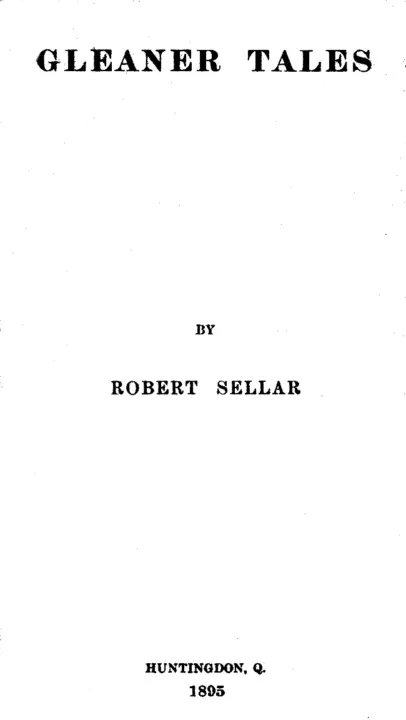
"Gleaner Tales" by Robert Sellar is a collection of historical tales written in the late 19th century. The work aims to capture pivotal moments in the early life of Canada, focusing on the experiences of settlers from the British Isles during the period of their first settlement. Among the characters are Lieutenant Morton and the Indigenous guide Hemlock, who navigate the complexities of war and survival against the backdrop of historical events involving the American invasion. The opening of "Gleaner Tales" presents a vivid and intense scene set in 1813, following Lieutenant Morton as he is ordered to escort an ammunition train during a time of conflict. We witness Morton's interactions with his comrades and the unfolding drama surrounding a spy's escape attempt and subsequent capture. As the narrative progresses, Morton's character develops amidst tension and action, particularly in his encounters with both the enemy and his companions. The stakes become dire when he is caught in a web of suspicion after an officer is found dead nearby, leading to his trial as a spy. The atmosphere of apprehension and the need for bravery resonate throughout the opening chapters, setting the stage for further exploration of themes like loyalty, sacrifice, and the turmoil of early Canadian history.
Introduction adapted from the source catalogue; source summaries may be automatically generated.
Free to read · English · 114,938 words · No account needed
MAKE TIME FOR A GOOD BOOK
On by default. Untick to stop anonymous reading totals. Each page counts after 10 seconds in view. How this works.
Anonymous counting is on unless you have switched it off.
“I’m glad to hear it. Weel, this being the first real warm day we’ve had, I tell’t Maggie to busk hersel’ and gang and veesit the neebors, for she’s been in a sad and sorrowfu’ way since her mither deed. She said she had nae heart to veesit, but wad tak a walk alang the river and be back to mak my denner. Her brithers we expect hame every day from takin’ rafts to Montreal.”
“I’ll go and seek her,” remarked Morton, as he turned, and the old man went on hoeing. Morton had gone about a mile, when his eye caught the flutter of the linen kerchief Maggie had pinned round her neck. She did not see him and as she sauntered before him, he marked her graceful carriage, and muttered to himself, “A woman worthy to woo and win.” Unwilling to startle her by going too near, he cried “Miss Forsyth.”
She paused, turned in astonishment, and as her color came and went
said, “Is it you?”
“Yes, and surely you will not shrink from me as you did when last we
met.”
She held out her hand and as he pressed it, simply said, “I’m glad you’re safe and well.”
“Have you no warmer greeting for me?”
“What warmer do you deserve?”
“My deservings are nothing, but your own kind heart might plead for me.”
“Oh, dear: the conceit of some men, who think they can pick up hearts on the banks of the Chateaugay as they would acorns.”
“And what of women who pitch back rings as if they stung them?”
Maggie laughed and replied, “The gift is measured with the giver.”
“When a gift is a token of the hour of peril, what then, my lady? Is it a thing to be scorned?”
“Something to be restored to the sender when he gets out of the trap, that he may bestow it on somebody else.”
“I swear I never cared for anybody else.”
“Who asked you? If you must needs confess, you should have visited the fathers at the Basin on your way here.”
“I’m Puritan enough to desire to confess direct to the one I have
offended.”
“So you have offended me!”
“You know I care for you.”
“How should I? From your many messages these last twenty months?”
Morton felt vexed and Maggie observed and enjoyed his perplexity. “Come,” she said, “it is wearing on to dinner-time and I know what soldiers’ appetites are. We had some soldier visitors who left us nothing. We will go home.”
“Not until I have said what I want to tell you,” he said warmly.
Your reading position is saved on this browser. Take it to another device with a library code. Reading pages adapt to text, rather than matching a printed edition.
BEHIND THE BOOK
This eBook is for the use of anyone anywhere in the United States and most other parts of the world at no cost and with almost no restrictions whatsoever. You may copy it, give it away or re-use it under the terms of the Project Gutenberg License included with this eBook or online at www.gutenberg.org. If you are not located in the United States, you will have to check the laws of the country where you are located before using this eBook. Read the source licence.
The original source file, including credits and licence, is retained by this library. Request an original-format copy at no charge. Please include the book title and Project Gutenberg identifier #66150.
KEEP YOUR CURIOSITY GOING
Cécile Tormay

Moritz Busch
Coulson Kernahan
John L. Ransom

Maurice Baring
Frances Wright