THE CLASSIC COLLECTION✦My diaries, being a personal narrative of events 1888-1914, Part 2 (1900-1914)CLASSIC FREE BOOKS
My diaries, being a personal narrative of events 1888-1914, Part 2 (1900-1914)
Wilfrid Scawen Blunt
THE CLASSIC COLLECTION · 1900
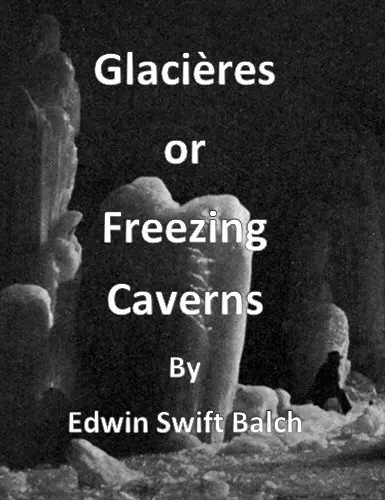
"Glacières; or, Freezing Caverns" by Edwin Swift Balch is a scientific publication written in the late 19th century. The book explores the phenomena of subterranean ice formations known as glacières, documenting the author's personal experiences and observations of various freezing caverns throughout Europe. Balch emphasizes the unique characteristics and environmental conditions that contribute to the formation and maintenance of these icy caves. At the start of the work, the author recounts his initial encounter with subterranean ice while descending King's Ravine on Mount Adams, where he was surprised to find ice present even in late summer. He then describes his travels through the Alps and visits to several glacières in France, capturing the details of each location's unique features, like ice columns and stalactites. This opening section not only sets the tone for an adventurous exploration of nature but also invites readers into a scientific inquiry about climatic conditions, geology, and the mesmerizing beauty found within these natural wonders.
Introduction adapted from the source catalogue; source summaries may be automatically generated.
Free to read · English · 80,213 words · No account needed
MAKE TIME FOR A GOOD BOOK
On by default. Untick to stop anonymous reading totals. Each page counts after 10 seconds in view. How this works.
Anonymous counting is on unless you have switched it off.
In the Heinrichs-Sohle in the Stockwerk near Altenberg.
In the Henneberg Stollen, on the Ingelbach, near Johanngeorgenstadt.
In the Weiss-Adler-Stollen, on the left declivity of the valley of the Schwarzwasser, above the Antonshütte.
Holes Holding Ice on the Saalberg. (Annalen der Physik und Chemie, 1850, LXXXI., page 579.)--These lie between Saalberg and the Burgk. Ice is found here on the surface from June to the middle of August. From the observations of Professor Hartenstein, Fugger deduces that this place must be the lower end of one or more windholes.
Millstone Quarry of Niedermendig. (M. A. Pictet, Mémoires de la Société d'Histoire Naturelle de Genève, 1821, vol. I., page 151.)--On the Niederrhein. There are many connecting pits and galleries here, in which ice has been found in the hottest days of summer as well as in March. The abandoned shafts are utilized as beer cellars.
Eisgrube on the Umpfen. (Voigt, Mineralogische Reisen durch das Herzogthum Weimar, 1785, vol. II., page 123.)--In the Rhöngebirge, twenty minutes from Kaltennordheim, are some irregular masses of columnar basalt, at an altitude of about 500 meters, among which abundant ice has been found up to late in the summer.
Cave near Muggendorf, Franconia.--The landlord of the Kurhaus Hotel at Muggendorf, told me that there was a small cave in the vicinity where there was ice in the winter and spring, but that it all melted away before August.
Cave on the Dürrberg. (Fugger, Eishöhlen, page 59.)--Near Zwickau in Bohemia. Small cave which sometimes contains ice.
The Schneebinge. (Lohman, Das Höhleneis, page 11.)--Near Platten in Bohemia. A small ice deposit in an old mine.
Ice among Basaltic Rocks on the Pleschiwitz. (Pleischl, in Poggendorff's Annalen der Physik und Chemie, vol. LIV., 1841, pages 292-299.)--Above Kameik near Leitmeritz in Bohemia. Professor Pleischl, in May, 1834, found ice under the rocks a little distance from the surface. The surface of the rocks was then warm. On the 21st of January, 1838, Professor Pleischl found snow on the outside of the rocks, but no ice underneath. He was assured by the people of the district that the hotter the summer, the more ice is found.
Glacière on the Zinkenstein. (Pleischl, in Poggendorff's Annalen der Physik und Chemie, vol. LIV., 1841, page 299).--The Zinkenstein is one of the highest points of the Vierzehnberge, in the Leitmeritz Kreis. There is a deep cleft in basalt, where ice has been found in summer.
Eislöcher on the Steinberg. (Pleischl, in Poggendorffs Annalen der Physik und Chemie, vol. LIV., 1841, page 299.)--In the Herrschaft Konoged. Small basalt talus where ice is found in the hottest weather.
Your reading position is saved on this browser. Take it to another device with a library code. Reading pages adapt to text, rather than matching a printed edition.
BEHIND THE BOOK
This eBook is for the use of anyone anywhere in the United States and most other parts of the world at no cost and with almost no restrictions whatsoever. You may copy it, give it away or re-use it under the terms of the Project Gutenberg License included with this eBook or online at www.gutenberg.org. If you are not located in the United States, you will have to check the laws of the country where you are located before using this eBook. Read the source licence.
The original source file, including credits and licence, is retained by this library. Request an original-format copy at no charge. Please include the book title and Project Gutenberg identifier #52216.
KEEP YOUR CURIOSITY GOING
Wilfrid Scawen Blunt
Wilfrid Scawen Blunt

E. W. (Edgar Watson) Howe
Francis Greenleaf Allinson & Anne C. E. (Anne Crosby Emery) Allinson
Cyrenus Cole

John Martineau