THE CLASSIC COLLECTION✦My diaries, being a personal narrative of events 1888-1914, Part 2 (1900-1914)CLASSIC FREE BOOKS
My diaries, being a personal narrative of events 1888-1914, Part 2 (1900-1914)
Wilfrid Scawen Blunt
THE CLASSIC COLLECTION · 1900
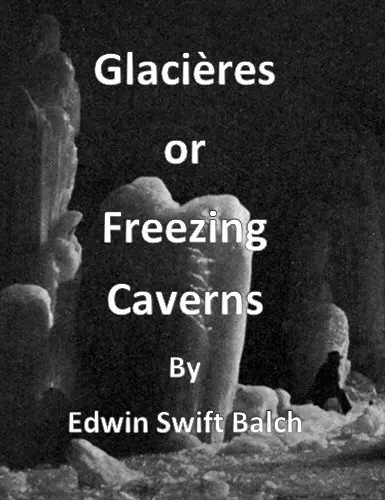
"Glacières; or, Freezing Caverns" by Edwin Swift Balch is a scientific publication written in the late 19th century. The book explores the phenomena of subterranean ice formations known as glacières, documenting the author's personal experiences and observations of various freezing caverns throughout Europe. Balch emphasizes the unique characteristics and environmental conditions that contribute to the formation and maintenance of these icy caves. At the start of the work, the author recounts his initial encounter with subterranean ice while descending King's Ravine on Mount Adams, where he was surprised to find ice present even in late summer. He then describes his travels through the Alps and visits to several glacières in France, capturing the details of each location's unique features, like ice columns and stalactites. This opening section not only sets the tone for an adventurous exploration of nature but also invites readers into a scientific inquiry about climatic conditions, geology, and the mesmerizing beauty found within these natural wonders.
Introduction adapted from the source catalogue; source summaries may be automatically generated.
Free to read · English · 80,213 words · No account needed
MAKE TIME FOR A GOOD BOOK
On by default. Untick to stop anonymous reading totals. Each page counts after 10 seconds in view. How this works.
Anonymous counting is on unless you have switched it off.
Eishöhle bei Roth.--Described in Part I., page 35.
Mines on the Eisenberg. (Fugger, Eishöhlen, page 59.)--These lie near Blankenburg in the Thüringer Wald and have been known to contain ice.
The Ziegenloch or Grosses Kalte Loch, and the Kleines Kalte Loch. (Behrens, Hercynia Curiosa, pages 68, 70.)--These lie near Questenberg in the Southern Harz Mountains, at an altitude of about 300 meters. The Grosses Loch is described as a sort of small pit some 8 meters deep, in one side of which opens a small fissure some 10 meters long. Ice has been found in this in April; Schwalbe found none there in July. The Kleines Loch was another small cold cave near the Ziegenloch, but it has been filled up. Behrens says that the dampness at the cave at Questenberg is precipitated as snow.
Holes with Ice near Sanct Blasien. (Fugger, Eishöhlen, page 109.)--In the Black Forest, among boulders at an altitude of 820 meters.
Holes with Ice near Hochenschwand. (Fugger, Eishöhlen, page 109.)--In the Black Forest, among boulders at an altitude of 820 meters.
Eisstollen and Eiskeller at the Dornburg. Described in Part I., page 59. (Poggendorff's Annalen der Physik und Chemie, Ergänzungsband, 1842, pages 517-519.)--Ice appears to have been discovered at the Dornburg in June, 1839. It was found from a depth of 60 centimeters down to 8 meters. The width of the ice-bearing talus was from 12 meters to 15 meters; and it is said that it becomes wider in winter and narrower in summer.
Beschertgluck Mine, Freiberg District. (Prestwich, Collected papers, etc., page 206.)--Mr. Prestwich quotes Daubuisson as having seen the shaft of the mine lined with ice to a depth of 80 toises (144 meters?).
Ice in the Zinc Mines on the Sauberg. (Reich, Beobachtungen über die Temperatur des Gesteines, 1834, pages 175 and 205.)--These are near Ehrenfriedersdorf in Saxony and formerly contained ice in winter. They are reported now to be destroyed.
The Garische Stollen. (Lohman, Das Höhleneis, etc., page 3.)--Near Ehrenfriedersdorf in the Freiwald. Lohman found much ice in this in January, less in March, and scarcely any in May.
The Ritterhöhle. (Lohman, Das Höhleneis, page 5.)--Near
Ehrenfriedersdorf in the Freiwald. Small ice deposit. The rock is
granite.
The Stulpnerhöhle. (Lohman, Das Höhleneis, page 6.)--Near the Ritterhöhle. Small ice deposit in granite rock.
Eisloch and Eishöhle near Geyer in Saxony. (Lohman, Das Höhleneis, page 7.)--These are in a place called die Binge. Both are small.
The Alte Thiele. (Lohman, Das Höhleneis, page 8.)--Near Buchholz in Saxony. Small ice deposit.
Mine Pits in the Saxon Erzgebirge. (Reich, Beobachtungen über die Temperatur des Gesteines, 1834.)--Extremely low temperatures have been found in several of these pits:--
In the Churprinz Friedrich August Erbstollen near Freiberg.
Your reading position is saved on this browser. Take it to another device with a library code. Reading pages adapt to text, rather than matching a printed edition.
BEHIND THE BOOK
This eBook is for the use of anyone anywhere in the United States and most other parts of the world at no cost and with almost no restrictions whatsoever. You may copy it, give it away or re-use it under the terms of the Project Gutenberg License included with this eBook or online at www.gutenberg.org. If you are not located in the United States, you will have to check the laws of the country where you are located before using this eBook. Read the source licence.
The original source file, including credits and licence, is retained by this library. Request an original-format copy at no charge. Please include the book title and Project Gutenberg identifier #52216.
KEEP YOUR CURIOSITY GOING
Wilfrid Scawen Blunt
Wilfrid Scawen Blunt

E. W. (Edgar Watson) Howe
Francis Greenleaf Allinson & Anne C. E. (Anne Crosby Emery) Allinson
Cyrenus Cole

John Martineau