READ · DISCOVER · ENJOYClassic literature · Always free
THE CLASSIC COLLECTION✦German FictionTheodor Fontane & Johann Wolfgang von Goethe & Gottfried Keller & Theodor StormCLASSIC FREE BOOKS

THE CLASSIC COLLECTION · 1917

German Fiction

"German Fiction" by Fontane, Goethe, Keller, and Storm is a collection of selected works from notable German authors written in the late 19th century. The compilation includes significant literary contributions from luminaries such as Johann Wolfgang von Goethe, Gottfried Keller, Theodor Storm, and Theodor Fontane, exploring complex themes of life, emotion, and character development within the context of German culture. The book likely delves into the internal struggles and nuanced experiences of its protagonists, inviting readers to reflect on deeper issues of existence and sentiment. The opening of the book presents a scholarly overview that examines the German novel's evolution and its intersections with international literature. It highlights the unique psychological depth characteristic of German literature, focusing on the internal emotional landscapes of characters more than on external action. Addressing the reader directly, it posits that German fiction often prefers psychological exploration over sensational narratives, appealing to those who appreciate intricate character studies and subtle developments over traditional plot-driven storytelling. The examination serves as a thoughtful introduction to the selected works, preparing readers for the emotional and intellectual depth they can expect from the writers featured in this anthology.

Introduction adapted from the source catalogue; source summaries may be automatically generated.

Start reading ↓

Free to read · English · 173,213 words · No account needed

MAKE TIME FOR A GOOD BOOK

German Fiction

On by default. Untick to stop anonymous reading totals. Each page counts after 10 seconds in view. How this works.

Anonymous counting is on unless you have switched it off.

German Fiction

The consolation Charlotte can bring to an invalid I experience from my own heart, which suffers more from her absence than many a poor creature lingering on a bed of sickness. She is gone to spend a few days in the town with a very worthy woman, who is given over by the physicians, and wishes to have Charlotte near her in her last moments. I accompanied her last week on a visit to the vicar of S----, a small village in the mountains, about a league hence. We arrived about four o'clock. Charlotte had taken her little sister with her. When we entered the vicarage court, we found the good old man sitting on a bench before the door, under the shade of two large walnut-trees. At the sight of Charlotte he seemed to gain new life, rose, forgot his stick, and ventured to walk towards her. She ran to him, and made him sit down again; then placing herself by his side, she gave him a number of messages from her father, and then caught up his youngest child,--a dirty, ugly little thing, the joy of his old age,--and kissed it. I wish you could have witnessed her attention to this old man,--how she raised her voice on account of his deafness; how she told him of healthy young people who had been carried off when it was least expected; praised the virtues of Carlsbad, and commended his determination to spend the ensuing summer there; and assured him that he looked better and stronger than he did when she saw him last. I, in the mean time, paid attention to his good lady. The old man seemed quite in spirits; and as I could not help admiring the beauty of the walnut-trees, which formed such an agreeable shade over our heads, he began, though with some little difficulty, to tell us their history. "As to the oldest," said he, "we do not know who planted it,--some say one clergyman, and some another; but the younger one, there behind us, is exactly the age of my wife,--fifty years old next October. Her father planted it in the morning, and in the evening she came into the world. My wife's father was my predecessor here, and I cannot tell you how fond he was of that tree; and it is fully as dear to me. Under the shade of that very tree, upon a log of wood, my wife was seated knitting when I, a poor student, came into this court for the first time, just seven and twenty years ago." Charlotte inquired for his daughter. He said she was gone with Herr Schmidt to the meadows, and was with the haymakers. The old man then resumed his story, and told us how his predecessor had taken a fancy to him, as had his daughter likewise; and how he had become first his curate, and subsequently his successor. He had scarcely finished his story when his daughter returned through the garden, accompanied by the above-mentioned Herr Schmidt. She welcomed Charlotte affectionately, and I confess I was much taken with her appearance. She was a lively-looking, good-humoured brunette, quite competent to amuse one for a short time in the country. Her lover (for such Herr Schmidt evidently appeared to be) was a polite, reserved personage, and would not join our conversation, notwithstanding all Charlotte's endeavours to draw him out. I was much annoyed at observing, by his countenance, that his silence did not arise from want of talent, but from caprice and ill-humour. This subsequently became very evident, when we set out to take a walk, and Frederica joining Charlotte, with whom I was talking, the worthy gentleman's face, which was naturally rather sombre, became so dark and angry that Charlotte was obliged to touch my arm and remind me that I was talking too much to Frederica. Nothing distresses me more than to see men torment each other; particularly when in the flower of their age, in the very season of pleasure, they waste their few short days of sunshine in quarrels and disputes, and only perceive their error when it is too late to repair it. This thought dwelt upon my mind; and in the evening, when we returned to the vicar's, and were sitting round the table with our bread and milk, the conversation turned on the joys and sorrows of the world, I could not resist the temptation to inveigh bitterly against ill-humour. "We are apt," said I, "to complain, but with very little cause, that our happy days are few and our evil days many. If our hearts were always disposed to receive the benefits Heaven sends us, we should acquire strength to support evil when it comes." "But," observed the vicar's wife, "we cannot always command our tempers, so much depends upon the constitution; when the body suffers, the mind is ill at ease." "I acknowledge that," I continued; "but we must consider such a disposition in the light of a disease, and inquire whether there is no remedy for it." "I should be glad to hear one," said Charlotte. "At least, I think very much depends upon ourselves; I know it is so with me. When anything annoys me, and disturbs my temper, I hasten into the garden, hum a couple of country dances, and it is all right with me directly." "That is what I meant," I replied. "Ill-humour resembles indolence: it is natural to us; but if once we have courage to exert ourselves, we find our work run fresh from our hands, and we experience in the activity from which we shrank a real enjoyment." Frederica listened very attentively; and the young man objected that we were not masters of ourselves, and still less so of our feelings. "The question is about a disagreeable feeling," I added, "from which every one would willingly escape, but none know their own power without trial. Invalids are glad to consult physicians, and submit to the most scrupulous regimen, the most nauseous medicines, in order to recover their health." I observed that the good old man inclined his head, and exerted himself to hear our discourse; so I raised my voice, and addressed myself directly to him. "We preach against a great many crimes," I observed, "but I never remember a sermon delivered against ill-humour." "That may do very well for your town clergymen," said he; "country people are never ill-humoured, though, indeed, it might be useful occasionally,--to my wife, for instance, and the judge." We all laughed, as did he likewise very cordially, till he fell into a fit of coughing, which interrupted our conversation for a time. Herr Schmidt resumed the subject. "You call ill-humour a crime," he remarked, "but I think you use too strong a term." "Not at all," I replied, "if that deserves the name which is so pernicious to ourselves and our neighbours. Is it not enough that we want the power to make one another happy,--must we deprive each other of the pleasure which we can all make for ourselves? Show me the man who has the courage to hide his ill-humour, who bears the whole burden himself without disturbing the peace of those around him. No; ill-humour arises from an inward consciousness of our own want of merit,--from a discontent which ever accompanies that envy which foolish vanity engenders. We see people happy whom we have not made so, and cannot endure the sight." Charlotte looked at me with a smile; she observed the emotion with which I spoke; and a tear in the eyes of Frederica stimulated me to proceed. "Woe unto those," I said, "who use their power over a human heart to destroy the simple pleasures it would naturally enjoy! All the favours, all the attentions, in the world cannot compensate for the loss of that happiness which a cruel tyranny has destroyed." My heart was full as I spoke. A recollection of many things which had happened pressed upon my mind, and filled my eyes with tears. "We should daily repeat to ourselves," I exclaimed, "that we should not interfere with our friends, unless to leave them in possession of their own joys, and increase their happiness by sharing it with them! But when their souls are tormented by a violent passion, or their hearts rent with grief, is it in your power to afford them the slightest consolation?

Your reading position is saved on this browser. Take it to another device with a library code. Reading pages adapt to text, rather than matching a printed edition.

More from this author

BEHIND THE WORDS

About Gottfried Keller

Gottfried Keller (1819–1890). Explore German Fiction, Seldwyla Folks: Three Singular Tales in this collection. These books span classic fiction.

Explore this author’s books →

About Johann Wolfgang von Goethe

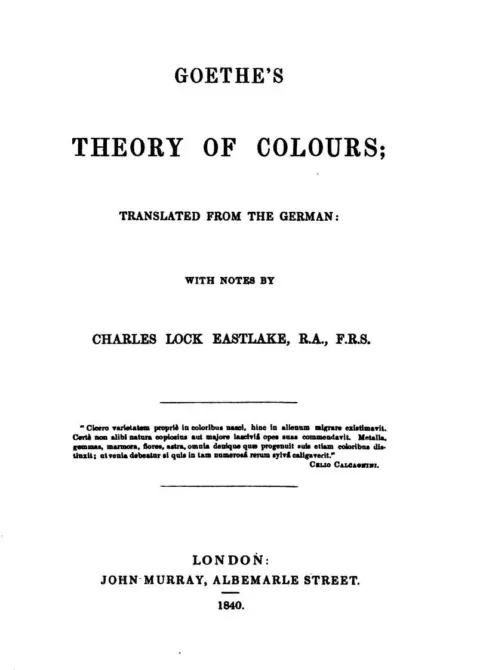
Johann Wolfgang von Goethe (1749–1832). Explore The princess and the tiger, Goethe’s literary essays, Goethe’s Theory of Colours and other works in this collection. These books span classic fiction, essays & ideas, history.
Explore this author’s books →

About Theodor Fontane

Theodor Fontane (1819–1898). Explore German Fiction in this collection. These books span classic fiction.

Explore this author’s books →

About Theodor Storm

Theodor Storm (1817–1888). Explore German Fiction in this collection. These books span classic fiction.

Explore this author’s books →

THE READERS’ VERDICT

How did this story stay with you?

Not rated yet
Your rating for German Fiction

Be the first to share your verdict.

One rating per browser, which you can change or remove. A necessary browser identifier remembers your vote. How ratings work

A GOOD STORY DESERVES COMPANY

Pass this book along.

A great read is even better when it’s shared.

SEND A LITTLE INSPIRATION

Share this book

BEHIND THE BOOK

Edition & source details.

Title
German Fiction
Author
Theodor Fontane & Johann Wolfgang von Goethe & Gottfried Keller & Theodor Storm
Publication year
1917
Digital edition publisher
Project Gutenberg
Gutenberg release date
2010-11-30
Language
English
Source edition imprint
Not stated in source catalogue
Source identifier
Project Gutenberg #34506
Contributors
William Allan Neilson (edt)

Public-domain source & licence

This eBook is for the use of anyone anywhere in the United States and most other parts of the world at no cost and with almost no restrictions whatsoever. You may copy it, give it away or re-use it under the terms of the Project Gutenberg License included with this eBook or online at www.gutenberg.org. If you are not located in the United States, you will have to check the laws of the country where you are located before using this eBook. Read the source licence.

Full source licence and obtaining an original copy

The original source file, including credits and licence, is retained by this library. Request an original-format copy at no charge. Please include the book title and Project Gutenberg identifier #34506.

the full Project Gutenberg License must appear
prominently whenever any copy of a Project Gutenberg work (any work
on which the phrase “Project Gutenberg” appears, or with which the
phrase “Project Gutenberg” is associated) is accessed, displayed,
performed, viewed, copied or distributed:

This eBook is for the use of anyone anywhere in the United States and most
other parts of the world at no cost and with almost no restrictions
whatsoever. You may copy it, give it away or re-use it under the terms
of the Project Gutenberg™ License included with this eBook or online
at www.gutenberg.org. If you
are not located in the United States, you will have to check the laws
of the country where you are located before using this eBook.

1.E.2. If an individual Project Gutenberg electronic work is
derived from texts not protected by U.S. copyright law (does not
contain a notice indicating that it is posted with permission of the
copyright holder), the work can be copied and distributed to anyone in
the United States without paying any fees or charges. If you are
redistributing or providing access to a work with the phrase “Project
Gutenberg” associated with or appearing on the work, you must comply
either with the requirements of paragraphs 1.E.1 through 1.E.7 or
obtain permission for the use of the work and the Project Gutenberg
trademark as set forth in paragraphs 1.E.8 or 1.E.9.

1.E.3. If an individual Project Gutenberg electronic work is posted
with the permission of the copyright holder, your use and distribution
must comply with both paragraphs 1.E.1 through 1.E.7 and any
additional terms imposed by the copyright holder. Additional terms
will be linked to the Project Gutenberg License for all works
posted with the permission of the copyright holder found at the
beginning of this work.

1.E.4. Do not unlink or detach or remove the full Project Gutenberg
License terms from this work, or any files containing a part of this
work or any other work associated with Project Gutenberg.

1.E.5. Do not copy, display, perform, distribute or redistribute this
electronic work, or any part of this electronic work, without
prominently displaying the sentence set forth in paragraph 1.E.1 with
active links or immediate access to the full terms of the Project
Gutenberg License.

1.E.6. You may convert to and distribute this work in any binary,
compressed, marked up, nonproprietary or proprietary form, including
any word processing or hypertext form. However, if you provide access
to or distribute copies of a Project Gutenberg work in a format
other than “Plain Vanilla ASCII” or other format used in the official
version posted on the official Project Gutenberg website
(www.gutenberg.org), you must, at no additional cost, fee or expense
to the user, provide a copy, a means of exporting a copy, or a means
of obtaining a copy upon request, of the work in its original “Plain
Vanilla ASCII” or other form. Any alternate format must include the
full Project Gutenberg License as specified in paragraph 1.E.1.

1.E.7. Do not charge a fee for access to, viewing, displaying,
performing, copying or distributing any Project Gutenberg works
unless you comply with paragraph 1.E.8 or 1.E.9.

1.E.8. You may charge a reasonable fee for copies of or providing
access to or distributing Project Gutenberg electronic works
provided that:

• You pay a royalty fee of 20% of the gross profits you derive from
the use of Project Gutenberg works calculated using the method
you already use to calculate your applicable taxes. The fee is owed
to the owner of the Project Gutenberg trademark, but he has
agreed to donate royalties under this paragraph to the Project
Gutenberg Literary Archive Foundation. Royalty payments must be paid
within 60 days following each date on which you prepare (or are
legally required to prepare) your periodic tax returns. Royalty
payments should be clearly marked as such and sent to the Project
Gutenberg Literary Archive Foundation at the address specified in
Section 4, “Information about donations to the Project Gutenberg
Literary Archive Foundation.”

• You provide a full refund of any money paid by a user who notifies
you in writing (or by e-mail) within 30 days of receipt that s/he
does not agree to the terms of the full Project Gutenberg™
License. You must require such a user to return or destroy all
copies of the works possessed in a physical medium and discontinue
all use of and all access to other copies of Project Gutenberg™
works.

• You provide, in accordance with paragraph 1.F.3, a full refund of
any money paid for a work or a replacement copy, if a defect in the
electronic work is discovered and reported to you within 90 days of
receipt of the work.

• You comply with all other terms of this agreement for free
distribution of Project Gutenberg™ works.


1.E.9. If you wish to charge a fee or distribute a Project
Gutenberg™ electronic work or group of works on different terms than
are set forth in this agreement, you must obtain permission in writing
from the Project Gutenberg Literary Archive Foundation, the manager of
the Project Gutenberg™ trademark. Contact the Foundation as set
forth in Section 3 below.

1.F.

1.F.1. Project Gutenberg volunteers and employees expend considerable
effort to identify, do copyright research on, transcribe and proofread
works not protected by U.S. copyright law in creating the Project
Gutenberg™ collection. Despite these efforts, Project Gutenberg™
electronic works, and the medium on which they may be stored, may
contain “Defects,” such as, but not limited to, incomplete, inaccurate
or corrupt data, transcription errors, a copyright or other
intellectual property infringement, a defective or damaged disk or
other medium, a computer virus, or computer codes that damage or
cannot be read by your equipment.

1.F.2. LIMITED WARRANTY, DISCLAIMER OF DAMAGES - Except for the “Right
of Replacement or Refund” described in paragraph 1.F.3, the Project
Gutenberg Literary Archive Foundation, the owner of the Project
Gutenberg™ trademark, and any other party distributing a Project
Gutenberg™ electronic work under this agreement, disclaim all
liability to you for damages, costs and expenses, including legal
fees. YOU AGREE THAT YOU HAVE NO REMEDIES FOR NEGLIGENCE, STRICT
LIABILITY, BREACH OF WARRANTY OR BREACH OF CONTRACT EXCEPT THOSE
PROVIDED IN PARAGRAPH 1.F.3. YOU AGREE THAT THE FOUNDATION, THE
TRADEMARK OWNER, AND ANY DISTRIBUTOR UNDER THIS AGREEMENT WILL NOT BE
LIABLE TO YOU FOR ACTUAL, DIRECT, INDIRECT, CONSEQUENTIAL, PUNITIVE OR
INCIDENTAL DAMAGES EVEN IF YOU GIVE NOTICE OF THE POSSIBILITY OF SUCH
DAMAGE.

1.F.3. LIMITED RIGHT OF REPLACEMENT OR REFUND - If you discover a
defect in this electronic work within 90 days of receiving it, you can
receive a refund of the money (if any) you paid for it by sending a
written explanation to the person you received the work from. If you
received the work on a physical medium, you must return the medium
with your written explanation. The person or entity that provided you
with the defective work may elect to provide a replacement copy in
lieu of a refund. If you received the work electronically, the person
or entity providing it to you may choose to give you a second
opportunity to receive the work electronically in lieu of a refund. If
the second copy is also defective, you may demand a refund in writing
without further opportunities to fix the problem.

1.F.4. Except for the limited right of replacement or refund set forth
in paragraph 1.F.3, this work is provided to you ‘AS-IS’, WITH NO
OTHER WARRANTIES OF ANY KIND, EXPRESS OR IMPLIED, INCLUDING BUT NOT
LIMITED TO WARRANTIES OF MERCHANTABILITY OR FITNESS FOR ANY PURPOSE.

1.F.5. Some states do not allow disclaimers of certain implied
warranties or the exclusion or limitation of certain types of
damages. If any disclaimer or limitation set forth in this agreement
violates the law of the state applicable to this agreement, the
agreement shall be interpreted to make the maximum disclaimer or
limitation permitted by the applicable state law. The invalidity or
unenforceability of any provision of this agreement shall not void the
remaining provisions.

1.F.6. INDEMNITY - You agree to indemnify and hold the Foundation, the
trademark owner, any agent or employee of the Foundation, anyone
providing copies of Project Gutenberg™ electronic works in
accordance with this agreement, and any volunteers associated with the
production, promotion and distribution of Project Gutenberg™
electronic works, harmless from all liability, costs and expenses,
including legal fees, that arise directly or indirectly from any of
the following which you do or cause to occur: (a) distribution of this
or any Project Gutenberg work, (b) alteration, modification, or
additions or deletions to any Project Gutenberg work, and (c) any
Defect you cause.

Section 2. Information about the Mission of Project Gutenberg

Project Gutenberg is synonymous with the free distribution of
electronic works in formats readable by the widest variety of
computers including obsolete, old, middle-aged and new computers. It
exists because of the efforts of hundreds of volunteers and donations
from people in all walks of life.

Volunteers and financial support to provide volunteers with the
assistance they need are critical to reaching Project Gutenberg’s
goals and ensuring that the Project Gutenberg collection will
remain freely available for generations to come. In 2001, the Project
Gutenberg Literary Archive Foundation was created to provide a secure
and permanent future for Project Gutenberg and future
generations. To learn more about the Project Gutenberg Literary
Archive Foundation and how your efforts and donations can help, see
Sections 3 and 4 and the Foundation information page at www.gutenberg.org.

Section 3. Information about the Project Gutenberg Literary Archive Foundation

The Project Gutenberg Literary Archive Foundation is a non-profit
501(c)(3) educational corporation organized under the laws of the
state of Mississippi and granted tax exempt status by the Internal
Revenue Service. The Foundation’s EIN or federal tax identification
number is 64-6221541. Contributions to the Project Gutenberg Literary
Archive Foundation are tax deductible to the full extent permitted by
U.S. federal laws and your state’s laws.

The Foundation’s business office is located at 41 Watchung Plaza #516,
Montclair NJ 07042, USA, +1 (862) 621-9288. Email contact links and up
to date contact information can be found at the Foundation’s website
and official page at www.gutenberg.org/contact

Section 4. Information about Donations to the Project Gutenberg
Literary Archive Foundation

Project Gutenberg™ depends upon and cannot survive without widespread
public support and donations to carry out its mission of
increasing the number of public domain and licensed works that can be
freely distributed in machine-readable form accessible by the widest
array of equipment including outdated equipment. Many small donations
($1 to $5,000) are particularly important to maintaining tax exempt
status with the IRS.

The Foundation is committed to complying with the laws regulating
charities and charitable donations in all 50 states of the United
States. Compliance requirements are not uniform and it takes a
considerable effort, much paperwork and many fees to meet and keep up
with these requirements. We do not solicit donations in locations
where we have not received written confirmation of compliance. To SEND
DONATIONS or determine the status of compliance for any particular state
visit www.gutenberg.org/donate.

While we cannot and do not solicit contributions from states where we
have not met the solicitation requirements, we know of no prohibition
against accepting unsolicited donations from donors in such states who
approach us with offers to donate.

International donations are gratefully accepted, but we cannot make
any statements concerning tax treatment of donations received from
outside the United States. U.S. laws alone swamp our small staff.

Please check the Project Gutenberg web pages for current donation
methods and addresses. Donations are accepted in a number of other
ways including checks, online payments and credit card donations. To
donate, please visit: www.gutenberg.org/donate.

Section 5. General Information About Project Gutenberg electronic works

Professor Michael S. Hart was the originator of the Project
Gutenberg concept of a library of electronic works that could be
freely shared with anyone. For forty years, he produced and
distributed Project Gutenberg eBooks with only a loose network of
volunteer support.

Project Gutenberg eBooks are often created from several printed
editions, all of which are confirmed as not protected by copyright in
the U.S. unless a copyright notice is included. Thus, we do not
necessarily keep eBooks in compliance with any particular paper
edition.

Most people start at our website which has the main PG search
facility: www.gutenberg.org.

This website includes information about Project Gutenberg,
including how to make donations to the Project Gutenberg Literary
Archive Foundation, how to help produce our new eBooks, and how to
subscribe to our email newsletter to hear about new eBooks.


KEEP YOUR CURIOSITY GOING

Your next chapter awaits.


