THE CLASSIC COLLECTION✦My diaries, being a personal narrative of events 1888-1914, Part 2 (1900-1914)CLASSIC FREE BOOKS
My diaries, being a personal narrative of events 1888-1914, Part 2 (1900-1914)
Wilfrid Scawen Blunt
THE CLASSIC COLLECTION · 1907
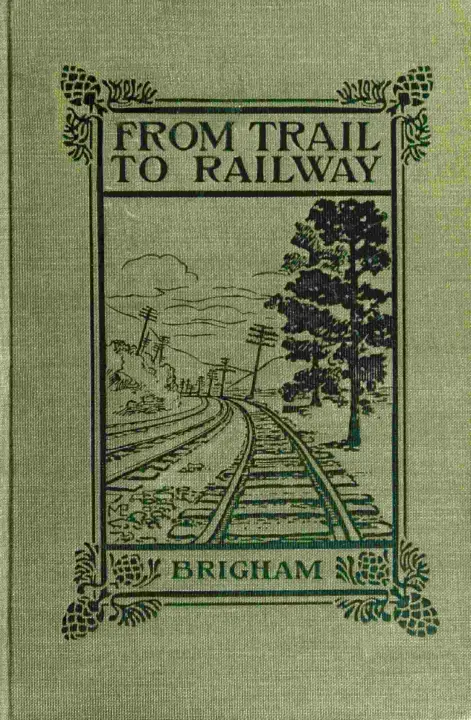
"From Trail to Railway through the Appalachians" by Albert Perry Brigham is a historical account written in the early 20th century. The book explores the evolution of transportation in the eastern United States, particularly focusing on the transition from trails and early roads to railways. It delves into geographic and historical contexts, aiming to connect physical landscapes with human endeavors throughout this transformative period. The opening of the narrative sets the stage by detailing the significance of Boston and the challenges faced in trade and transportation in the aftermath of the American Revolution. Brigham introduces the natural topography of the Berkshires, emphasizing the difficulties in crossing the rugged mountains that separated New England from the burgeoning western territories. He also highlights early efforts, such as road construction and early rail proposals, to overcome these barriers and the eventual incremental growth of a better-connected America that thrived on commerce and travel. This initial chapter establishes the foundation for understanding the intertwined nature of geography, history, and development in the region.
Introduction adapted from the source catalogue; source summaries may be automatically generated.
Free to read · English · 41,122 words · No account needed
MAKE TIME FOR A GOOD BOOK
On by default. Untick to stop anonymous reading totals. Each page counts after 10 seconds in view. How this works.
Anonymous counting is on unless you have switched it off.
Roads, in New England, 4, 6, 7;
stage, 64;
development of, 72;
indifference to, 87;
national interest in, 92;
Braddock’s, 90;
Cumberland, 93;
Frederick, 93;
National, 91, 93, 96;
Wilderness (Boone’s trail, Kentucky road, Virginia road, Caintuck
Hog road), 127, 149
Roanoke, 134
Robertson, James, goes to Watauga, 137;
pacifies the Indians, 139;
helps protect the new settlement, 155;
founds Nashborough, 163;
trusted by the people, 164;
portrait, 164;
ability, 172
Rochester, N.Y., 25, 52
Rochester, Colonel, 26, 41, 61, 132
“Rolling roads,” 88
Rome, 22, 46, 61
Roosevelt, Theodore, cited, 137, 140, 160
Ross’s Landing, 174
Sails on cars, 105
St. Clair, General, 124
St. Leger, General, 33, 61
Salt, 27, 61, 113
Samp mortars, 21
San Francisco, 109
Saratoga, 38
Schenectady, 19, 42, 47, 61
“Schonowe,” 19
Schuyler, Fort (Utica), 23
Schuyler, Han Yost, 37
Schuylerville, 38
Scotch-Irish, 66, 136
Seneca river, 24
Seneca lake, 25
Settlement:
in New England, 4;
in New York, 14, 24;
in Pennsylvania, 66;
in the Ohio country, 117;
in Tennessee, 135, 170;
in Kentucky, 148
Sevier, John, goes to Watauga, 138;
fights on the frontier, 155;
plans to attack Ferguson, 160;
returns home, 162;
portrait, 162;
monument to, 165;
other honors, 166;
on the Tennessee river, 172
Shelby, Isaac, 155, 159, 165
Shelbyville, 165
Shenandoah valley, 88, 107, 130, 132
Sheridan, 133
Shippensburg, Pa., 71
Shreve, Captain, 117
Slate, 104
“Smoky City, The,” 120
South Mountain, Pa., 132
Southern Pacific Railway, 22
Southern Railway, 134, 170
Speed of early trains, 105
Spotswood, Alexander, 129
Springfield, Mass., 6, 10
Stanwix, Fort, 22, 23, 34, 37, 61, 149
Stark, General, 38
Staunton, Va., 135
Steamboats, 118
Stephenson, George, 53
Stillwater, 38
Susquehanna valley, 26, 41, 46, 104
Swift Run Gap, 130
Sycamore Shoals, 160
Sydney, Australia, 109
Syracuse, 27, 52, 57, 61
Tarleton, Colonel, 159
Teamsters of early days, 64, 69
Tennessee, 134, 154, 164, 172;
University of, 170
Tennessee river, 134, 142, 163, 167, 172, 174
Ticonderoga, 32, 37, 38
Tidewater country, 87, 130
Timber, 104, 180
Toll houses, 68, 87
Toll rates, 94
Tom Thumb, 106
Trails, old, 4, 6, 17, 19, 22, 25, 28, 72
Tramways in England, 54
Transylvania Company, 148
Travel, early, 5, 22, 56, 64, 91
Trow Plat, 23
Trunk line, 57
“Tubal Cain of Virginia,” 129
Tudor, Frederick, 4
Twentieth Century Limited, 56
Union Pacific Railroad, 109
University of Tennessee, 170
Utica, 21, 23, 37, 57, 61
Valley of east Tennessee, 135;
of Virginia, 132
Valley, the Great, 71, 130, 132, 134, 136, 139
Valleys as natural roads, 5–7, 16, 17, 22, 24, 26, 31, 41, 126, 133,
142, 152, 156
Van Curler, Arent, 17, 19, 57, 61
Vanderbilt, Cornelius, 58
Ventura, the, 109
Vincennes, Ind., 158
Virginia, 129, 154;
valley of, 132
Wabash Railway Company, 102
Wabash river, 158
Walker, Dr. Thomas, 142
Ward, Nancy, 139
Washington, D.C., 91, 93, 94
Washington, George, 41, 60, 86, 112, 133;
part taken by, in road making, 88–92, 98
Washington, Lawrence, 89
Watauga Settlement, 135–141, 144, 146, 159
Waterford, 47
West, the, 40, 60
Westfield valley, 6
West Shore Railway, 59
Wheeling, 94, 107, 122
White, Hugh, 21
Whitesboro, 21
Wilderness Road, 127, 149
Willett, Captain Marinus, 35
William and Mary College, 142
Wills creek, 89, 102
Wills mountain, 93
Winchester, Va., 132, 135
Windmills, Dutch, 15
Wood creek, 22, 42
Yadkin valley, North Carolina, 146
Transcriber’s Notes
Punctuation, hyphenation, and spelling were made consistent when a predominant preference was found in the original book; otherwise they were not changed.
Simple typographical errors were corrected; unbalanced quotation
marks were remedied when the change was obvious, and otherwise left
unbalanced.
Illustrations in this eBook have been positioned between paragraphs and outside quotations. In versions of this eBook that support hyperlinks, the page references in the List of Illustrations lead to the corresponding illustrations.
Portions of the captions of some illustrations were taken from the List
of Illustrations.
The index was not checked for proper alphabetization or correct page
references.
Page 18: The pronunciation mark above the first “o” in “ĭr-ṓ-kwoi´” was an inverted “T”, which was only visually approximated here.
Your reading position is saved on this browser. Take it to another device with a library code. Reading pages adapt to text, rather than matching a printed edition.
BEHIND THE BOOK
This eBook is for the use of anyone anywhere in the United States and most other parts of the world at no cost and with almost no restrictions whatsoever. You may copy it, give it away or re-use it under the terms of the Project Gutenberg License included with this eBook or online at www.gutenberg.org. If you are not located in the United States, you will have to check the laws of the country where you are located before using this eBook. Read the source licence.
The original source file, including credits and licence, is retained by this library. Request an original-format copy at no charge. Please include the book title and Project Gutenberg identifier #71908.
KEEP YOUR CURIOSITY GOING
Wilfrid Scawen Blunt
Wilfrid Scawen Blunt

E. W. (Edgar Watson) Howe
Cécile Tormay

Moritz Busch
John L. Ransom