THE CLASSIC COLLECTION✦Andersonville diaryCLASSIC FREE BOOKS
Andersonville diary
John L. Ransom
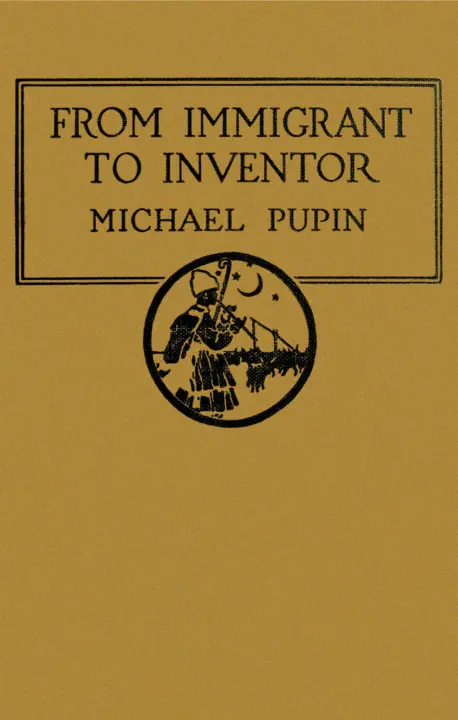
THE CLASSIC COLLECTION · 1922
"From Immigrant to Inventor" by Michael Pupin is a memoir written in the early 20th century, reflecting on the author’s remarkable journey from Serbia to becoming a prominent American scientist and inventor. The book chronicles Pupin's early life as an impoverished immigrant who arrives in America with only five cents, his formative experiences in schooling, and the cultural challenges he faced and overcame through perseverance and ingenuity. The opening of the memoir reveals Pupin's arrival in America and his initial struggles. He describes his first experiences as an immigrant, highlighting his confidence despite a lack of financial resources, and it sets the tone for his narrative of growth and adaptation. Pupin conveys the importance of his Serbian heritage and the lessons learned from his mother and the villagers of Idvor, which shaped his character. This portion also touches on the themes of resilience, the immigrant experience, and the pursuit of education amid adversity, foreshadowing his future impact on American science.
Introduction adapted from the source catalogue; source summaries may be automatically generated.
Free to read · English · 130,353 words · No account needed
MAKE TIME FOR A GOOD BOOK
On by default. Untick to stop anonymous reading totals. Each page counts after 10 seconds in view. How this works.
Anonymous counting is on unless you have switched it off.
The college atmosphere which I found at Columbia at that time gave me a new sensation. I did not understand it at first and misinterpreted many things. The few days preceding the opening of the college sessions I spent chasing around for a boarding-house, while my classmates were hanging around the college buildings, making arrangements to join this or that fraternity, and also solidifying the line of defense of the freshmen against the hostile sophomores. There was a lively process of organization going on under the leadership of groups of boys who came from the same preparatory schools. These groups led and the others were expected to follow without a murmur. Insubordination or even indifference was condemned as lack of college spirit. This spirit was necessary among the freshmen particularly, because, as I was informed later, there was a great common danger--the sophomores! I saw some of this feverish activity going on, but did not understand its meaning and hence remained outside of it, as if I were a stranger and not a member of the freshman class, which I heard described, by the freshmen themselves, as the best freshman class in the history of Columbia. The sophomores denied this in a most provoking manner; hence the hostility. Nobody paid any attention to me; nobody knew me, because I did not come from any of the preparatory schools which prepared boys for Columbia. One day I saw on the campus two huge waves of lively youngsters beating against each other just like inrolling waves of the sea lifting on their backs the returning waves which had been reflected from the cliffs of the shore. The freshmen were defending a cane against fierce attacks of the sophomores. It was the historic Columbia cane rush, I was told by Michael, the college janitor, who stood alongside of me as I looked on. It was not a real fight resulting in broken noses or blackened eyes, but just a most vigorous push-and-pull contest, the sophomores trying to take possession of a cane which a strong freshman, surrounded by a stalwart body-guard of freshmen, was holding and guarding just as a guard of fanatic monks would defend the sacred relics of a great saint. This freshmen group was the centre of the scrimmage and it stood there like a high rock in the midst of an angry sea. Coats and shirts were torn off the backs of the brave fighters, some attacking and others defending the central group, but not a single ugly swear-word was heard nor did I see a single sign of intentional bloodshed. Members of the junior and senior classes watched as umpires. Michael, the janitor, who knew everybody on the college campus as a shepherd knows his sheep, was not quite certain about my identity. He asked me whether I was a freshman, and when I said “yes,” he asked me why in the world I was not in the rush, defending the freshmen body-guard. He looked so anxious and worried that I felt sure of being guilty of some serious offense against old Columbia traditions. I immediately took off my coat and stiff shirt and plunged into the surging waves of sophomores and freshmen and had almost reached the central body-guard of freshmen, eager to join in its defense, when a sophomore, named Frank Henry, grabbed me and pulled me back, telling me that I had no business to cross the line of umpires at that late moment. I did not know the rules of the game and shoved him aside and we clinched. He was the strongest man in Columbia College, as I learned later, but my kindling-wood operations on the banks of the Passaic River had made me a stiff opponent. We wrestled and wrestled and would have wrestled till sunset like Prince Marco and the Arab Moussa Kessedjia in the old Serbian ballads, if the umpires had not proclaimed the cane rush a draw. The main show being over, the side show which Henry and I were keeping up had no further useful purpose to serve, and we stopped and shook hands. He was glad to stop, he admitted, and so was I, but he told my classmates that “if that terrible Turk had been selected a member of the freshmen body-guard the result of the cane rush might have been different.” I told him that I was a Serb, and not a Turk, and he apologized, saying that he could never draw very fine distinctions between the various races in the Balkans. “But, whatever race you are,” said he, “you will be a good fellow if you will learn to play the game.” Splendid advice from a college boy! “Play the game,” what a wonderful phrase! I studied it long, and the more I thought about it the more I was convinced that one aspect of the history of this country with all its traditions is summed up in these three words. No foreigner can understand this country who does not know the full meaning of this phrase, which I first heard from a Columbia College youngster. No foreign language can so translate the phrase as to reproduce its brevity and at the same time convey its full meaning. But, when I heard it, I thought of the bootblacks and newsboys who, five years previously, had acted as umpires when I defended my right to wear a red fez. To “play the game” according to the best traditions of the land which offered me all of its opportunities was always my idea of Americanization. But how many immigrants to this land can be made to understand this?
Your reading position is saved on this browser. Take it to another device with a library code. Reading pages adapt to text, rather than matching a printed edition.
BEHIND THE BOOK
This eBook is for the use of anyone anywhere in the United States and most other parts of the world at no cost and with almost no restrictions whatsoever. You may copy it, give it away or re-use it under the terms of the Project Gutenberg License included with this eBook or online at www.gutenberg.org. If you are not located in the United States, you will have to check the laws of the country where you are located before using this eBook. Read the source licence.
The original source file, including credits and licence, is retained by this library. Request an original-format copy at no charge. Please include the book title and Project Gutenberg identifier #66886.
KEEP YOUR CURIOSITY GOING
John L. Ransom

Herman W. Mudgett

Harriet Monroe
Daniel Dulany Addison
Charles Lanman

Harold Rosher