READ · DISCOVER · ENJOYClassic literature · Always free
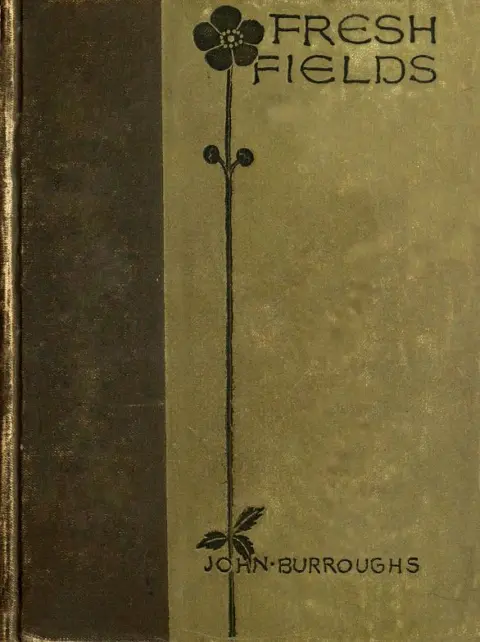
Fresh Fields — digital edition cover

THE CLASSIC COLLECTION · 1884

Fresh Fields

"Fresh Fields" by John Burroughs is a travel narrative written in the late 19th century. The book primarily explores the author’s impressions of nature across England and Scotland, offering insights into the scenery, flora, fauna, and cultural landmarks, intertwining personal reflections with vivid descriptions. The opening of the narrative sets the tone for a reflective and sensory journey, as the author begins his travels by describing the intoxicating scent of peat in Ireland, which evokes a sense of nostalgia. Upon arriving in Scotland, he expresses a deep appreciation for the lush, verdant landscapes, contrasting them with the more rugged terrains of America. He vividly paints a picture of the pastoral charm found along the Clyde River, where he observes the harmonious coexistence of nature and industry. Burroughs reflects on various experiences, such as his encounters with local wildlife and the beauty of the English countryside, capturing not just the sights, but also the emotions and memories they evoke within him. The opening thus introduces readers to a work rich in nature writing, emphasizing the personal connection between the observer and the observed.

Introduction adapted from the source catalogue; source summaries may be automatically generated.

Start reading ↓

Free to read · English · 73,636 words · No account needed

MAKE TIME FOR A GOOD BOOK

Fresh Fields

On by default. Untick to stop anonymous reading totals. Each page counts after 10 seconds in view. How this works.

Anonymous counting is on unless you have switched it off.

Fresh Fields

Presently my companion pointed out to me a small wood below the road that had a wide fringe of bushes and saplings connecting it with a meadow, amid which stood the tree-embowered house of a city man, where he had heard the nightingale in the morning; and then, farther along, showed me, near his own cottage, where he had heard one the evening before. It was now only six o'clock, and I had two or three hours to wait before I could reasonably expect to hear her. "It gets to be into the hevening," said my new friend, "when she sings the most, you know." I whiled away the time as best I could. If I had been an artist, I should have brought away a sketch of a picturesque old cottage near by, that bore the date of 1688 on its wall. I was obliged to keep moving most of the time to keep warm. Yet the "no-see-'ems," or midges, annoyed me, in a temperature which at home would have chilled them buzzless and biteless. Finally, I leaped the smooth masonry of the stone wall and ambushed myself amid the tall ferns under a pine-tree, where the nightingale had been heard in the morning. If the keeper had seen me, he would probably have taken me for a poacher. I sat shivering there till nine o'clock, listening to the cooing of the wood-pigeons, watching the motions of a jay that, I suspect, had a nest near by, and taking note of various other birds. The song-thrush and the robins soon made such a musical uproar along the borders of a grove, across an adjoining field, as quite put me out. It might veil and obscure the one voice I wanted to hear. The robin continued to sing quite into the darkness. This bird is related to the nightingale, and looks and acts like it at a little distance; and some of its notes are remarkably piercing and musical. When my patience was about exhausted, I was startled by a quick, brilliant call or whistle, a few rods from me, that at once recalled my barber with his blade of grass, and I knew my long-sought bird was inflating her throat. How it woke me up! It had the quality that startles; it pierced the gathering gloom like a rocket. Then it ceased. Suspecting I was too near the singer, I moved away cautiously, and stood in a lane beside the wood, where a loping hare regarded me a few paces away. Then my singer struck up again, but I could see did not let herself out; just tuning her instrument, I thought, and getting ready to transfix the silence and the darkness. A little later, a man and boy came up the lane. I asked them if that was the nightingale singing; they listened, and assured me it was none other. "Now she's on, sir; now she's on. Ah! but she don't stick. In May, sir, they makes the woods all heccho about here. Now she's on again; that's her, sir; now she's off; she won't stick." And stick she would not. I could hear a hoarse wheezing and clucking sound beneath her notes, when I listened intently. The man and boy moved away. I stood mutely invoking all the gentle divinities to spur the bird on. Just then a bird like our hermit thrush came quickly over the hedge a few yards below me, swept close past my face, and back into the thicket. I had been caught listening; the offended bird had found me taking notes of her dry and worn-out pipe there behind the hedge, and the concert abruptly ended; not another note; not a whisper. I waited a long time and then moved off; then came back, implored the outraged bird to resume; then rushed off, and slammed the door, or rather the gate, indignantly behind me. I paused by other shrines, but not a sound. The cottager had told me of a little village three miles beyond, where there were three inns, and where I could probably get lodgings for the night. I walked rapidly in that direction; committed myself to a footpath; lost the trail, and brought up at a little cottage in a wide expanse of field or common, and by the good woman, with a babe in her arms, was set right again. I soon struck the highway by the bridge, as I had been told, and a few paces brought me to the first inn. It was ten o'clock, and the lights were just about to be put out, as the law or custom is in country inns. The landlady said she could not give me a bed; she had only one spare room, and that was not in order, and she should not set about putting it in shape at that hour; and she was short and sharp about it, too. I hastened on to the next one. The landlady said she had no sheets, and the bed was damp and unfit to sleep in. I protested that I thought an inn was an inn, and for the accommodation of travelers. But she referred me to the next house. Here were more people, and more the look and air of a public house. But the wife (the man does not show himself on such occasions) said her daughter had just got married and come home, and she had much company and could not keep me. In vain I urged my extremity; there was no room. Could I have something to eat, then? This seemed doubtful, and led to consultations in the kitchen; but, finally, some bread and cold meat were produced. The nearest hotel was Godalming, seven miles distant, and I knew all the inns would be shut up before I could get there. So I munched my bread and meat, consoling myself with the thought that perhaps this was just the ill wind that would blow me the good I was in quest of. I saw no alternative but to spend a night under the trees with the nightingales; and I might surprise them at their revels in the small hours of the morning. Just as I was ready to congratulate myself on the richness of my experience, the landlady came in and said there was a young man there going with a "trap" to Godalming, and he had offered to take me in. I feared I should pass for an escaped lunatic if I declined the offer; so I reluctantly assented, and we were presently whirling through the darkness, along a smooth, winding road, toward town. The young man was a drummer; was from Lincolnshire, and said I spoke like a Lincolnshire man. I could believe it, for I told him he talked more like an American than any native I had met. The hotels in the larger towns close at eleven, and I was set down in front of one just as the clock was striking that hour. I asked to be conducted to a room at once. As I was about getting in bed there was a rap at the door, and a waiter presented me my bill on a tray. "Gentlemen as have no luggage, etc.," he explained; and pretend to be looking for nightingales, too! Three-and-sixpence; two shillings for the bed and one-and-six for service. I was out at five in the morning, before any one inside was astir. After much trying of bars and doors, I made my exit into a paved court, from which a covered way led into the street. A man opened a window and directed me how to undo the great door, and forth I started, still hoping to catch my bird at her matins. I took the route of the day before. On the edge of the beautiful plowed field, looking down through the trees and bushes into the gleam of the river twenty rods below, I was arrested by the note I longed to hear. It came up from near the water, and made my ears tingle. I folded up my rubber coat and sat down upon it, saying, Now we will take our fill. But--the bird ceased, and, tarry though I did for an hour, not another note reached me. The prize seemed destined to elude me each time just as I thought it mine. Still, I treasured what little I had heard.

Your reading position is saved on this browser. Take it to another device with a library code. Reading pages adapt to text, rather than matching a printed edition.

More from this author

BEHIND THE WORDS

About John Burroughs

John Burroughs (1837–1921). Explore Accepting the universe, Literary values, and other papers, Riverby and other works in this collection. These books span history, philosophy, science & nature.

Explore this author’s books →

THE READERS’ VERDICT

How did this story stay with you?

Not rated yet
Your rating for Fresh Fields

Be the first to share your verdict.

One rating per browser, which you can change or remove. A necessary browser identifier remembers your vote. How ratings work

A GOOD STORY DESERVES COMPANY

Pass this book along.

A great read is even better when it’s shared.

SEND A LITTLE INSPIRATION

Share this book

BEHIND THE BOOK

Edition & source details.

Title
Fresh Fields
Author
John Burroughs
Publication year
1884
Digital edition publisher
Project Gutenberg
Gutenberg release date
2013-11-08
Language
English
Source edition imprint
Not stated in source catalogue
Source identifier
Project Gutenberg #44127
Contributors
No additional named contributors in source metadata

Public-domain source & licence

This eBook is for the use of anyone anywhere in the United States and most other parts of the world at no cost and with almost no restrictions whatsoever. You may copy it, give it away or re-use it under the terms of the Project Gutenberg License included with this eBook or online at www.gutenberg.org. If you are not located in the United States, you will have to check the laws of the country where you are located before using this eBook. Read the source licence.

Full source licence and obtaining an original copy

The original source file, including credits and licence, is retained by this library. Request an original-format copy at no charge. Please include the book title and Project Gutenberg identifier #44127.

the full Project Gutenberg License must appear
prominently whenever any copy of a Project Gutenberg work (any work
on which the phrase “Project Gutenberg” appears, or with which the
phrase “Project Gutenberg” is associated) is accessed, displayed,
performed, viewed, copied or distributed:

This eBook is for the use of anyone anywhere in the United States and most
other parts of the world at no cost and with almost no restrictions
whatsoever. You may copy it, give it away or re-use it under the terms
of the Project Gutenberg™ License included with this eBook or online
at www.gutenberg.org. If you
are not located in the United States, you will have to check the laws
of the country where you are located before using this eBook.

1.E.2. If an individual Project Gutenberg electronic work is
derived from texts not protected by U.S. copyright law (does not
contain a notice indicating that it is posted with permission of the
copyright holder), the work can be copied and distributed to anyone in
the United States without paying any fees or charges. If you are
redistributing or providing access to a work with the phrase “Project
Gutenberg” associated with or appearing on the work, you must comply
either with the requirements of paragraphs 1.E.1 through 1.E.7 or
obtain permission for the use of the work and the Project Gutenberg
trademark as set forth in paragraphs 1.E.8 or 1.E.9.

1.E.3. If an individual Project Gutenberg electronic work is posted
with the permission of the copyright holder, your use and distribution
must comply with both paragraphs 1.E.1 through 1.E.7 and any
additional terms imposed by the copyright holder. Additional terms
will be linked to the Project Gutenberg License for all works
posted with the permission of the copyright holder found at the
beginning of this work.

1.E.4. Do not unlink or detach or remove the full Project Gutenberg
License terms from this work, or any files containing a part of this
work or any other work associated with Project Gutenberg.

1.E.5. Do not copy, display, perform, distribute or redistribute this
electronic work, or any part of this electronic work, without
prominently displaying the sentence set forth in paragraph 1.E.1 with
active links or immediate access to the full terms of the Project
Gutenberg License.

1.E.6. You may convert to and distribute this work in any binary,
compressed, marked up, nonproprietary or proprietary form, including
any word processing or hypertext form. However, if you provide access
to or distribute copies of a Project Gutenberg work in a format
other than “Plain Vanilla ASCII” or other format used in the official
version posted on the official Project Gutenberg website
(www.gutenberg.org), you must, at no additional cost, fee or expense
to the user, provide a copy, a means of exporting a copy, or a means
of obtaining a copy upon request, of the work in its original “Plain
Vanilla ASCII” or other form. Any alternate format must include the
full Project Gutenberg License as specified in paragraph 1.E.1.

1.E.7. Do not charge a fee for access to, viewing, displaying,
performing, copying or distributing any Project Gutenberg works
unless you comply with paragraph 1.E.8 or 1.E.9.

1.E.8. You may charge a reasonable fee for copies of or providing
access to or distributing Project Gutenberg electronic works
provided that:

• You pay a royalty fee of 20% of the gross profits you derive from
the use of Project Gutenberg works calculated using the method
you already use to calculate your applicable taxes. The fee is owed
to the owner of the Project Gutenberg trademark, but he has
agreed to donate royalties under this paragraph to the Project
Gutenberg Literary Archive Foundation. Royalty payments must be paid
within 60 days following each date on which you prepare (or are
legally required to prepare) your periodic tax returns. Royalty
payments should be clearly marked as such and sent to the Project
Gutenberg Literary Archive Foundation at the address specified in
Section 4, “Information about donations to the Project Gutenberg
Literary Archive Foundation.”

• You provide a full refund of any money paid by a user who notifies
you in writing (or by e-mail) within 30 days of receipt that s/he
does not agree to the terms of the full Project Gutenberg™
License. You must require such a user to return or destroy all
copies of the works possessed in a physical medium and discontinue
all use of and all access to other copies of Project Gutenberg™
works.

• You provide, in accordance with paragraph 1.F.3, a full refund of
any money paid for a work or a replacement copy, if a defect in the
electronic work is discovered and reported to you within 90 days of
receipt of the work.

• You comply with all other terms of this agreement for free
distribution of Project Gutenberg™ works.


1.E.9. If you wish to charge a fee or distribute a Project
Gutenberg™ electronic work or group of works on different terms than
are set forth in this agreement, you must obtain permission in writing
from the Project Gutenberg Literary Archive Foundation, the manager of
the Project Gutenberg™ trademark. Contact the Foundation as set
forth in Section 3 below.

1.F.

1.F.1. Project Gutenberg volunteers and employees expend considerable
effort to identify, do copyright research on, transcribe and proofread
works not protected by U.S. copyright law in creating the Project
Gutenberg™ collection. Despite these efforts, Project Gutenberg™
electronic works, and the medium on which they may be stored, may
contain “Defects,” such as, but not limited to, incomplete, inaccurate
or corrupt data, transcription errors, a copyright or other
intellectual property infringement, a defective or damaged disk or
other medium, a computer virus, or computer codes that damage or
cannot be read by your equipment.

1.F.2. LIMITED WARRANTY, DISCLAIMER OF DAMAGES - Except for the “Right
of Replacement or Refund” described in paragraph 1.F.3, the Project
Gutenberg Literary Archive Foundation, the owner of the Project
Gutenberg™ trademark, and any other party distributing a Project
Gutenberg™ electronic work under this agreement, disclaim all
liability to you for damages, costs and expenses, including legal
fees. YOU AGREE THAT YOU HAVE NO REMEDIES FOR NEGLIGENCE, STRICT
LIABILITY, BREACH OF WARRANTY OR BREACH OF CONTRACT EXCEPT THOSE
PROVIDED IN PARAGRAPH 1.F.3. YOU AGREE THAT THE FOUNDATION, THE
TRADEMARK OWNER, AND ANY DISTRIBUTOR UNDER THIS AGREEMENT WILL NOT BE
LIABLE TO YOU FOR ACTUAL, DIRECT, INDIRECT, CONSEQUENTIAL, PUNITIVE OR
INCIDENTAL DAMAGES EVEN IF YOU GIVE NOTICE OF THE POSSIBILITY OF SUCH
DAMAGE.

1.F.3. LIMITED RIGHT OF REPLACEMENT OR REFUND - If you discover a
defect in this electronic work within 90 days of receiving it, you can
receive a refund of the money (if any) you paid for it by sending a
written explanation to the person you received the work from. If you
received the work on a physical medium, you must return the medium
with your written explanation. The person or entity that provided you
with the defective work may elect to provide a replacement copy in
lieu of a refund. If you received the work electronically, the person
or entity providing it to you may choose to give you a second
opportunity to receive the work electronically in lieu of a refund. If
the second copy is also defective, you may demand a refund in writing
without further opportunities to fix the problem.

1.F.4. Except for the limited right of replacement or refund set forth
in paragraph 1.F.3, this work is provided to you ‘AS-IS’, WITH NO
OTHER WARRANTIES OF ANY KIND, EXPRESS OR IMPLIED, INCLUDING BUT NOT
LIMITED TO WARRANTIES OF MERCHANTABILITY OR FITNESS FOR ANY PURPOSE.

1.F.5. Some states do not allow disclaimers of certain implied
warranties or the exclusion or limitation of certain types of
damages. If any disclaimer or limitation set forth in this agreement
violates the law of the state applicable to this agreement, the
agreement shall be interpreted to make the maximum disclaimer or
limitation permitted by the applicable state law. The invalidity or
unenforceability of any provision of this agreement shall not void the
remaining provisions.

1.F.6. INDEMNITY - You agree to indemnify and hold the Foundation, the
trademark owner, any agent or employee of the Foundation, anyone
providing copies of Project Gutenberg™ electronic works in
accordance with this agreement, and any volunteers associated with the
production, promotion and distribution of Project Gutenberg™
electronic works, harmless from all liability, costs and expenses,
including legal fees, that arise directly or indirectly from any of
the following which you do or cause to occur: (a) distribution of this
or any Project Gutenberg work, (b) alteration, modification, or
additions or deletions to any Project Gutenberg work, and (c) any
Defect you cause.

Section 2. Information about the Mission of Project Gutenberg

Project Gutenberg is synonymous with the free distribution of
electronic works in formats readable by the widest variety of
computers including obsolete, old, middle-aged and new computers. It
exists because of the efforts of hundreds of volunteers and donations
from people in all walks of life.

Volunteers and financial support to provide volunteers with the
assistance they need are critical to reaching Project Gutenberg’s
goals and ensuring that the Project Gutenberg collection will
remain freely available for generations to come. In 2001, the Project
Gutenberg Literary Archive Foundation was created to provide a secure
and permanent future for Project Gutenberg and future
generations. To learn more about the Project Gutenberg Literary
Archive Foundation and how your efforts and donations can help, see
Sections 3 and 4 and the Foundation information page at www.gutenberg.org.

Section 3. Information about the Project Gutenberg Literary Archive Foundation

The Project Gutenberg Literary Archive Foundation is a non-profit
501(c)(3) educational corporation organized under the laws of the
state of Mississippi and granted tax exempt status by the Internal
Revenue Service. The Foundation’s EIN or federal tax identification
number is 64-6221541. Contributions to the Project Gutenberg Literary
Archive Foundation are tax deductible to the full extent permitted by
U.S. federal laws and your state’s laws.

The Foundation’s business office is located at 41 Watchung Plaza #516,
Montclair NJ 07042, USA, +1 (862) 621-9288. Email contact links and up
to date contact information can be found at the Foundation’s website
and official page at www.gutenberg.org/contact

Section 4. Information about Donations to the Project Gutenberg
Literary Archive Foundation

Project Gutenberg™ depends upon and cannot survive without widespread
public support and donations to carry out its mission of
increasing the number of public domain and licensed works that can be
freely distributed in machine-readable form accessible by the widest
array of equipment including outdated equipment. Many small donations
($1 to $5,000) are particularly important to maintaining tax exempt
status with the IRS.

The Foundation is committed to complying with the laws regulating
charities and charitable donations in all 50 states of the United
States. Compliance requirements are not uniform and it takes a
considerable effort, much paperwork and many fees to meet and keep up
with these requirements. We do not solicit donations in locations
where we have not received written confirmation of compliance. To SEND
DONATIONS or determine the status of compliance for any particular state
visit www.gutenberg.org/donate.

While we cannot and do not solicit contributions from states where we
have not met the solicitation requirements, we know of no prohibition
against accepting unsolicited donations from donors in such states who
approach us with offers to donate.

International donations are gratefully accepted, but we cannot make
any statements concerning tax treatment of donations received from
outside the United States. U.S. laws alone swamp our small staff.

Please check the Project Gutenberg web pages for current donation
methods and addresses. Donations are accepted in a number of other
ways including checks, online payments and credit card donations. To
donate, please visit: www.gutenberg.org/donate.

Section 5. General Information About Project Gutenberg electronic works

Professor Michael S. Hart was the originator of the Project
Gutenberg concept of a library of electronic works that could be
freely shared with anyone. For forty years, he produced and
distributed Project Gutenberg eBooks with only a loose network of
volunteer support.

Project Gutenberg eBooks are often created from several printed
editions, all of which are confirmed as not protected by copyright in
the U.S. unless a copyright notice is included. Thus, we do not
necessarily keep eBooks in compliance with any particular paper
edition.

Most people start at our website which has the main PG search
facility: www.gutenberg.org.

This website includes information about Project Gutenberg,
including how to make donations to the Project Gutenberg Literary
Archive Foundation, how to help produce our new eBooks, and how to
subscribe to our email newsletter to hear about new eBooks.


KEEP YOUR CURIOSITY GOING

Your next chapter awaits.