THE CLASSIC COLLECTION✦Accepting the universeCLASSIC FREE BOOKS
Accepting the universe
John Burroughs
THE CLASSIC COLLECTION · 1884
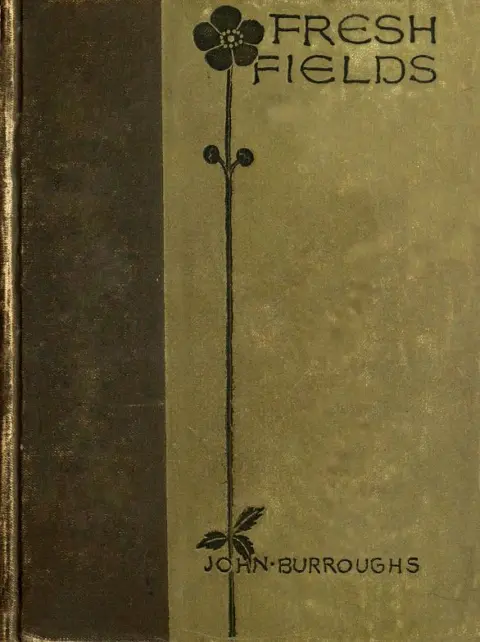
"Fresh Fields" by John Burroughs is a travel narrative written in the late 19th century. The book primarily explores the author’s impressions of nature across England and Scotland, offering insights into the scenery, flora, fauna, and cultural landmarks, intertwining personal reflections with vivid descriptions. The opening of the narrative sets the tone for a reflective and sensory journey, as the author begins his travels by describing the intoxicating scent of peat in Ireland, which evokes a sense of nostalgia. Upon arriving in Scotland, he expresses a deep appreciation for the lush, verdant landscapes, contrasting them with the more rugged terrains of America. He vividly paints a picture of the pastoral charm found along the Clyde River, where he observes the harmonious coexistence of nature and industry. Burroughs reflects on various experiences, such as his encounters with local wildlife and the beauty of the English countryside, capturing not just the sights, but also the emotions and memories they evoke within him. The opening thus introduces readers to a work rich in nature writing, emphasizing the personal connection between the observer and the observed.
Introduction adapted from the source catalogue; source summaries may be automatically generated.
Free to read · English · 73,636 words · No account needed
MAKE TIME FOR A GOOD BOOK
On by default. Untick to stop anonymous reading totals. Each page counts after 10 seconds in view. How this works.
Anonymous counting is on unless you have switched it off.
Carlyle, Thomas, quotations from, 25, 49, 50, 58, 60, 61, 71,
73, 75, 204, 206-209, 211, 215-217, 219, 223-226, 228-232,
234, 236-238, 240, 241, 246-248, 251, 254-259, 266;
residences of, 49-51, 54, 55;
the grave of, 56, 57;
at the graves of his father and mother, 57, 58;
his reverence and affection for his kindred, 58;
his family traits, 58, 59;
his love of Scotland, 59, 60;
his affection for his mother, 61;
an old road-mender's opinion of, 67;
his style, 71, 75;
his connection with Irving, 72;
an indomitable worker, 73-75;
his house in Chelsea, 199, 200;
a call on, 200-202;
on Scott, 201, 202;
his correspondence with Emerson, 203, 204, 208-210;
his friendship with Emerson, 203, 204;
compared and contrasted with Emerson, 203-210, 212;
his magnanimous wrathfulness, 203, 204;
a man of action, 207;
a regal and dominating man, 211, 212;
as an historical writer, 213, 214;
his power of characterization, 214, 215;
his vocabulary of vituperation, 216, 217;
not a philosopher, 217, 218;
his struggle against odds, 218-220;
his unselfishness, 220, 221;
his relations with his wife, 221-223;
his passion for heroes, 223-226, 232-234;
his glorification of the individual will, 226;
his earnestness, 227;
a master portrait-painter, 228-232;
the value he set on painted portraits, 232;
his hatred of democracy, 232-251;
his large capital of faith, 251-253;
his religious belief, 251-257;
his attitude of renunciation, 255, 256;
his search for the truth, 256, 257;
his egoism, 258;
value of his teaching, 258-266;
his isolation of soul, 262-264;
his mission, 265;
his Oliver Cromwell, 211, 212;
his Frederick the Great, 211-217, 242.
Carlyle family, the, 56-61, 67, 70, 71.
Catbird (Galeoscoptes carolinensis), notes of, 117, 120,
125, 129.
Cathedrals, Canterbury, 11-13;
images in, 15;
soil collected on the walls of, 21;
Rochester, 21;
St. Paul's, 182.
Catskill Mountains, contrasted with the mountains of Scotland,
7;
scenery in, 38;
the valleys of, 149.
Cattle, of the Scotch Highlands, 25.
Cedar-bird, or cedar waxwing (Ampelis cedrorum), notes of,
115.
Celandine, 172.
Celts, the, 45.
Chaffinch, or shilfa, 133, 134, 191;
song of, 79, 90, 95, 129, 133, 134;
nest of, 65, 190.
Chat, yellow-breasted (Icteria virens), 117;
song of, 117, 120, 125.
Chewink, or towhee (Pipilo erythrophthalmus), notes of,
118, 120, 125, 129.
Chickadee (Parus atricapillus), notes of, 129.
Chiffchaff, notes of, 95, 143.
Chipmunk (Tamias striatus), 195.
Chippie. See Sparrow, social.
Cicada, or harvest-fly, 194, 195.
Cinquefoil, 17.
Claytonia, or spring beauty, 164, 172.
Clematis, wild, 17.
Clouds, in England, 107;
at sea, 269-273.
Clover (Trifolium incarnatum), 93, 169.
Clover, red, 16, 52.
Clover, white, 16, 17, 165.
Clover, yellow, 16.
Clyde, the, sailing up, 2-7.
Cockscomb, 160.
Coleridge, Samuel Taylor, quotation from, 166, 167, 228.
Coltsfoot, 170.
Columbine, 38, 173.
Commons, in England, 104.
Convolvulus, 19.
Copses, in England, 82.
Cormorants, 189.
Corn-crake, notes of, 132.
Cow-bunting, or cowbird (Molothrus ater), notes of, 125.
Cranesbill, 53.
Creeper, European brown, 189.
Crow, carrion, 193.
Cuckoo (Coccyzus sp.), notes of, 127.
Cuckoo, European, 65;
notes of, 77, 78, 95, 123, 138, 148.
Curlew, European, 107;
notes of, 141.
Daffodils, 165, 172.
Daisy, English, 52, 159, 160, 196.
Daisy, ox-eye, 160, 165, 196.
Dalibarda, 164.
Dandelion, 16, 165.
Danton, Georges Jacques, 229.
Darwin, Charles, 31, 32.
Dead-nettle, 161.
Democracy, Carlyle's opinion of, 232-251.
De Quincey, Thomas, 230.
Desmoulins, Camille, 229.
Devil's Punch-Bowl, the, 88.
Dicentra, 38, 164, 172.
Dickens, Charles, 231.
Dock, sorrel (Rumex acetosa), 170.
Docks, 171.
Dog-fish, 188.
Dolphins, 274, 275.
Doon, the, 46, 132, 134, 161, 162.
Dover, the cliffs of, 13, 14.
Ducks, wild, 186.
Eagle, 187, 188.
Earthworm, as a cultivator of the soil, 31, 32.
Easing, 94, 103.
Ecclefechan, 39;
the journey from Edinburgh to, 49-55;
in the village and churchyard of, 55-58, 61-64;
birds'-nesting boys of, 64-66;
walks about, 67-72;
the "dogfight," 67.
Edinburgh, 48, 49, 178.
Edward, Thomas, 187, 188.
Elder, English, 10.
Elecampane, 171.
Elm, English, 19, 97.
Your reading position is saved on this browser. Take it to another device with a library code. Reading pages adapt to text, rather than matching a printed edition.
John Burroughs
John Burroughs
John Burroughs
John Burroughs
BEHIND THE BOOK
This eBook is for the use of anyone anywhere in the United States and most other parts of the world at no cost and with almost no restrictions whatsoever. You may copy it, give it away or re-use it under the terms of the Project Gutenberg License included with this eBook or online at www.gutenberg.org. If you are not located in the United States, you will have to check the laws of the country where you are located before using this eBook. Read the source licence.
The original source file, including credits and licence, is retained by this library. Request an original-format copy at no charge. Please include the book title and Project Gutenberg identifier #44127.
KEEP YOUR CURIOSITY GOING
Wilfrid Scawen Blunt
Wilfrid Scawen Blunt
E. W. (Edgar Watson) Howe
Cécile Tormay

Moritz Busch
John L. Ransom