The orchestra and its instruments
Esther Singleton
THE CLASSIC COLLECTION · 1903
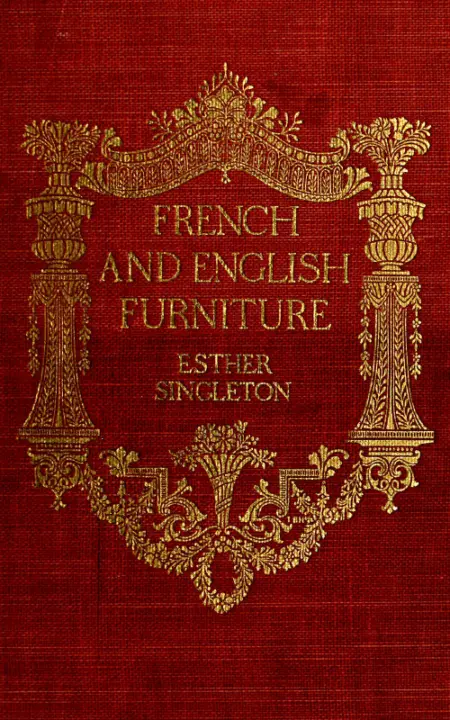
"French and English Furniture" by Esther Singleton is a historical account written in the early 20th century. The work provides an in-depth exploration of furniture styles and decorative arts from the French Renaissance to various English decorative periods, focusing on distinctive characteristics, functions, and historical contexts. Singleton aims to serve collectors, students, and interior decorators by offering a comprehensive guide to furnishing rooms in any given style. The opening of the text reveals Singleton's purpose of providing an extensive overview of French and English furniture from the Renaissance onward. She emphasizes the lack of comparable works that effectively describe and illustrate various styles, asserting that her book aims to enable readers to understand how to appropriately furnish rooms in specific historical styles, such as Louis XV or Heppelwhite. The preface also discusses the intricate details of the furniture, including upholstery, cabinetry, and decorative elements, highlighting the artistic achievements and evolution in taste from one period to another. Additionally, she mentions the inclusion of illustrations sourced from contemporary materials and designers to enrich the reader's understanding.
Introduction adapted from the source catalogue; source summaries may be automatically generated.
Free to read · English · 96,415 words · No account needed
MAKE TIME FOR A GOOD BOOK
On by default. Untick to stop anonymous reading totals. Each page counts after 10 seconds in view. How this works.
Anonymous counting is on unless you have switched it off.
Delafosse (b. 1721) designed every species of interior decoration, and every kind of furniture and ornament in use, besides innumerable trophies, pastoral attributes, and attributes of music, painting, science, hunting, fishing, etc., etc. His furniture includes sofas, canapés and fauteuils in the picturesque taste, and chairs in the antique taste, Turkey ottomans and beds, gondola sofas, French, Italian and Chinese beds, and couches and settees in all the novel forms of the day, as well as window-seats, secretaries, corner-cupboards, candlestands, pedestals, stoves, and chimney-pieces. In some of his designs there are reminiscences of the Louis XV. style, but he is regarded as one of the exponents of the Louis XVI. style and their individuality has given them the name “genre de la Fosse.”
Fragonard (b. 1733; d. 1806) has among his designs bas-reliefs gay with fauns and Bacchantes in luxuriant foliage, panels and over-doors, and charming studies for ceilings, especially adapted for boudoirs.
Forty, designer, engraver, carver, etc., worked in Paris from 1775 to 1780; and in taste and execution his works are perfect examples of the time. In addition to books of vases, iron work for balconies, gratings, stairways, and designs for goldsmiths, he published eight books entitled Œuvres de Sculptures en bronze, in which are designs for girandoles, lustres, clocks, candelabra, dials, barometers, etc., and a “design for Two Toilettes,” representing everything that is appropriate to the use of a lady, and ornamented with the proper figures and allegorical attributes. Jewel-boxes, powder-boxes, comb-trays, etc., are included.
De Lalonde’s first publications, in the Louis XVI. style, are addressed “to artists and persons who wish to decorate with taste”; and he assures them that everything is in the newest style. They include borders and frames, both square and round, feet for furniture, tables and consoles, doors, cornices, entablatures, girandoles, lustres, candelabra, trophies, soffits, vases, mantel-pieces, over-doors, ceilings and rosettes for ceilings, fire-places, locks and knobs for the use of doors and furniture, chimney-pieces and sconces. His thirteen books of furniture represent sofas, lits de repos, bergères, duchesses, banquettes confidents, ottomans and other varieties of beds and sofas, fauteuils of both the square and gondola form, billiard and card-tables, desks of the cylinder and tomb shapes and desks with hind’s feet, commode desks, commodes of marquetry, square commodes and commodes with hind’s feet, corner-cupboards, screens, chiffonniers, bookcases with pilasters, little toilette commodes, demi-toilettes, flower-stands, etc., etc. Other books show numerous designs for the table service. The later publications of De Lalonde approach the new Classic taste. In these there are numerous plates for the decoration of apartments, cornices, consoles, ceilings, doors, alcoves, windows, chimney-pieces, girandoles, lustres, sofas, canapés, fauteuils and beds, most of which are “in the antique taste.” Among the chairs there is a chaise renversée à bergère, a fauteuil à griffon, a chaise élastique, a fauteuil à tête renversée, and a fauteuil à chimère antique.
Your reading position is saved on this browser. Take it to another device with a library code. Reading pages adapt to text, rather than matching a printed edition.
Esther Singleton
Esther Singleton
Esther Singleton
Esther Singleton
BEHIND THE BOOK
This eBook is for the use of anyone anywhere in the United States and most other parts of the world at no cost and with almost no restrictions whatsoever. You may copy it, give it away or re-use it under the terms of the Project Gutenberg License included with this eBook or online at www.gutenberg.org. If you are not located in the United States, you will have to check the laws of the country where you are located before using this eBook. Read the source licence.
The original source file, including credits and licence, is retained by this library. Request an original-format copy at no charge. Please include the book title and Project Gutenberg identifier #54866.
KEEP YOUR CURIOSITY GOING
Cécile Tormay

Moritz Busch
John L. Ransom
Frances Wright
Cécile Tormay

Mabel Potter Daggett