
The lost dirigible
Ralph Henry Barbour
THE CLASSIC COLLECTION · 1905
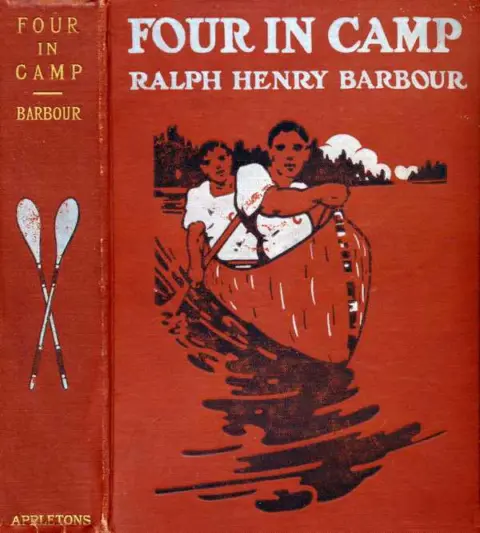
"Four in Camp: A Story of Summer Adventures in the New Hampshire Woods" by Ralph Henry Barbour is a novel written in the early 20th century. The narrative centers around the experiences of a young boy named Nelson Tilford as he arrives at Camp Chicora, where he is introduced to camp life, friendships, and various summer adventures amidst the New Hampshire woods. The book features themes of camaraderie, outdoor activities, and the excitement of youth in a natural setting. At the start of the story, Nelson Tilford arrives at Camp Chicora, grappling with feelings of loneliness and apprehension about fitting in with the other campers. He is warmly welcomed by Mr. Verder, one of the camp councilors, and soon participates in the lively atmosphere of camp life, including meals and campfire gatherings. The narrative sets the stage for his interactions with fellow campers, particularly Tom Ferris and Dan Speede, as they share experiences, play games, and partake in friendly banter. As the boys settle into their routine, including daily duties and activities such as swimming and baseball, the story hints at the spirited adventures and friendships that will develop throughout the summer.
Introduction adapted from the source catalogue; source summaries may be automatically generated.
Free to read · English · 54,426 words · No account needed
MAKE TIME FOR A GOOD BOOK
On by default. Untick to stop anonymous reading totals. Each page counts after 10 seconds in view. How this works.
Anonymous counting is on unless you have switched it off.
“You know those Wickasaw dubs came over here to-day to our ball field and had the cheek to cheer for the Inn, don’t you?”
“Sure,” muttered Tom.
“Well, they had no business doing it.”
“That’s so,” Nelson concurred.
“And so we’re going to get square with them.”
“Hooray!” said Tom in a husky whisper.
“How?” questioned Nelson.
“I’m coming to that,” answered Dan importantly.
“You’re a long old time coming,” Tom grumbled. “I’ll bet that fellow has got up-stairs by now and murdered the hero and the girl, and I wasn’t there to----”
“Cut it out, Tommy!” commanded Dan. “You see that flag over there at Wickasaw’s landing?”
“I see something sort of white that may be a flag, or may be some fellow’s Sunday shirt,” answered Nelson.
“Well, that’s that old white flag with the score on it. They’re too lazy to do anything shipshape, and so instead of tying it onto the lanyards under the camp-flag----”
“Bending it on, you mean,” said Tom.
“You be blowed,” said Dan. “You know too much, Tommy. Well, instead of fixing it on to the rope they just nailed it on to the pole. That’s the lucky part of it; see?”
The others looked across at the blur of white and then looked at Dan. Then they shook their heads.
“I may be stupid, Dan,” said Nelson apologetically, “but I’m blowed if
I do see.”
“I guess the answer’s a bottle of ink,” said Tom flippantly.
“Why,” said Dan impatiently, “if they’d taken it in we couldn’t have
got it.”
“Oh!” exclaimed Nelson. “Then we’re going--to--to----”
“Swipe it!” said Dan.
Tom heaved a sigh of relief.
“Bully! I was afraid it was something to do with blue paint!”
“What’s your scheme?” asked Nelson, beginning to take interest. But Dan had nothing more to say until the motor-dory had come alongside and its occupants had finally taken themselves off up the hill, whooping like an Indian war-party.
“When it’s good and dark,” he continued then, “we’ll swim over there and get the old rag; that’s all.”
“But why not take a boat?” asked Tom.
“Because somebody would be sure to hear us.”
“Then what’s the matter with a canoe?”
“Well, that might do,” answered Dan thoughtfully. “But we don’t want to have any trouble about it; Clint’s got his eye on us, I’ll bet, and if we get caught swiping Wickasaw’s flag we’ll get what for!”
“But there won’t be any fun in it if they don’t know who’s taken it,”
Nelson objected.
Your reading position is saved on this browser. Take it to another device with a library code. Reading pages adapt to text, rather than matching a printed edition.
Ralph Henry Barbour
Ralph Henry Barbour

Ralph Henry Barbour

Ralph Henry Barbour
BEHIND THE BOOK
This eBook is for the use of anyone anywhere in the United States and most other parts of the world at no cost and with almost no restrictions whatsoever. You may copy it, give it away or re-use it under the terms of the Project Gutenberg License included with this eBook or online at www.gutenberg.org. If you are not located in the United States, you will have to check the laws of the country where you are located before using this eBook. Read the source licence.
The original source file, including credits and licence, is retained by this library. Request an original-format copy at no charge. Please include the book title and Project Gutenberg identifier #50590.
KEEP YOUR CURIOSITY GOING
Coulson Kernahan

Maurice Baring
Frances Wright
Cécile Tormay

Frederic Jesup Stimson

W. H. P. (William Henry Pope) Jarvis