
The lost dirigible
Ralph Henry Barbour
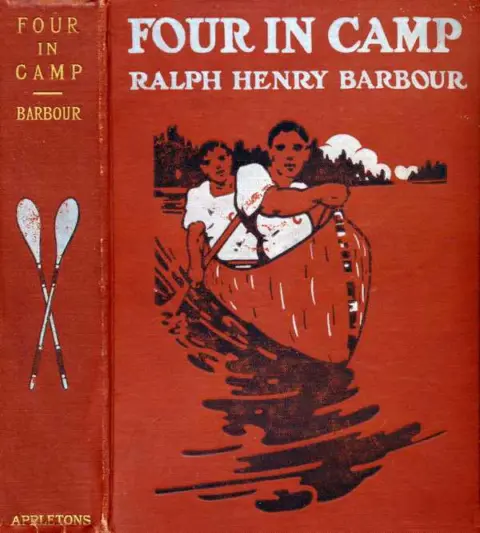
THE CLASSIC COLLECTION · 1905
"Four in Camp: A Story of Summer Adventures in the New Hampshire Woods" by Ralph Henry Barbour is a novel written in the early 20th century. The narrative centers around the experiences of a young boy named Nelson Tilford as he arrives at Camp Chicora, where he is introduced to camp life, friendships, and various summer adventures amidst the New Hampshire woods. The book features themes of camaraderie, outdoor activities, and the excitement of youth in a natural setting. At the start of the story, Nelson Tilford arrives at Camp Chicora, grappling with feelings of loneliness and apprehension about fitting in with the other campers. He is warmly welcomed by Mr. Verder, one of the camp councilors, and soon participates in the lively atmosphere of camp life, including meals and campfire gatherings. The narrative sets the stage for his interactions with fellow campers, particularly Tom Ferris and Dan Speede, as they share experiences, play games, and partake in friendly banter. As the boys settle into their routine, including daily duties and activities such as swimming and baseball, the story hints at the spirited adventures and friendships that will develop throughout the summer.
Introduction adapted from the source catalogue; source summaries may be automatically generated.
Free to read · English · 54,426 words · No account needed
MAKE TIME FOR A GOOD BOOK
On by default. Untick to stop anonymous reading totals. Each page counts after 10 seconds in view. How this works.
Anonymous counting is on unless you have switched it off.
Dire news reached the camp one morning, brought over from the village by a small junior who had gone for the mail. His tale was listened to with incredulous indignation by a large group of the fellows congregated outside of Birch Hall. The junior’s name was Rooke, and he was vastly impressed with his importance when he saw with what breathless interest his news was received. When Dan joined the group, after having reported as orderly to Mr. Ellery, officer of the day, Rooke was telling his story for the second time, and with what Tom called “imposing detail.”
“There’s a fellow over at Crescent staying at the boarding-house named Harry Fraser,” began Rooke.
“Queer name for a boarding-house,” said Dan.
“Shut up, Speede!” some one admonished him.
Rooke looked hurt.
“All right; never mind what the boarding-house is called, Kid,” said
Dan. “Fire ahead!”
“I’d met him now and then at the post-office, you know. Well, this morning, when I came out with the mail, he was there----”
“Were there any letters for me?” asked Dan eagerly. Then he retired to a safe distance, and waited for his pursuers to become absorbed again in the narrative.
“‘Say,’ he said, ‘Wickasaw put it on to you fellows good and hard, didn’t they?’ ‘How did they?’ says I. ‘Oh, you don’t know anything about it, do you?’ says he. And of course I didn’t, but I wasn’t going to let on to him.”
“Foxy kid!” murmured Dan.
“‘Oh, that!’ I says; ‘that’s nothing! Any one could do that!’”
“Good for you, Rooke!” his audience laughed.
“Well, pretty soon I found out what he was talking about. And what do you think those chumps have done?” And Rooke paused dramatically, looking very indignant.
“You told us once,” said some one unkindly. “Go ahead!”
Rooke resented this remark, and for a moment seemed inclined to sulk. But Joe Carter patted him on the back, Dan told him he was a smart kid, and he decided to let the incident pass.
“Why, they’ve gone and painted ‘Camp Wickasaw’ on the rocks over at the cliff back of Crescent! And Fraser says the letters are done in red paint and are three feet high, and you can see them for miles!”
“Phew!” said Dan. “Aren’t they the cheeky beggars?”
“When did they do it, Kid?” asked Bob.
“Day before yesterday. They went on a picnic, or something, over that
way.”
“Well, we’ll just have to go over and paint it out,” said Carter decidedly, amid a murmur of concurrence.
Your reading position is saved on this browser. Take it to another device with a library code. Reading pages adapt to text, rather than matching a printed edition.
Ralph Henry Barbour
Ralph Henry Barbour

Ralph Henry Barbour

Ralph Henry Barbour
BEHIND THE BOOK
This eBook is for the use of anyone anywhere in the United States and most other parts of the world at no cost and with almost no restrictions whatsoever. You may copy it, give it away or re-use it under the terms of the Project Gutenberg License included with this eBook or online at www.gutenberg.org. If you are not located in the United States, you will have to check the laws of the country where you are located before using this eBook. Read the source licence.
The original source file, including credits and licence, is retained by this library. Request an original-format copy at no charge. Please include the book title and Project Gutenberg identifier #50590.
KEEP YOUR CURIOSITY GOING
Coulson Kernahan

Maurice Baring
Frances Wright
Cécile Tormay

Frederic Jesup Stimson

W. H. P. (William Henry Pope) Jarvis