There is a tide
J. C. (John Collis) Snaith
THE CLASSIC COLLECTION · 1910
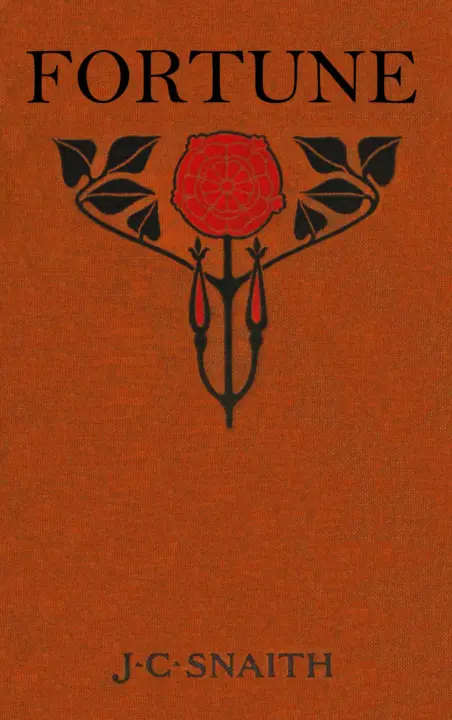
"Fortune" by J. C. Snaith is a novel written in the early 20th century. The story follows a young man who sets out on an adventurous quest for his fortune, bravely leaving his home and the comforts of life behind. As he journeys to a foreign land, he encounters challenges, both physical and moral, while grappling with his youthful ideals and the stark realities of life. At the start of the novel, the protagonist embarks on a journey from his hometown, full of optimism and youthful exuberance. He reflects on his upbringing and resolves to find fortune in a distant land. However, as he sets off, he quickly encounters hardships, notably the harsh climate and the desert landscape that threatens his spirit. His kindness, shown through his charity towards an old woman, complicates his financial situation. Eventually, he finds himself at a decrepit inn, where he meets Sir Richard Pendragon, an enigmatic Englishman with a boisterous demeanor, who challenges his perceptions and engages him in a battle of wits and swords, setting the stage for further adventures.
Introduction adapted from the source catalogue; source summaries may be automatically generated.
Free to read · English · 96,441 words · No account needed
MAKE TIME FOR A GOOD BOOK
On by default. Untick to stop anonymous reading totals. Each page counts after 10 seconds in view. How this works.
Anonymous counting is on unless you have switched it off.
HOWEVER, the Count of Nullepart was wrong in this particular. For on returning to the Three Feathers, we found her supping porridge with the greatest zest, with two servants to wait upon her. We were in time to hear her rate the landlord soundly because her couch had been hard; also to hear her put innumerable questions to that honest fellow as to whether her horse was shoed? what kind of smith it was that shoed it? was the shoe likely to give comfort to the horse? and was it calculated to cause no injury?
“Not that the horse is mine, fellow, you understand that?” said the little lady, who looked as fresh as peach bloom, and who appeared to keep her small head full of practical affairs.
“Oh yes, your ladyship, I quite understand that,” said the innkeeper, with an air of the profoundest intelligence.
“I suspect you stole it, madam, from the Mother Superior,” said the Count of Nullepart, taking up the conversation with a silken air.
“Why should you suspect that, sir?” said she, flashing upon the count the instant glance of a hawk.
“I have two eyes, madam,” said he, smiling, “something of mind, and my five wits--although I have no respect for them, and deplore their use--are yet pointed as finely as five daggers. I am sure you stole your horse from the Mother Superior.”
“How so, sirrah? And why so? And what do you mean?” said the lady, flinging her questions at him scornfully, and tapping her foot on the ground with petulance.
“I have been thinking upon you during the night,” said the Count of Nullepart, “and have allowed myself to conclude that you are run away from your convent on the horse of the Mother Superior, which fetches home the eggs and butter from market.”
“Well, sir, and if I am run away,” said the lady haughtily, “I would not have you mention it in this public place. I have many reasons for running away, and the first of them is my father’s peril.”
“May I ask you, madam,” said the Count of Nullepart, with a smile lurking at the corners of his mouth, “will it alleviate your father’s peril, which I do not doubt is great, that you run away from your convent on the horse of the Mother Superior?”
“Why, sir, indeed it will,” said she. “All his days, my father, his lordship’s grace, hath been but as a child in statecraft; and being, as he conceives, insufficiently able to mismanage his own policy, he must needs in matters of great pith and delicacy call in the aid of an old fat man to embroil them further.”
Your reading position is saved on this browser. Take it to another device with a library code. Reading pages adapt to text, rather than matching a printed edition.
J. C. (John Collis) Snaith
J. C. (John Collis) Snaith
J. C. (John Collis) Snaith
J. C. (John Collis) Snaith
BEHIND THE BOOK
This eBook is for the use of anyone anywhere in the United States and most other parts of the world at no cost and with almost no restrictions whatsoever. You may copy it, give it away or re-use it under the terms of the Project Gutenberg License included with this eBook or online at www.gutenberg.org. If you are not located in the United States, you will have to check the laws of the country where you are located before using this eBook. Read the source licence.
The original source file, including credits and licence, is retained by this library. Request an original-format copy at no charge. Please include the book title and Project Gutenberg identifier #73402.
KEEP YOUR CURIOSITY GOING
Coulson Kernahan

Maurice Baring
Frances Wright
Cécile Tormay

Frederic Jesup Stimson

W. H. P. (William Henry Pope) Jarvis