THE CLASSIC COLLECTION✦My diaries, being a personal narrative of events 1888-1914, Part 2 (1900-1914)CLASSIC FREE BOOKS
My diaries, being a personal narrative of events 1888-1914, Part 2 (1900-1914)
Wilfrid Scawen Blunt
THE CLASSIC COLLECTION · 1855
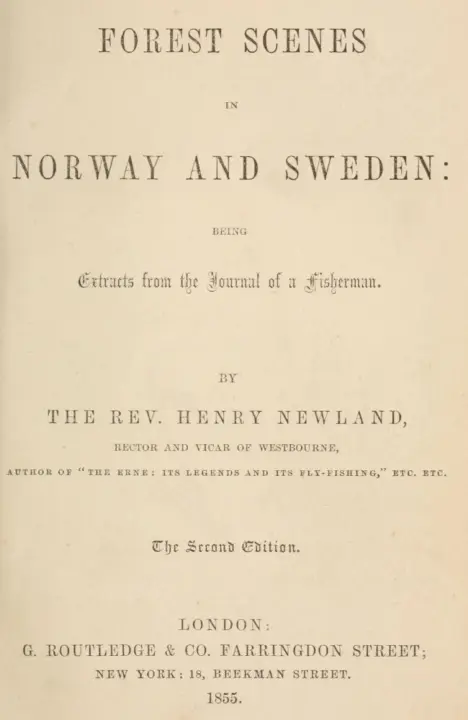
"Forest Scenes in Norway and Sweden: Being Extracts from the Journal of a Fisherman" by The Rev. Henry Newland is a collection of travel sketches written in the mid-19th century. This work intricately blends personal experiences and observations during fishing expeditions in the picturesque landscapes of Norway and Sweden. With a focus on the adventures of a clergyman and his companions, the narrative likely reveals both the beauty of the northern wilderness and the joys of fishing amidst various characters encountered along the way. The opening of the book introduces the author’s intentions and the whimsical tone he adopts throughout the journey. Initially, he addresses his audience, discussing the balance between work and leisure while hinting at the authenticity of the experiences documented. As he prepares for the expedition, readers meet the Parson and the Captain, who engage in lively discussions about their packing and plans. The Parson's methodical approach includes gathering fishing gear and necessary provisions, while playful banter reveals their personalities and foreshadows the misadventures to come. Overall, the opening sets the stage for a humorous yet informative exploration of the Scandinavian wilderness, preparing the reader for both the practical aspects of fishing and the charm of the local landscapes and cultures.
Introduction adapted from the source catalogue; source summaries may be automatically generated.
Free to read · English · 155,541 words · No account needed
MAKE TIME FOR A GOOD BOOK
On by default. Untick to stop anonymous reading totals. Each page counts after 10 seconds in view. How this works.
Anonymous counting is on unless you have switched it off.
Meanwhile, the lower table did not at all seem to be in want of an appetite; the kettle was emptied, and whole heaps of flad-bröd, sour as verdjuice, and pots of butter, such as no nose or stomach, out of Norway, could tolerate, were fast disappearing beneath the unceasing attacks of seven gluttonous Scandinavians—while, as the twilight darkened, and diminished the restraint they might possibly have felt at the presence of their superiors, the noise grew louder and louder. Jacob began some interminable ballad about the sorrows and trials of little Kirstin, a very beautiful lady, who went through all sorts of misfortunes, and did not seem a “bit better than she should be;” but that goes for nothing at all in Swedish song, and very little in Swedish life. This he sang, chorus and all, to his own share. It seemed to affect the worthy man very little, that he was almost his own audience; no one seemed to attend him, but his song went on, stanza after stanza, uninterruptedly, forming a sort of running accompaniment to the shouts and screams of “Gammle Norgé,” “Wackere Lota, or, Kari,” which startled the echoes alternately, according as love, or patriotism, was the prevailing sentiment.
At last, they began drinking healths—“Skaal Herr Carblom,” “Skaal for the well-born singer;” for, like the old Spanish nobility, though they addressed one another as Tom, Piersen, and so forth, they always gave the interloper his full title.
“Jeg takker de,” said Jacob, solemnly, without, however, pausing for one
moment in his song.
“Little Kirstin, she came to the bridal hall,—
We will begin with the wooing,—
And a little page answered to her call,
My best beloved, I ne’er can forget you”—
Here broke in Tom, beating time to his music with a horn which he had replenished to the very brim, and of which he was imparting the contents very liberally to the turf round him—
“Wet your clay, Andy!
Out with the brandy!
We live in jolly way,—
Here’s to you, night or day!
Look at sister Kajsa Stina,
See her bottles bright and clear-ah!
Take the horn, good fellow! grin-ah!
Grin and swill and drink like me!”
Jacob’s voice was again audible—
“She tied her horse in the garden there:
We will begin with the wooing”—
“Skaal Thorsen! skaal Tom Engelsk! skaal for the British navy!”
“Rule, Britannia!” shouted Tom. Jacob went on—
“We will begin with the wooing:
She brushed and—”
Here a general chorus—
Your reading position is saved on this browser. Take it to another device with a library code. Reading pages adapt to text, rather than matching a printed edition.
BEHIND THE BOOK
This eBook is for the use of anyone anywhere in the United States and most other parts of the world at no cost and with almost no restrictions whatsoever. You may copy it, give it away or re-use it under the terms of the Project Gutenberg License included with this eBook or online at www.gutenberg.org. If you are not located in the United States, you will have to check the laws of the country where you are located before using this eBook. Read the source licence.
The original source file, including credits and licence, is retained by this library. Request an original-format copy at no charge. Please include the book title and Project Gutenberg identifier #67401.
KEEP YOUR CURIOSITY GOING
Wilfrid Scawen Blunt
Wilfrid Scawen Blunt

E. W. (Edgar Watson) Howe
Francis Greenleaf Allinson & Anne C. E. (Anne Crosby Emery) Allinson
Cyrenus Cole

John Martineau