THE CLASSIC COLLECTION✦My diaries, being a personal narrative of events 1888-1914, Part 2 (1900-1914)CLASSIC FREE BOOKS
My diaries, being a personal narrative of events 1888-1914, Part 2 (1900-1914)
Wilfrid Scawen Blunt
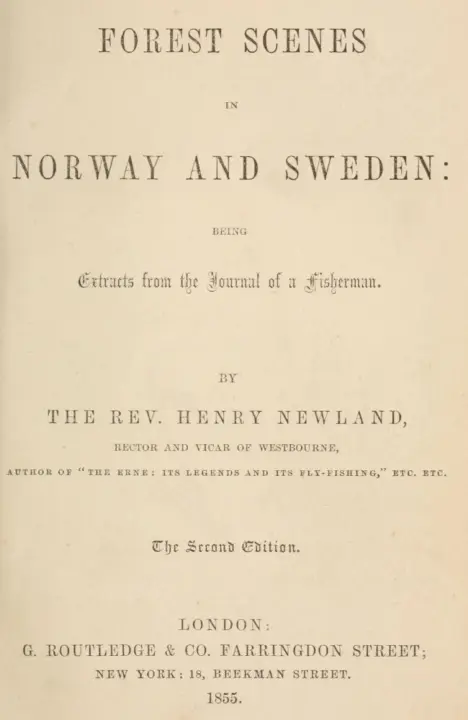
THE CLASSIC COLLECTION · 1855
"Forest Scenes in Norway and Sweden: Being Extracts from the Journal of a Fisherman" by The Rev. Henry Newland is a collection of travel sketches written in the mid-19th century. This work intricately blends personal experiences and observations during fishing expeditions in the picturesque landscapes of Norway and Sweden. With a focus on the adventures of a clergyman and his companions, the narrative likely reveals both the beauty of the northern wilderness and the joys of fishing amidst various characters encountered along the way. The opening of the book introduces the author’s intentions and the whimsical tone he adopts throughout the journey. Initially, he addresses his audience, discussing the balance between work and leisure while hinting at the authenticity of the experiences documented. As he prepares for the expedition, readers meet the Parson and the Captain, who engage in lively discussions about their packing and plans. The Parson's methodical approach includes gathering fishing gear and necessary provisions, while playful banter reveals their personalities and foreshadows the misadventures to come. Overall, the opening sets the stage for a humorous yet informative exploration of the Scandinavian wilderness, preparing the reader for both the practical aspects of fishing and the charm of the local landscapes and cultures.
Introduction adapted from the source catalogue; source summaries may be automatically generated.
Free to read · English · 155,541 words · No account needed
MAKE TIME FOR A GOOD BOOK
On by default. Untick to stop anonymous reading totals. Each page counts after 10 seconds in view. How this works.
Anonymous counting is on unless you have switched it off.
“Ale’s not so good
For the children of men
As people have boasted;
For less and less,
As more he drinketh,
Knows man himself.
The kern of forgetfulness
Sits on the drunken
And steals the man’s senses,—
By the bird’s pinions
Fettered I lay
In Gunlada’s dwelling.
Drunken I lay,
Lay thoroughly drunken,
With Fjalar the wise.
This is the best of drink,
That every one afterwards
Comes to his senses.”
High Song of Odin the Old.
Many minutes had not expired, during which brief space the fishermen had been luxuriating in their dry clothes, when the boats were seen working their way back across the tail of the Aal Foss rapid, as they returned with the party from the right bank, which, after bobbing about on the ripples and cross currents, shot into their little harbour beneath the encampment.
Birger came up the bank, half-laughing, yet looking as if he had been doing something he was ashamed of.
“Where the deuce have you been, Birger?” said the Captain, as that worthy threw himself on the turf under the birch-tree: “Jacob says you have been sacrificing to Nyssen, whoever he is.”
“So I have,” said Birger; “but don’t speak so loud. I will tell you all
about it.”
“Not speak so loud,” said the Captain; “why not?”
“Well,” said Birger, rather hesitatingly, “Nyssen does not like to be spoken of. That is to say, the men don’t exactly like to hear people speaking of him, at least by name, if it is above the breath.”
“Come, come, Birger, be honest,” said the Parson.
“Well, if you must have it, I do not quite like it myself. I do not believe in such things, of course; but there is no good in doing what everybody thinks unlucky.”
“Well, well,” said the Captain, “but tell us what you have been about. I am quite in the dark as yet about this mysterious gentleman or lady.”
“Why, the Nyss,” said Birger, sinking his voice at the word to a whisper, “is a spirit of the air, just as the Neck (a similar whisper) is a spirit of the water.”
“The very familiars of the Lady of Branksome,” said the Parson:—
It was the Spirit of the Flood,
And he spoke to the Spirit of the Fell.
“Very likely, but our spirits, like our people, are not indifferent to the pleasures of eating and drinking; and therefore, whenever we start on an expedition, we propitiate them with an offering.”
“And the offering consists of——?”
“What we like best ourselves, cakes and ale.”
Your reading position is saved on this browser. Take it to another device with a library code. Reading pages adapt to text, rather than matching a printed edition.
BEHIND THE BOOK
This eBook is for the use of anyone anywhere in the United States and most other parts of the world at no cost and with almost no restrictions whatsoever. You may copy it, give it away or re-use it under the terms of the Project Gutenberg License included with this eBook or online at www.gutenberg.org. If you are not located in the United States, you will have to check the laws of the country where you are located before using this eBook. Read the source licence.
The original source file, including credits and licence, is retained by this library. Request an original-format copy at no charge. Please include the book title and Project Gutenberg identifier #67401.
KEEP YOUR CURIOSITY GOING
Wilfrid Scawen Blunt
Wilfrid Scawen Blunt

E. W. (Edgar Watson) Howe
Francis Greenleaf Allinson & Anne C. E. (Anne Crosby Emery) Allinson
Cyrenus Cole

John Martineau