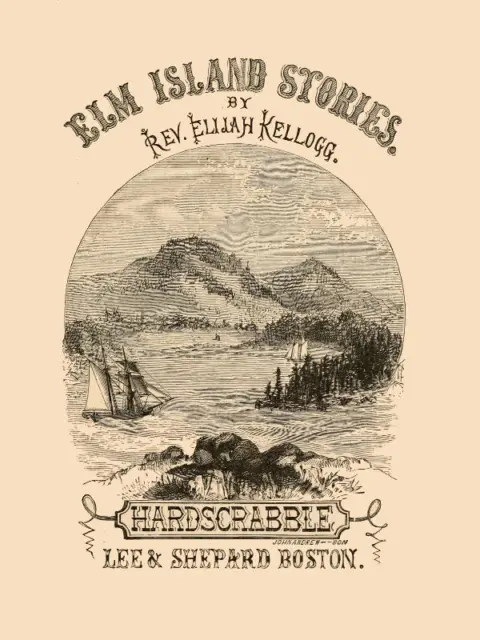
The Hard-Scrabble of Elm Island
Elijah Kellogg
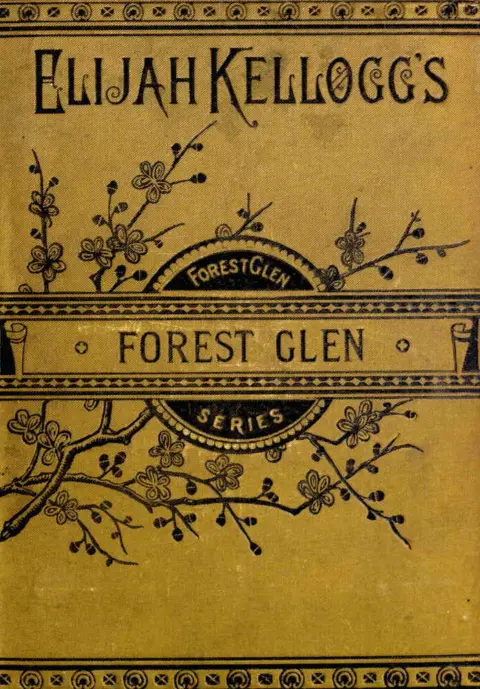
THE CLASSIC COLLECTION · 1877
"Forest Glen; or, The Mohawk's Friendship" by Elijah Kellogg is a historical novel written in the late 19th century. The book explores the intense and perilous life of frontier settlers during the brutal Indian wars, focusing on themes of survival, bravery, and inter-race relationships. The narrative likely features characters like the settlers and a Mohawk Indian, whose friendship serves as a central point of tension and conflict amid the backdrop of war and cultural exchange. At the start of the novel, the scene is set in the quiet yet ominous valley of Wolf Run, where the settlers are grappling with the threat of impending Indian attacks. As summer transitions to autumn, a sense of foreboding looms, with the settlers—and particularly the children—training for battles that they may soon have to fight. The opening introduces the realities of life on the frontier: the settlers' preparations for defense, the mixed sentiments of fear and determination, and the daily struggles of survival amid an environment filled with both natural beauty and danger. This sets the stage for the tale of war, friendship, and courage that unfolds as the settlers face both external and internal conflicts.
Introduction adapted from the source catalogue; source summaries may be automatically generated.
Free to read · English · 64,187 words · No account needed
MAKE TIME FOR A GOOD BOOK
On by default. Untick to stop anonymous reading totals. Each page counts after 10 seconds in view. How this works.
Anonymous counting is on unless you have switched it off.
It was now time to gather the corn. Sammy was obliged to suspend his operations, and the entire community were busily employed in harvesting and husking. The ears were picked off and husked in the field, and the sound corn put in log cribs inside the fort.
A strong scout was sent out, boys placed back to back on stumps to watch while the rest were at work. Every nerve was strained to place their bread-corn out of the reach of the savages; for, this being accomplished, their anxieties in respect to food would cease.
The corn-crop and all their crops were late sown and planted, by reason of Indian alarms, and because in the spring they were occupied in building the mill.
The last basketful had been placed on the sled; and Honeywood took up his goad to start the oxen, when Mrs. Sumerford exclaimed, "Who's that? I saw a man, I know I did, come from behind the big rock, cross the ford and the little clear spot between there and the woods; and I think he had a rifle on his shoulder."
All now stood on their guard, rifle in hand.
"It ain't an Indian, that's sartain," said Holdness: "an Indian wouldn't be walking about in plain sight, with a rifle on his shoulder."
"Who else can it be? We haven't seen a white face for months. I think we'd better run for the garrison," said Mrs. Blanchard.
"I see him," said McClure. "It's a white man, but none of our folks: he's got a pack and a rifle. It's some ranger who has lost his way."
Every eye was now eagerly fastened on the stranger, who travelled
slowly as though fatigued.
"It's Ned Rangely, Brad," shouted McClure, "as sure as the sun is in the heavens: it's Ned, who hunted and trapped with us so many winters at Red Stone, and has been in more Indian fights than any man on the frontier. Don't you see how he carries that left arm: that was broke by an Indian bullet?"
"I believe you're right, neighbor."
"Right? I know I am: I could tell him among a thousand."
They both started towards the stranger, who stopped, and stood leaning on his rifle, evidently fatigued.
"God bless you, Ned Rangely! Is that yourself?" cried Holdness, seizing one hand, while McClure laid his hand upon his shoulder.
"How are you, old stand-by?" cried McClure. "It does a man good, these ticklish times, to look on your old face. Haven't you come in a good time? We've plenty to eat, nothing to do; and you've got to stay here with us all the rest of your life."
Your reading position is saved on this browser. Take it to another device with a library code. Reading pages adapt to text, rather than matching a printed edition.
Elijah Kellogg
Elijah Kellogg
Elijah Kellogg
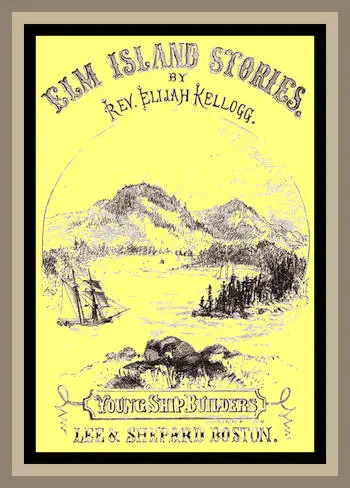
Elijah Kellogg
BEHIND THE BOOK
This eBook is for the use of anyone anywhere in the United States and most other parts of the world at no cost and with almost no restrictions whatsoever. You may copy it, give it away or re-use it under the terms of the Project Gutenberg License included with this eBook or online at www.gutenberg.org. If you are not located in the United States, you will have to check the laws of the country where you are located before using this eBook. Read the source licence.
The original source file, including credits and licence, is retained by this library. Request an original-format copy at no charge. Please include the book title and Project Gutenberg identifier #63160.
KEEP YOUR CURIOSITY GOING
Cécile Tormay

Moritz Busch
Coulson Kernahan
John L. Ransom

Maurice Baring
Frances Wright