
The lost dirigible
Ralph Henry Barbour
THE CLASSIC COLLECTION · 1911
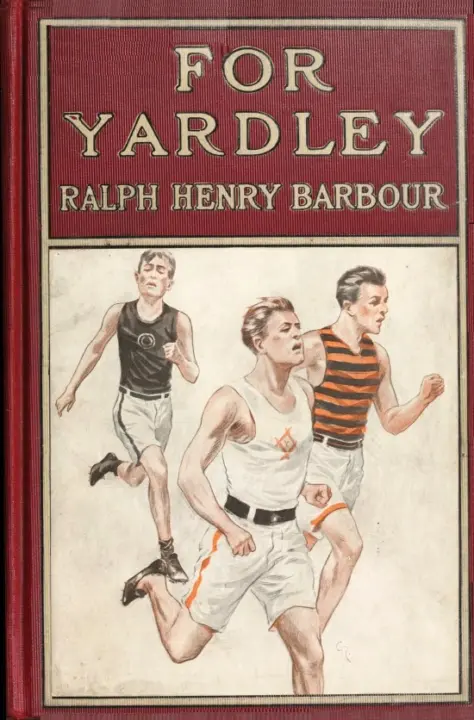
"For Yardley: A Story of Track and Field" by Ralph Henry Barbour is a novel written in the early 20th century. This fiction work focuses on the life and athletic challenges faced by students at Yardley Hall, specifically highlighting the dynamics of friendship, competition, and personal growth in the realm of track and field events. The main characters introduced include Alf Loring, a talented quarter-back and athlete, along with his friends Tom Dyer and Gerald Pennimore, who demonstrate a mix of ambition and camaraderie as they navigate their school experience. The opening of the narrative establishes a rainy and dreary Saturday at Yardley Hall, where Alf Loring is feeling particularly restless. He and his roommate Tom Dyer share playful banter about the weather and their studies while eagerly anticipating the start of the spring sports season. Thoughts of track tryouts bring young Gerald Pennimore into their conversation, illustrating his enthusiasm for joining the team. As the boys discuss their aspirations for track and field success, an underlying sense of competition and friendship emerges, setting the stage for the events that will unfold throughout their school year. This blend of light-hearted camaraderie and the seriousness of athletic commitment creates an engaging backdrop for the unfolding story.
Introduction adapted from the source catalogue; source summaries may be automatically generated.
Free to read · English · 59,953 words · No account needed
MAKE TIME FOR A GOOD BOOK
On by default. Untick to stop anonymous reading totals. Each page counts after 10 seconds in view. How this works.
Anonymous counting is on unless you have switched it off.
“Pooh!” said Tom. “We went in with our eyes open, I guess. You didn’t kidnap any of us. We can take our medicine, eh, Dan?”
“Naturally; only――I wish Gerald had kept out of it!”
“I’m not scared,” answered Gerald, stoutly. “I think, though, I’d better get breakfast if I’m going to get to Office at half-past. They say Collins hates you to be late.”
“And say, Gerald,” Alf admonished as they went out, “whatever you do, don’t let him think you’re trying to be smart or fresh. He hates that, too. Now come on and eat all you can.”
“Yes,” murmured Tom, “eat, drink, and be merry, for to-morrow we die.”
“Why to-morrow?” asked Alf, cynically cheerful. “What’s the matter with
to-day?”
When Gerald entered the outer Office at precisely one minute before the appointed time, he found it occupied by seven persons. First, there was Mr. Collins, seated at his desk by the window; then Mr. Forisher, the secretary, settling down for his morning’s work; then three boys, Benton and Hale and Graves; and last but not least, occupying a chair in a corner, was a man of middle age with Irish features whom Gerald instantly guessed to be the Broadwood gardener. He was dressed immaculately and uncomfortably in his best black suit, and held a derby hat tightly in his lap. At Gerald’s entrance every occupant of the room looked toward him, but all removed their gaze after a second save the man in the corner. Long after Gerald had taken his seat, he was aware that the gardener was still regarding him triumphantly.
Presently Mr. Collins laid aside the work he had been occupied with and swung about in his swivel-chair. He glanced from one of the audience to another, and finally encountered the gaze of the man in the corner.
“Well?” he asked. “Is he here?”
“Yes, sir,” answered the gardener, decisively.
“Quite certain, Mr. Grogan?”
“Yes, sir, certain sure, sir.”
“Ah! And which of the young gentlemen is it, please?”
“It’s him, sir!” Mr. Grogan’s hand shot out at Gerald. Mr. Collins showed unmistakable surprise.
“What! Why――now, come, Mr. Grogan, isn’t there a chance that you may be mistaken? Remember that it was at night and, according to your own words, you didn’t see his face.”
“I seen his hair, Mr. Collins, and I seen the shape of him, sir, and
that’s him.”
Your reading position is saved on this browser. Take it to another device with a library code. Reading pages adapt to text, rather than matching a printed edition.
Ralph Henry Barbour
Ralph Henry Barbour

Ralph Henry Barbour

Ralph Henry Barbour
BEHIND THE BOOK
This eBook is for the use of anyone anywhere in the United States and most other parts of the world at no cost and with almost no restrictions whatsoever. You may copy it, give it away or re-use it under the terms of the Project Gutenberg License included with this eBook or online at www.gutenberg.org. If you are not located in the United States, you will have to check the laws of the country where you are located before using this eBook. Read the source licence.
The original source file, including credits and licence, is retained by this library. Request an original-format copy at no charge. Please include the book title and Project Gutenberg identifier #59043.
KEEP YOUR CURIOSITY GOING
Coulson Kernahan

Maurice Baring
Frances Wright
Cécile Tormay

Frederic Jesup Stimson

W. H. P. (William Henry Pope) Jarvis