
The lost dirigible
Ralph Henry Barbour
THE CLASSIC COLLECTION · 1911
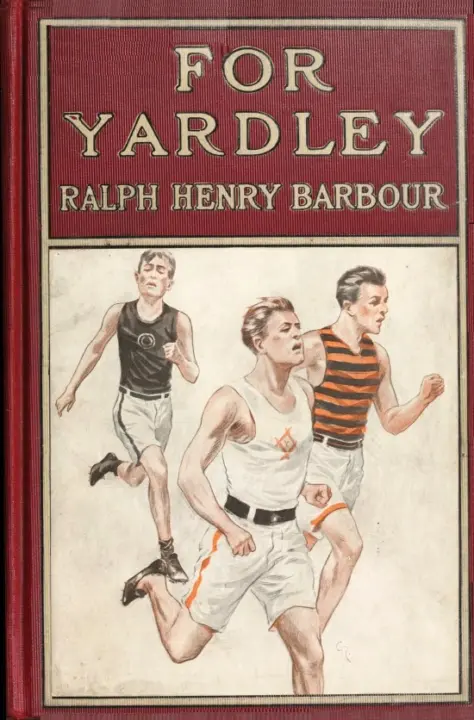
"For Yardley: A Story of Track and Field" by Ralph Henry Barbour is a novel written in the early 20th century. This fiction work focuses on the life and athletic challenges faced by students at Yardley Hall, specifically highlighting the dynamics of friendship, competition, and personal growth in the realm of track and field events. The main characters introduced include Alf Loring, a talented quarter-back and athlete, along with his friends Tom Dyer and Gerald Pennimore, who demonstrate a mix of ambition and camaraderie as they navigate their school experience. The opening of the narrative establishes a rainy and dreary Saturday at Yardley Hall, where Alf Loring is feeling particularly restless. He and his roommate Tom Dyer share playful banter about the weather and their studies while eagerly anticipating the start of the spring sports season. Thoughts of track tryouts bring young Gerald Pennimore into their conversation, illustrating his enthusiasm for joining the team. As the boys discuss their aspirations for track and field success, an underlying sense of competition and friendship emerges, setting the stage for the events that will unfold throughout their school year. This blend of light-hearted camaraderie and the seriousness of athletic commitment creates an engaging backdrop for the unfolding story.
Introduction adapted from the source catalogue; source summaries may be automatically generated.
Free to read · English · 59,953 words · No account needed
MAKE TIME FOR A GOOD BOOK
On by default. Untick to stop anonymous reading totals. Each page counts after 10 seconds in view. How this works.
Anonymous counting is on unless you have switched it off.
By
RALPH HENRY BARBOUR
NEW YORK AND LONDON
D. APPLETON AND COMPANY
1911
Copyright, 1911, by
D. APPLETON AND COMPANY
Published September, 1911
Printed in the United States of America
“Wonder why it always rains on Saturdays?” muttered Alf Loring, laying his book face-down in his lap and staring discontentedly out of the window beside him.
It was a cheerless outlook. Through the blurred panes his gaze traversed the Yard, empty and bedraggled, to the back of Merle Hall and the gymnasium. Everywhere was rotting snow or pools of water, while from a low, leaden sky the rain fell straight and persistently. It had been raining just this way all day and half of last night, and to all appearances it intended to continue raining in the same manner for another twenty-four hours. Yesterday the Yard had been a foot deep in nice clean snow, the result of the blizzard that had swept over Wissining and New England in general two days before, and there had been more than one jolly battle royal out there. But now――Alf sighed; and, turning, looked aggrievedly at his roommate.
Tom Dyer was seated at the study table, face in hands, the droplight shedding its yellow glow on his tousled hair, paying little heed to aught but the lesson he was striving to master. Alf scowled.
“Who invented rain, anyhow?” he demanded. There was no reply.
“Tom!”
“Eh? What?” Tom looked up from his book, blinking.
“I asked who invented rain, you deaf old haddock.”
“Oh! I don’t know,” answered Tom, vaguely. His eyes went back to the book. Then he added, evidently as an afterthought and with a desire to escape responsibility, “I didn’t.”
“Well, I’d like to know what it’s good for,” grumbled Alf.
“Makes crops grow,” Tom murmured.
“There aren’t any crops the first of March, you idiot. For the love of Mike, Tom, shut that book up and talk to a fellow!”
“What do you want to talk about?” asked Tom, without, however, obeying
his chum’s command.
“Anything. I’m sick of studying. I’m sick of everything. I’m sick of this rotten rain.”
“Pull the curtains and you won’t know it’s raining,” advised Tom.
“Of course I’ll know it,” replied the other, crossly. “I’ve seen it. This is a mean old time of year, anyhow. There’s nothing to do but study and read and loaf around; no hockey, no baseball, no golf――――”
“There’s chess.”
Your reading position is saved on this browser. Take it to another device with a library code. Reading pages adapt to text, rather than matching a printed edition.
Ralph Henry Barbour
Ralph Henry Barbour

Ralph Henry Barbour

Ralph Henry Barbour
BEHIND THE BOOK
This eBook is for the use of anyone anywhere in the United States and most other parts of the world at no cost and with almost no restrictions whatsoever. You may copy it, give it away or re-use it under the terms of the Project Gutenberg License included with this eBook or online at www.gutenberg.org. If you are not located in the United States, you will have to check the laws of the country where you are located before using this eBook. Read the source licence.
The original source file, including credits and licence, is retained by this library. Request an original-format copy at no charge. Please include the book title and Project Gutenberg identifier #59043.
KEEP YOUR CURIOSITY GOING
Coulson Kernahan

Maurice Baring
Frances Wright
Cécile Tormay

Frederic Jesup Stimson

W. H. P. (William Henry Pope) Jarvis