THE CLASSIC COLLECTION✦Sunshine and snowCLASSIC FREE BOOKS
Sunshine and snow
Harold Bindloss
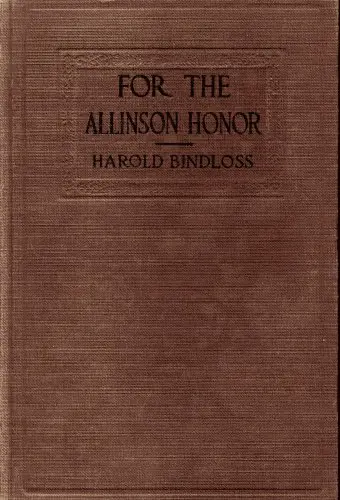
THE CLASSIC COLLECTION · 1913
"For the Allinson Honor" by Harold Bindloss is a novel written in the early 20th century. The book revolves around Andrew Allinson, a man torn between family expectations and his personal sense of honor, as well as his relationships with Clare Olcott, a young woman in distress due to her husband’s absence, and the other members of the Allinson family. The story delves into themes of duty, reputation, and the quest for identity set against a backdrop of rural life and the early days of mining ventures. At the start of the novel, we are introduced to Clare Olcott, who is unsettled and in need of assistance while her husband serves in West Africa. She is aided by Andrew Allinson, an acquaintance of her husband from their time in the Boer War. Clare's vulnerable situation and Andrew's growing concern for her wellbeing set the stage for the unfolding drama. The narrative also juggles the dynamics of the Allinson family, exploring their pride and expectations, particularly concerning Andrew’s perceived lack of ambition and his emerging relationship with Clare, which sparks gossip and scrutiny. The opening portion effectively establishes the characters and the social tensions that will drive the plot forward.
Introduction adapted from the source catalogue; source summaries may be automatically generated.
Free to read · English · 95,648 words · No account needed
MAKE TIME FOR A GOOD BOOK
On by default. Untick to stop anonymous reading totals. Each page counts after 10 seconds in view. How this works.
Anonymous counting is on unless you have switched it off.
The hall which Andrew's grandfather had built around the peel had for years been let with its shooting rights. Ghyllside, however, where Andrew lived, was a commodious house, and Leonard Hathersage was frequently glad to spend a week-end there. He and his wife had arrived on the previous evening, and he was now busy in the library while Andrew sat talking to his sisters on the terrace.
Though the light was fading, it was not yet dark, and the air was still and fragrant with flowers. Yew hedges and shrubberies were growing indistinct; a clump of firs in a neighboring meadow loomed up black and shadowy, but a band of pale saffron light still shone behind the hall on the edge of the moorland a mile away. The square peel stood out harsh and sharp against the glow, the rambling house with its tall chimneys trailing away into the gloom on its flanks.
Andrew, who had early lost his mother, had three sisters. Florence, Leonard's wife, his senior by several years, was a tall, prim and rather domineering woman; Gertrude, who had married Antony Wannop, a local gentleman, was gentler and less decided than her sister; Hilda, the youngest of all, was little, dark, and impulsive.
Wannop leaned on the terrace wall between the flower urns with a cigar in his mouth. He was stout and generally marked by a bluff geniality.
"Where did you go this afternoon, Andrew, when you wouldn't come with us to the Warringtons'?" Hilda asked.
Andrew would have preferred to evade the question, but that seemed
impossible.
"I went to see Mrs. Olcott."
"Again!" exclaimed Hilda, who prided herself on being blunt.
Wannop chuckled softly, but Florence claimed Andrew's attention.
"Don't you think you have been there often enough?"
"It hasn't struck me in that light."
"Then," replied Florence, "I feel it's time it did."
"Come now!" Wannop broke in. "Three to one is hardly fair. Don't be bullied, Andrew; a bachelor can be independent."
"How do you make it three?" Hilda asked. "Only Florence and I
mentioned the matter."
"I am, of course, acquainted with Gertrude's views," Wannop explained.
Hilda laughed. Antony, with his characteristic maladroitness, had somehow made things worse, and Andrew's face hardened. His sisters were generally candid with him, but they had gone too far. With a thoughtlessness he sometimes showed, he had told them nothing about his acquaintance with Clare Olcott's husband.
"You're not much of an ally," he said with a dry smile. "Anyway, as there's no reason why I shouldn't go to The Firs, I'm not likely to be deterred. I may as well mention that I met Ethel Hillyard and begged her to call."
Your reading position is saved on this browser. Take it to another device with a library code. Reading pages adapt to text, rather than matching a printed edition.
Harold Bindloss
Harold Bindloss
Harold Bindloss
Harold Bindloss
BEHIND THE BOOK
This eBook is for the use of anyone anywhere in the United States and most other parts of the world at no cost and with almost no restrictions whatsoever. You may copy it, give it away or re-use it under the terms of the Project Gutenberg License included with this eBook or online at www.gutenberg.org. If you are not located in the United States, you will have to check the laws of the country where you are located before using this eBook. Read the source licence.
The original source file, including credits and licence, is retained by this library. Request an original-format copy at no charge. Please include the book title and Project Gutenberg identifier #34415.
KEEP YOUR CURIOSITY GOING
Coulson Kernahan

Maurice Baring
Frances Wright
Cécile Tormay

Frederic Jesup Stimson

W. H. P. (William Henry Pope) Jarvis