THE CLASSIC COLLECTION✦An outlaw’s diary: the CommuneCLASSIC FREE BOOKS
An outlaw’s diary: the Commune
Cécile Tormay
THE CLASSIC COLLECTION · 1866
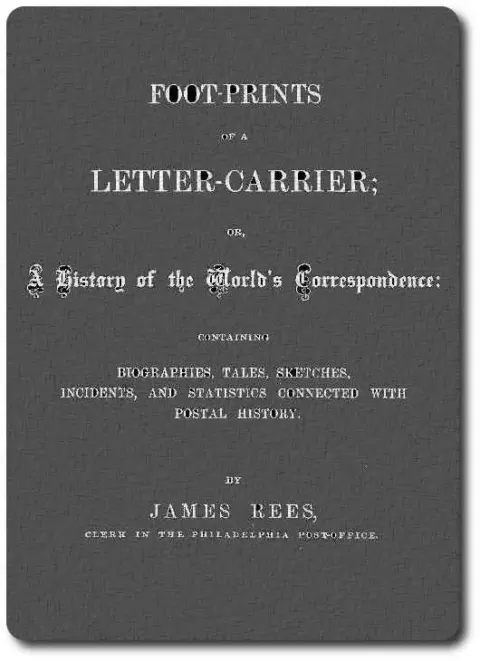
"Foot-prints of a Letter Carrier; or, A History of the World's Correspondence" by James Rees is a historical account written in the mid-19th century. The book explores the development and significance of postal systems throughout history, particularly in the context of the United States. It promises to delve into various aspects of postal history, including biographies, anecdotes, and statistics that underscore the social and political importance of postal services. The opening portion of the work establishes a foundational understanding of the post office's history, emphasizing its significant yet often overlooked role in society. The author reflects on the general disinterest in postal history, despite its relevance to daily life and national affairs. Rees discusses the evolution of communication methods from ancient times, introducing the concept of post as a governmental necessity linked to trade and commerce. He sets the stage for a narrative that connects various developments in postal services across nations while highlighting the profound impact these systems have had on the progression of civilization.
Introduction adapted from the source catalogue; source summaries may be automatically generated.
Free to read · English · 119,279 words · No account needed
MAKE TIME FOR A GOOD BOOK
On by default. Untick to stop anonymous reading totals. Each page counts after 10 seconds in view. How this works.
Anonymous counting is on unless you have switched it off.
Rousseau represents men as originally without language, as unsocial by nature, and totally ignorant of the ties of society. He does not, however, seek to explain how language arose, being disheartened at the outset by the difficulty of deciding whether language was more necessary for the institution of society, or society for the invention of language.
Language is beyond doubt a divine institution, invented by Deity, and by him made known to the human race. If language was devised by man, the invention would not have been at once matured, but must have been the result of the necessities and experience of successive generations. Adam and Eve, in the garden of Eden, spoke a language the purity of which continued until its final disruption at the building of the Tower of Babel.
What language is more beautiful and expressive than that of the Hebrew? It is the language of Deity, and it pleased our Lord Jesus to make use of it when he spake from heaven unto Paul.
There are said to be no less than 3425 known languages in use in the world, of which 937 are Asiatic, 588 European, 276 African, and 1624 American languages and dialects.
By calculation from the best dictionaries, for each of the following languages there are about 20,000 words in the Spanish, 22,000 in the English, 38,000 in the Latin, 30,000 in the French, 45,000 in the Italian, 50,000 in the Greek, and 80,000 in the German.
In the estimate of the number of words in the English language it includes, of course, not only the radical words, but also derivatives, except the preterites and participles of verbs; to which must be added some few terms which, though set down in the dictionaries, are either obsolete or have never ceased to be considered foreign. Of these about 23,000, or nearly five-eighths, are of Anglo-Saxon origin.
The alphabets of different nations contain the following number of letters:—English, 26; French, 23; Italian, 20; Spanish, 27; German, 26; Sclavonic, 27; Russian, 41; Latin, 22; Hebrew, 22; Greek, 24;[8] Arabic, 28; Persian, 32; Turkish, 33; Sanscrit, 50; Chinese, 214.
Anthony Brewer (1617) thus characterized those best known:—
“The ancient Hebrew, clad with mysteries;
The learned Greek, rich in fit epithets,
Blest in the lovely marriage of pure words;
The Chaldean wise; the Arabian physical;
The Roman eloquent; the Tuscan grave;
The braving Spanish, and the smooth-tong’d
French.”
The Hebrew language and letters are derived from the Phœnician, since Tyre, Sidon, &c. were distinguished cities in the age of Moses and Joshua. Even Abraham lived in their territory.
Sanscrit is the basis of Hindoo learning, and said to be the first
character.
Your reading position is saved on this browser. Take it to another device with a library code. Reading pages adapt to text, rather than matching a printed edition.
BEHIND THE BOOK
This eBook is for the use of anyone anywhere in the United States and most other parts of the world at no cost and with almost no restrictions whatsoever. You may copy it, give it away or re-use it under the terms of the Project Gutenberg License included with this eBook or online at www.gutenberg.org. If you are not located in the United States, you will have to check the laws of the country where you are located before using this eBook. Read the source licence.
The original source file, including credits and licence, is retained by this library. Request an original-format copy at no charge. Please include the book title and Project Gutenberg identifier #47190.
KEEP YOUR CURIOSITY GOING
Cécile Tormay

Moritz Busch
John L. Ransom
Frances Wright
Cécile Tormay

Mabel Potter Daggett