THE CLASSIC COLLECTION✦An outlaw’s diary: the CommuneCLASSIC FREE BOOKS
An outlaw’s diary: the Commune
Cécile Tormay
THE CLASSIC COLLECTION · 1866
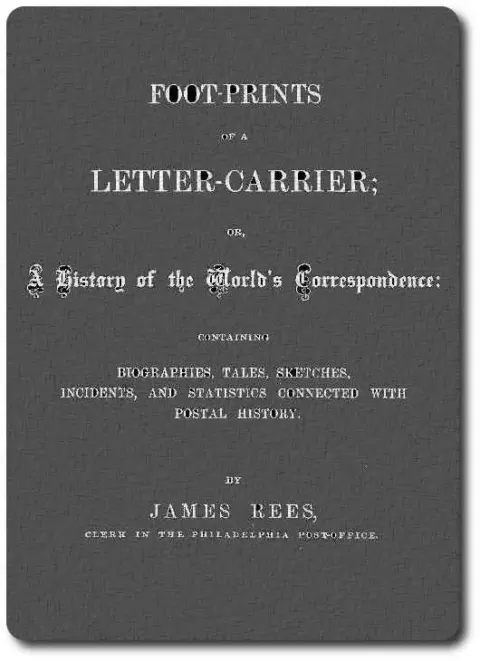
"Foot-prints of a Letter Carrier; or, A History of the World's Correspondence" by James Rees is a historical account written in the mid-19th century. The book explores the development and significance of postal systems throughout history, particularly in the context of the United States. It promises to delve into various aspects of postal history, including biographies, anecdotes, and statistics that underscore the social and political importance of postal services. The opening portion of the work establishes a foundational understanding of the post office's history, emphasizing its significant yet often overlooked role in society. The author reflects on the general disinterest in postal history, despite its relevance to daily life and national affairs. Rees discusses the evolution of communication methods from ancient times, introducing the concept of post as a governmental necessity linked to trade and commerce. He sets the stage for a narrative that connects various developments in postal services across nations while highlighting the profound impact these systems have had on the progression of civilization.
Introduction adapted from the source catalogue; source summaries may be automatically generated.
Free to read · English · 119,279 words · No account needed
MAKE TIME FOR A GOOD BOOK
On by default. Untick to stop anonymous reading totals. Each page counts after 10 seconds in view. How this works.
Anonymous counting is on unless you have switched it off.
Blair, in his introduction to his Lectures on Rhetoric, speaking of language, says:—“One of the most distinguished privileges which Providence has conferred upon mankind is the power of communicating their thoughts to one another. Destitute of this power, reason would be a solitary and, in some measure, an unavoidable principle. Speech is the great instrument by which man becomes beneficial to man; and it is to the intercourse and transmission of thought, by means of speech, that we are chiefly indebted for the improvement of thought itself.”
Tooke, in one of his admirable golden sentences, says:—“The first aim of language was to communicate our thoughts; the second, to do it with dispatch.”
“And all the worlde was of one tongue and one language.”—Bible, 1551,
Gen. xi.
Language came into the world along with all things that had life. It was the voice of nature speaking through things animate, giving form and harmony to objects animate as well as inanimate; and all of which, as soon as created, God pronounced good.
Flowers had their language, and there was music in the spheres. Trees murmured through their deep forest-home long before the woodman’s axe stripped them of their mode of expressing their wild æolian sounds to each other. And there was language in waterfalls, mountain cataracts, as well as music in the sound, though expressed in thundertones; and, as the spirit of Deity passed over the earth, all living things found tongue, thought, expression, and the human voice syllabled the words and commands of its Maker. Language, therefore, is a divine institution.
Horace, Pliny, Juvenal, and others, held the opinion that it was a divine institution, and only reached its present state after a long and gradual improvement of the human family.
Many of the ancient philosophers and poets believed that men were originally “a dumb, low herd.”
“Mutum et turpe pecus.”
Lord Monboddo—who, in his work on “the Origin of Language,” labors to prove that man is but a higher species of monkey—thinks that originally the human race had only a few monosyllables, such as, Ha, he, hi, ho, by which, like beasts, they expressed certain emotions. Others, again, assert that the early races were in all things rude and savage, totally ignorant of the arts, unable to communicate with each other, except in the imperfect manner of beasts, and sensible of nothing save hunger, pain, and similar emotions. Cicero, alluding to the human race in primeval ages, says:—
“There was a time when men wandered everywhere through life after the manner of beasts, and supported themselves by eating the food of beasts. Fields and mountains, hills and dales were alike their homes.”
Your reading position is saved on this browser. Take it to another device with a library code. Reading pages adapt to text, rather than matching a printed edition.
BEHIND THE BOOK
This eBook is for the use of anyone anywhere in the United States and most other parts of the world at no cost and with almost no restrictions whatsoever. You may copy it, give it away or re-use it under the terms of the Project Gutenberg License included with this eBook or online at www.gutenberg.org. If you are not located in the United States, you will have to check the laws of the country where you are located before using this eBook. Read the source licence.
The original source file, including credits and licence, is retained by this library. Request an original-format copy at no charge. Please include the book title and Project Gutenberg identifier #47190.
KEEP YOUR CURIOSITY GOING
Cécile Tormay

Moritz Busch
John L. Ransom
Frances Wright
Cécile Tormay

Mabel Potter Daggett