
The lost dirigible
Ralph Henry Barbour
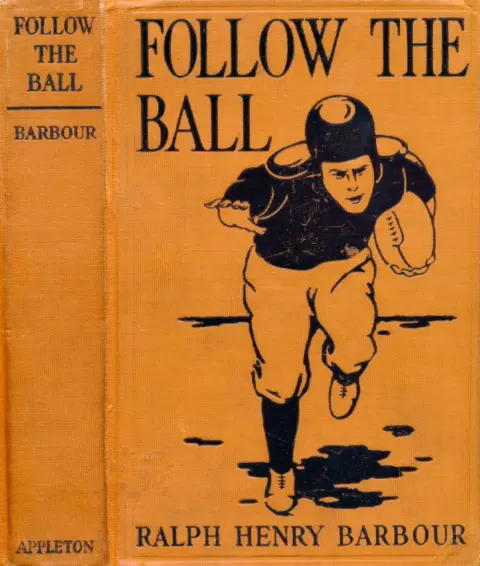
THE CLASSIC COLLECTION · 1924
"Follow the Ball" by Ralph Henry Barbour is a sports-themed novel likely written in the early 20th century. The story revolves around the life of Joe Kenton, a talented baseball player at Holman's School, as he navigates the complexities of friendships, rivalries, and the significance of teamwork. The book explores themes of loyalty, personal sacrifice, and the passion for sports through the lens of adolescent experiences. The opening of the book introduces Joe Kenton, who is reflecting on his past school year and his relationship with his roommate Hal Norwin. As the school year approaches its end, Joe grapples with missed opportunities for academic achievements and social connections, particularly with Hal, with whom he shares a strained friendship. A pivotal moment occurs when Hal sneaks into their dormitory and is caught by the proctor, and Joe heroically takes the blame to protect Hal's chance to play in an important upcoming baseball game. This act of sacrifice sets the stage for the evolving dynamics between the characters and foreshadows the challenges they will face both on and off the field.
Introduction adapted from the source catalogue; source summaries may be automatically generated.
Free to read · English · 57,928 words · No account needed
MAKE TIME FOR A GOOD BOOK
On by default. Untick to stop anonymous reading totals. Each page counts after 10 seconds in view. How this works.
Anonymous counting is on unless you have switched it off.
The form under the bed-clothes stirred, an arm was thrust forth and Hal groaned sleepily. Then, as though disturbed by the sound or the light, he thrust the clothes down and blinked protestingly. It was a good piece of acting. Joe wondered whether Maynard was deceived by it. It was hard to tell.
“Put out that light, Joe,” muttered Hal. Then, wakefully: “Hello,
what’s the row?”
Maynard viewed him doubtfully. “I think you heard what I said,” he
observed.
“He says he saw some one climb in our window a while ago.” Joe nodded smilingly at the proctor.
Hal turned and looked at the window, blinking and rubbing his eyes. Then: “Wh-what for?” he asked stupidly.
“I don’t think he said,” replied Joe gravely. “You didn’t say, did you,
Maynard?”
“I’ve had my say.” The proctor turned toward the door. “I’m sorry,
fellows.”
“Just a minute!” said Joe. “Do you still think you saw――what you said,
Maynard?”
“Naturally.”
“And you feel that it’s――it’s up to you to spoil Saturday’s game?”
“It’s up to me to report to faculty. You should have thought of the
game before.”
“It seems sort of tough,” muttered Joe. Maynard flashed a puzzled look at him. Hal sat up impulsively.
“Oh, well,” he began, “I suppose――”
“Never mind,” interrupted Joe, shrugging. “I can stand it, I guess.”
“You mean――it was you?” demanded Maynard, staring hard.
Joe shrugged again. “I thought you said you knew,” he scoffed.
“I think I do,” replied Maynard meaningly, with a quick side glance at Hal’s troubled face. “But I can’t prove I’m right, I suppose. Seems to me it would be the decent thing for one of you to own up, though.”
Again Hal started to speak and again Joe interrupted. “Oh, piffle, Maynard! A fellow’s innocent until he’s proved guilty. Anyway, I guess the――the circumstantial evidence is all you need.”
“All right, have it your way, Kenton. You know where the evidence points. I’m sorry to have――I’m sorry it happened. Good night.”
“I’m sorry, too,” answered Joe soberly. “Good night, Maynard.”
The door closed behind the proctor and Joe snapped off the light. After a long moment of silence: “What did you do that for?” demanded Hal, truculently.
“Well, he was sure it was one of us. If I don’t play Saturday it won’t much matter. If you don’t, it’ll matter a lot. You’re the only one of us who can hit Cross, and unless some one hits him we’re going to get licked. Besides, I didn’t lie to him.”
Your reading position is saved on this browser. Take it to another device with a library code. Reading pages adapt to text, rather than matching a printed edition.
Ralph Henry Barbour
Ralph Henry Barbour

Ralph Henry Barbour

Ralph Henry Barbour
BEHIND THE BOOK
This eBook is for the use of anyone anywhere in the United States and most other parts of the world at no cost and with almost no restrictions whatsoever. You may copy it, give it away or re-use it under the terms of the Project Gutenberg License included with this eBook or online at www.gutenberg.org. If you are not located in the United States, you will have to check the laws of the country where you are located before using this eBook. Read the source licence.
The original source file, including credits and licence, is retained by this library. Request an original-format copy at no charge. Please include the book title and Project Gutenberg identifier #60540.
KEEP YOUR CURIOSITY GOING
Coulson Kernahan

Maurice Baring
Frances Wright
Cécile Tormay

Frederic Jesup Stimson

W. H. P. (William Henry Pope) Jarvis