THE CLASSIC COLLECTION✦An outlaw’s diary: the CommuneCLASSIC FREE BOOKS
An outlaw’s diary: the Commune
Cécile Tormay
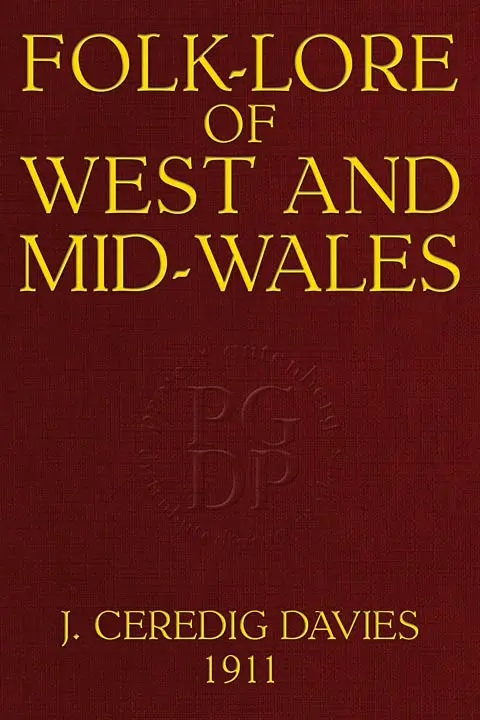
THE CLASSIC COLLECTION · 1911
"Folk-Lore of West and Mid-Wales" by Jonathan Ceredig Davies is a collection of folklore and customs, likely written in the early 20th century. The work focuses on the rich tapestry of Welsh traditions, particularly those found in West and Mid-Wales, seeking to document the vanishing cultural heritage of these regions. Through a detailed exploration of various customs, including love traditions, wedding practices, and superstitions, the book aims to preserve these narratives for future generations. The opening of the text sets the stage by highlighting the author's deep connections with the Welsh community and their folk traditions. It presents a historical context in which Davies gathered stories from local individuals, shedding light on rituals surrounding courtship, marriage, and the beliefs that shaped daily life. Emphasizing the importance of oral tradition, the introduction notes that many practices have faded with time or are on the brink of being forgotten. The author’s mission is portrayed as a labor of love—one that intertwines personal anecdotes with broader cultural insights, making a case for the significance of keeping these traditions alive amid modernity's encroachment.
Introduction adapted from the source catalogue; source summaries may be automatically generated.
Free to read · English · 143,766 words · No account needed
MAKE TIME FOR A GOOD BOOK
On by default. Untick to stop anonymous reading totals. Each page counts after 10 seconds in view. How this works.
Anonymous counting is on unless you have switched it off.
Bread and butter falling on the floor upside down signifies "rain is near," according to some folks.
When the moon's horns are turned up, it is a sign of fine weather; if they are turned down rain is coming. When the face of the moon is partially obscured by a light thin vapour rain is coming.
Welsh people in country places generally expect a change of weather when the moon changes; and I have just been informed at Llanilar, that a new moon on a wet Saturday, brings wet weather, but that, on the other hand, a new moon on a fine Saturday, brings fine weather.
By Christmas, the days are said to have lengthened "a cock's stride."
The following Welsh weather sayings I often heard when a boy:--
"Chwefrol chwyth,
Chwytha'r deryn oddiar ei nyth."
(February's blast
Blows the bird from its nest.)
"Mawrth a ladd,
Ebrill a fling."
(March kills,
April flays.)
If the hazel (collen) blooms well it is a sign of a fruitful year.
In Cardiganshire and Carmarthenshire, it is believed that if nuts will be numerous, many children will be born that year.
I have met many people all over Wales who think that a very mild winter is not good, and they repeat the old saying:--
"Gaeaf glas, mynwent fras."
which means that
"When the winter is green, many funerals will be seen."
It is believed in Cardiganshire and Carmarthenshire by many, especially old people, that the cuckoo does not go away from this country in winter, but sleeps in some sheltered place. When a boy, I often heard the following ditty:--
"Amser y gwcw yw Ebrill a Mai,
A hanner Mehefin, chwi wyddoch bob rhai."
(The Cuckoo's time is April and May,
And half of June, as all know, I daresay).
The cuckoo making its appearance before the leaves are on the hawthorn bush is a sign of a bad year; and for the bird not to appear at its usual time is also a bad sign; hence:
"Gwcw Glamme,
Cosyn dime."
When you hear the cuckoo for the first time in the season it is very important to have money in your pocket in order to secure good luck for the coming year. People turn the money in their pockets with their hands, and sometimes toss a piece into the air. It is also considered very lucky to hear this bird for the first time when you are standing on green grass; but if you are on the road or on bare ground, it is otherwise.
Your reading position is saved on this browser. Take it to another device with a library code. Reading pages adapt to text, rather than matching a printed edition.
BEHIND THE BOOK
This eBook is for the use of anyone anywhere in the United States and most other parts of the world at no cost and with almost no restrictions whatsoever. You may copy it, give it away or re-use it under the terms of the Project Gutenberg License included with this eBook or online at www.gutenberg.org. If you are not located in the United States, you will have to check the laws of the country where you are located before using this eBook. Read the source licence.
The original source file, including credits and licence, is retained by this library. Request an original-format copy at no charge. Please include the book title and Project Gutenberg identifier #53915.
KEEP YOUR CURIOSITY GOING
Cécile Tormay

Moritz Busch
John L. Ransom

Maurice Baring
Frances Wright
Cécile Tormay