THE CLASSIC COLLECTION✦An outlaw’s diary: the CommuneCLASSIC FREE BOOKS
An outlaw’s diary: the Commune
Cécile Tormay
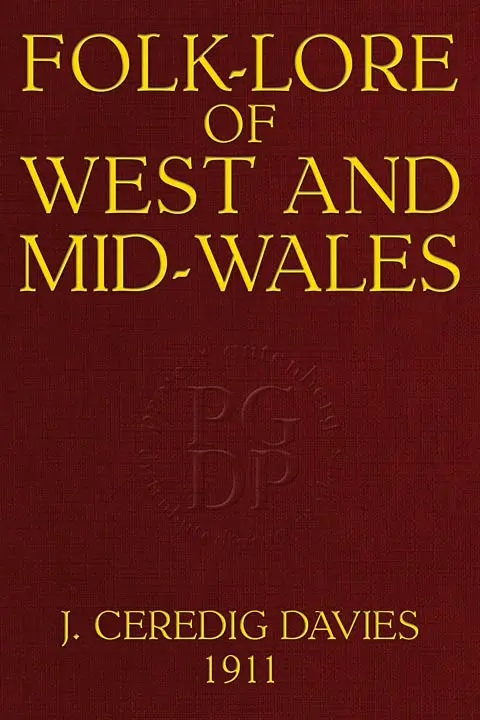
THE CLASSIC COLLECTION · 1911
"Folk-Lore of West and Mid-Wales" by Jonathan Ceredig Davies is a collection of folklore and customs, likely written in the early 20th century. The work focuses on the rich tapestry of Welsh traditions, particularly those found in West and Mid-Wales, seeking to document the vanishing cultural heritage of these regions. Through a detailed exploration of various customs, including love traditions, wedding practices, and superstitions, the book aims to preserve these narratives for future generations. The opening of the text sets the stage by highlighting the author's deep connections with the Welsh community and their folk traditions. It presents a historical context in which Davies gathered stories from local individuals, shedding light on rituals surrounding courtship, marriage, and the beliefs that shaped daily life. Emphasizing the importance of oral tradition, the introduction notes that many practices have faded with time or are on the brink of being forgotten. The author’s mission is portrayed as a labor of love—one that intertwines personal anecdotes with broader cultural insights, making a case for the significance of keeping these traditions alive amid modernity's encroachment.
Introduction adapted from the source catalogue; source summaries may be automatically generated.
Free to read · English · 143,766 words · No account needed
MAKE TIME FOR A GOOD BOOK
On by default. Untick to stop anonymous reading totals. Each page counts after 10 seconds in view. How this works.
Anonymous counting is on unless you have switched it off.
MISCELLANEOUS BELIEFS, WEATHER SIGNS, BIRDS, LORE, Etc.
To find a horse shoe on the road or in a field is considered extremely
lucky.
To see a lamb for the first time during the season with its head
facing you is also lucky.
When you see a newly-wedded couple throw an old pair of shoes at them, for it means "good luck to them."
This was done now at Llanilar, October, 1910, at the wedding of Miss Jones, Bryntirion, by Mrs. Richards, Derwen-Deg.
To drop your stick or umbrella on your journey is unlucky.
When you have started on a journey, to turn back to the house for something you have forgotten, means bad luck.
To bring heather into the house is a sign of death: white heather, however, is considered extremely lucky.
It is unlucky to meet a white horse when on a journey, to change it into luck spit over your little finger.
If a young lady looks through a silk-handkerchief at the first new moon after New Year's Day, she will be able to see her future husband.
It is unlucky to find a coin on the road, but if the head and not the tail happens to be up it is a lucky omen.
To carry in one's purse a crooked sixpence, or a coin with a hole in
it is lucky.
Spit on the first coin you get in the day, and you'll have luck for
24 hours.
Never begin any new work on a Friday or Saturday.
It is considered unlucky for a servant to go to service on a Thursday or a Saturday. In Cardiganshire servants go to service either on a Monday or Wednesday, which are considered lucky days.
A woman near Narberth in Pembrokeshire told me that Tuesdays and Thursdays are lucky days in that part.
In some parts of Carmarthenshire, the most lucky days are Tuesdays,
Thursdays and Saturdays.
But the fact of it is, I have discovered that the days which are considered lucky in one part of the country are considered unlucky in another part.
Odd numbers, especially three, and seven, are said to be lucky numbers.
Thirteen, however, is considered very unlucky, and it is thought that if thirteen persons sit down to table, the last person who sits down and the first to rise up, are those to whom the ill-luck will fall.
It is considered unlucky by many to shake hands across a table; and when two people are shaking hands, if two others of the company attempt to shake hands across their hands it is a very unlucky sign.
Your reading position is saved on this browser. Take it to another device with a library code. Reading pages adapt to text, rather than matching a printed edition.
BEHIND THE BOOK
This eBook is for the use of anyone anywhere in the United States and most other parts of the world at no cost and with almost no restrictions whatsoever. You may copy it, give it away or re-use it under the terms of the Project Gutenberg License included with this eBook or online at www.gutenberg.org. If you are not located in the United States, you will have to check the laws of the country where you are located before using this eBook. Read the source licence.
The original source file, including credits and licence, is retained by this library. Request an original-format copy at no charge. Please include the book title and Project Gutenberg identifier #53915.
KEEP YOUR CURIOSITY GOING
Cécile Tormay

Moritz Busch
John L. Ransom

Maurice Baring
Frances Wright
Cécile Tormay