The slave ship
Mary Johnston
THE CLASSIC COLLECTION · 1918
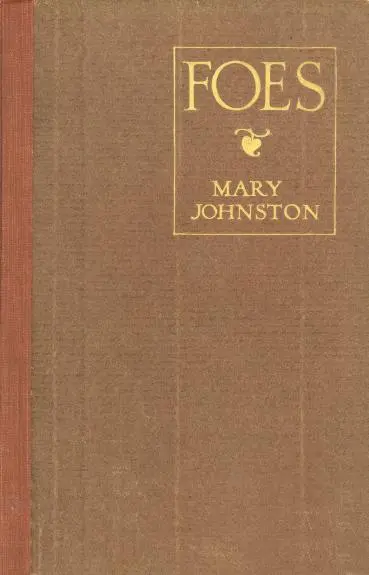
"Foes" by Mary Johnston is a novel written in the early 20th century. This work explores themes of friendship, loyalty, and the tumultuous world surrounding Scotland in the early 18th century, focusing on the lives and relationships of the Jardine family, particularly the bond between Alexander Jardine and Ian Rullock. The narrative delves into the political tensions stemming from the Jacobite uprisings, set against a rich backdrop of the Scottish landscape. The opening of the novel introduces the character of English Strickland, a tutor at Glenfernie House, as he converses with Mother Binning, a local woman gifted with the second sight. Their discussion reflects the deeply rooted traditions and portents that linger in rural Scottish life. Amidst this setting, Strickland contemplates the enigmatic Alexander Jardine, who possesses a complexity that intrigues both Mother Binning and the tutor himself. The narrative then establishes Alexander's relationships with his family and friends, hinting at the conflicts and emotional depth that will shape the course of their lives as they approach a turning point in Scottish history. Overall, the opening sets the stage for a story of growth, friendship, and the struggle against a backdrop of cultural upheaval.
Introduction adapted from the source catalogue; source summaries may be automatically generated.
Free to read · English · 89,254 words · No account needed
MAKE TIME FOR A GOOD BOOK
On by default. Untick to stop anonymous reading totals. Each page counts after 10 seconds in view. How this works.
Anonymous counting is on unless you have switched it off.
Said Alexander: "You did thus and thus, obeying inner weakness, calling it all the time strength. And do I not know that I, too, made myself a shadow going after shadows? My own make of selfishness, arrogance, and hatred.... Let us do better, you and I!" He mended the fire. "By understanding the past may be altered. Already it is altered with you and me.... I was here the other day. I stayed a long time. There seemed two boys in the cave and there seemed a girl beside them. The three felt with and understood and were one another." He came and knelt beside Ian. "Let us forge a stronger friendship!"
Ian, face to the rock, was weeping, weeping. Alexander knelt beside him, lay beside him, arm over heaving shoulders. Old Steadfast--Old Saracen--and Elspeth Barrow, also, and around and through, pulsing, cohering, interpenetrating, healing, a sense of something greater....
It passed--the torrent force, long pent, aching against its barriers. Ian lay still, at last sat up.
"Come outside," said Alexander, "into the cold and the air."
They left the cave for the moonlight night. They leaned against the rock, and about them hung the sleeping trees. The crag was silvered, the stream ran with a deep under-sound. The air struck pure and cold. The large stars shone down through all the flooding radiance of the moon. The familiar place, the strange place, the old-new place.... At last Ian spoke, "Have you been to the Kelpie's Pool?"
"Yes. The day I came home I lay for hours beside it."
"I was there to-night. I came here from there."
"It is with us. But far beside it is also with us!"
"The carnival at Rome. When I left Rome I went to the Lake of Como. I want to tell you of a night there--and of nights and days later, elsewhere--"
"Come within, as we used to do, and talk the heart out."
They went back to the fire. It played and sang. The minutes, poignant,
full, went by.
"So at last prison and scaffold risks ceased to count. I took what
disguise I could and came."
"All at Black Hill know?"
"Yes. But they are not betrayers. I do not show myself and am not called by my name. I am Senor Nobody."
"Senor Nobody."
"When I broke Edinburgh gaol I fled to France through Spain. There in the mountains I fell among brigands. I had to find ransom. Senor Nobody provided it. I never saw him nor do I know his name.... Alexander!"
"Aye."
"Was it you?"
"Aye. I hated while I gave.... But I don't hate now. I don't hate
myself. Ian!"
The fire played, the fire sang.
Your reading position is saved on this browser. Take it to another device with a library code. Reading pages adapt to text, rather than matching a printed edition.
Mary Johnston
Mary Johnston
Mary Johnston
Mary Johnston
BEHIND THE BOOK
This eBook is for the use of anyone anywhere in the United States and most other parts of the world at no cost and with almost no restrictions whatsoever. You may copy it, give it away or re-use it under the terms of the Project Gutenberg License included with this eBook or online at www.gutenberg.org. If you are not located in the United States, you will have to check the laws of the country where you are located before using this eBook. Read the source licence.
The original source file, including credits and licence, is retained by this library. Request an original-format copy at no charge. Please include the book title and Project Gutenberg identifier #16554.
KEEP YOUR CURIOSITY GOING
Cécile Tormay

Moritz Busch
Coulson Kernahan
John L. Ransom

Maurice Baring
Frances Wright