The slave ship
Mary Johnston
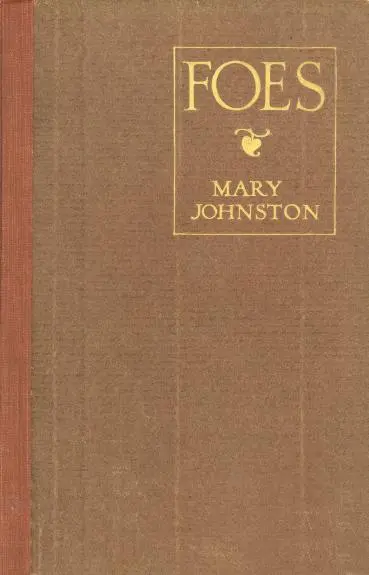
THE CLASSIC COLLECTION · 1918
"Foes" by Mary Johnston is a novel written in the early 20th century. This work explores themes of friendship, loyalty, and the tumultuous world surrounding Scotland in the early 18th century, focusing on the lives and relationships of the Jardine family, particularly the bond between Alexander Jardine and Ian Rullock. The narrative delves into the political tensions stemming from the Jacobite uprisings, set against a rich backdrop of the Scottish landscape. The opening of the novel introduces the character of English Strickland, a tutor at Glenfernie House, as he converses with Mother Binning, a local woman gifted with the second sight. Their discussion reflects the deeply rooted traditions and portents that linger in rural Scottish life. Amidst this setting, Strickland contemplates the enigmatic Alexander Jardine, who possesses a complexity that intrigues both Mother Binning and the tutor himself. The narrative then establishes Alexander's relationships with his family and friends, hinting at the conflicts and emotional depth that will shape the course of their lives as they approach a turning point in Scottish history. Overall, the opening sets the stage for a story of growth, friendship, and the struggle against a backdrop of cultural upheaval.
Introduction adapted from the source catalogue; source summaries may be automatically generated.
Free to read · English · 89,254 words · No account needed
MAKE TIME FOR A GOOD BOOK
On by default. Untick to stop anonymous reading totals. Each page counts after 10 seconds in view. How this works.
Anonymous counting is on unless you have switched it off.
Alexander sat by the window, in the rocky island, and the Spanish river flowed by. It was dusk. Then came lights, and the English secretary and physician, with servants to lay the table and bring supper. Glenfernie ate and drank with the two men. His lordship was reported better, would doubtless be up to-morrow. The talk fell upon Greece, to which country the nobleman was, in the end, bound. Greek art, Greek literature, Greek myth. Here the secretary proved scholar and enthusiast, a liker especially of the byways of myth. He and Alexander voyaged here and there among them. "And you remember, too," said the secretary, "the Cranes of Ibycus--"
They rose at last from table. Secretary and physician must return to their patron. "I am going to hunt bed and sleep," said Glenfernie. "To-morrow, if his lordship is recovered, we'll go see that church."
In the rude, small bedchamber he found his Spanish servant. Presently he would dismiss him, but first, "Tell me, Gil, of the banditti in these mountains."
Gil told. The foreigner who employed him asked questions, referred intelligently from answer to answer, and at last had in hand a compact body of information. He bade Gil good night. Ways of banditti in any age or place were much the same!
The room was small, with a rude and narrow bed. There was a window, small, too, but open to the night. Pouring through this there entered a vagrant procession of sound, with, in the interstices, a silence that had its own voice. As the night deepened the procession thinned, at last died away.
When he undressed he had taken the letter to Senor Nobody and put it upon the table. Now, lying still and straight upon the bed in the dark room, there seemed a blacker darkness where it lay, four feet from him, a little above the level of his eyes. There it was, a square, a cube, of Egyptian night, hard, fierce, black, impenetrable.
For a long time he kept a fixed gaze upon it. Beyond and above it glimmered the window. The larger square at last drew his eyes. He lay another long while, very still, with the window before him. Lying so, thought at last grew quiet, hushed, subdued. Very quietly, very sweetly, like one long gone, loved in the past, returning home, there slipped into view, borne upon the stream of consciousness, an old mood of stillness, repose, dawn-light by which the underneath of things was seen. Once it had come not infrequently, then blackness and hardness had whelmed it and it came no more. He had almost forgotten the feel of it.
Your reading position is saved on this browser. Take it to another device with a library code. Reading pages adapt to text, rather than matching a printed edition.
Mary Johnston
Mary Johnston
Mary Johnston

Mary Johnston
BEHIND THE BOOK
This eBook is for the use of anyone anywhere in the United States and most other parts of the world at no cost and with almost no restrictions whatsoever. You may copy it, give it away or re-use it under the terms of the Project Gutenberg License included with this eBook or online at www.gutenberg.org. If you are not located in the United States, you will have to check the laws of the country where you are located before using this eBook. Read the source licence.
The original source file, including credits and licence, is retained by this library. Request an original-format copy at no charge. Please include the book title and Project Gutenberg identifier #16554.
KEEP YOUR CURIOSITY GOING
Cécile Tormay

Moritz Busch
Coulson Kernahan
John L. Ransom

Maurice Baring
Frances Wright