The slave ship
Mary Johnston
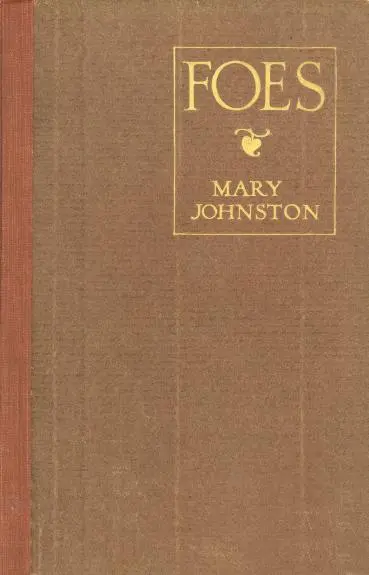
THE CLASSIC COLLECTION · 1918
"Foes" by Mary Johnston is a novel written in the early 20th century. This work explores themes of friendship, loyalty, and the tumultuous world surrounding Scotland in the early 18th century, focusing on the lives and relationships of the Jardine family, particularly the bond between Alexander Jardine and Ian Rullock. The narrative delves into the political tensions stemming from the Jacobite uprisings, set against a rich backdrop of the Scottish landscape. The opening of the novel introduces the character of English Strickland, a tutor at Glenfernie House, as he converses with Mother Binning, a local woman gifted with the second sight. Their discussion reflects the deeply rooted traditions and portents that linger in rural Scottish life. Amidst this setting, Strickland contemplates the enigmatic Alexander Jardine, who possesses a complexity that intrigues both Mother Binning and the tutor himself. The narrative then establishes Alexander's relationships with his family and friends, hinting at the conflicts and emotional depth that will shape the course of their lives as they approach a turning point in Scottish history. Overall, the opening sets the stage for a story of growth, friendship, and the struggle against a backdrop of cultural upheaval.
Introduction adapted from the source catalogue; source summaries may be automatically generated.
Free to read · English · 89,254 words · No account needed
MAKE TIME FOR A GOOD BOOK
On by default. Untick to stop anonymous reading totals. Each page counts after 10 seconds in view. How this works.
Anonymous counting is on unless you have switched it off.
Gilian moved to the window and sat in it. She had not undressed. The moon silvered her, too. "What has happened, Elspeth?"
"Naught. What should happen?"
"It's no use telling me that.--We've been away from each other almost a year. I know that I've changed, grown, in that time, and it's natural that you should do the same. But it's something besides that!"
Elspeth laughed and her laughter was like a little, cold, mirthless chime of silver bells. "You're fanciful, Gilian!... We're no longer lassies; we're women! So the colors of things get a little different--that's all!"
"Don't you love me, Elspeth?"
"Yes, I love you. What has that to do with it?"
"Has it not? Has love naught to do with it? Love at all--all love?"
Elspeth parted her long dark hair into two waves, drew it before her, and began to braid it, sitting still, her limbs under her, upon the bed. "I saw you on the moor walking and talking with grandfather. What did he say to you?"
"You are changed and I said that you were changed. He had not
noticed--he would not be like to notice! Then he told me about the
laird and you."
"Yes. About the laird and me."
"You couldn't love him? They say he is a fine man."
"No, I couldn't love him. I like him. He understands. No one is to
blame."
"But if it is not that, what is it--what is it, Elspeth?"
"It's naught--naught--naught, I tell you!"
"It's a strange naught that makes you like a dark lady in a
ballad-book!"
Elspeth laughed again. "Didn't I say that you were fanciful? It's late
and I am sleepy."
That had been while the leaves were still upon the trees. The next morning and thenceforward Elspeth seemed to make a point of cheerfulness. It passed with her aunt and the helpers in the house. Jarvis Barrow appeared to take no especial note if women laughed or sighed, so long as they lived irreproachably.
The leaves bronzed, the autumn rains came, the leaves fell, the trees stood bare, the winds began to blow, there fell the first snowflakes. Gilian, walking home from the town, was overtaken on the moor by Robin Greenlaw.
"Where is Elspeth?"
"We are making our winter dresses. She would not leave her sewing."
The cousins walked upon the moor path together. Gilian was fairer and
more strongly made than Elspeth. They walked in silence; then said
Robin:
"You're the old Gilian, but I'm sure I miss the old Elspeth!"
"I think, myself, she's gone visiting! I rack and rack my brains to find what grief could have come to Elspeth. She will not help me."
Your reading position is saved on this browser. Take it to another device with a library code. Reading pages adapt to text, rather than matching a printed edition.
Mary Johnston
Mary Johnston
Mary Johnston
Mary Johnston
BEHIND THE BOOK
This eBook is for the use of anyone anywhere in the United States and most other parts of the world at no cost and with almost no restrictions whatsoever. You may copy it, give it away or re-use it under the terms of the Project Gutenberg License included with this eBook or online at www.gutenberg.org. If you are not located in the United States, you will have to check the laws of the country where you are located before using this eBook. Read the source licence.
The original source file, including credits and licence, is retained by this library. Request an original-format copy at no charge. Please include the book title and Project Gutenberg identifier #16554.
KEEP YOUR CURIOSITY GOING
Cécile Tormay

Moritz Busch
Coulson Kernahan
John L. Ransom

Maurice Baring
Frances Wright