THE CLASSIC COLLECTION✦When I was your ageCLASSIC FREE BOOKS
When I was your age
Laura Elizabeth Howe Richards
THE CLASSIC COLLECTION · 1909
"Florence Nightingale, the Angel of the Crimea: A Story for Young People" by Laura E. Richards is a historical account written in the early 20th century. The book recounts the life and achievements of Florence Nightingale, focusing on her vital contributions during the Crimean War. As the narrative unfolds, it delves into her upbringing, gradual journey into nursing, and the monumental work she accomplished in improving war hospital conditions, highlighting her profound impact on healthcare. At the start of the book, the scene is set with a dinner conversation among military and naval officers reflecting on the Vietnam War, leading to a consensus that Florence Nightingale is the one worker who will be forever remembered for her efforts. The narrative introduces her early life, detailing her family background, childhood homes, and experiences that shaped her caring nature and passion for helping others. The opening chapters illustrate young Florence's affinity for nursing, revealed through her interactions with her dolls and the animals around her, ultimately foreshadowing her humanitarian efforts during times of war and suffering.
Introduction adapted from the source catalogue; source summaries may be automatically generated.
Free to read · English · 32,599 words · No account needed
MAKE TIME FOR A GOOD BOOK
On by default. Untick to stop anonymous reading totals. Each page counts after 10 seconds in view. How this works.
Anonymous counting is on unless you have switched it off.
Whene'er a noble deed is wrought,[5]
Whene'er is spoken a noble thought,
Our hearts, in glad surprise,
To higher levels rise.
The tidal wave of deeper souls
Into our inmost being rolls,
And lifts us unawares
Out of all meaner cares.
Honor to those whose words or deeds
Thus help us in our daily needs,
And by their overflow
Raise us from what is low!
Thus thought I, as by night I read
Of the great army of the dead,
The trenches cold and damp,
The starved and frozen camp,--
The wounded from the battle-plain,
In dreary hospitals of pain,
The cheerless corridors,
The cold and stony floors.
Lo! in that house of misery
A lady with a lamp I see
Pass through the glimmering gloom,
And flit from room to room.
And slow, as in a dream of bliss,
The speechless sufferer turns to kiss
Her shadow, as it falls
Upon the darkening walls.
As if a door in heaven should be
Opened and then closed suddenly,
The vision came and went,
The light shone and was spent.
On England's annals, through the long
Hereafter of her speech and song,
That light its rays shall cast
From portals of the past.
A Lady with a Lamp shall stand
In the great history of the land,
A noble type of good,
Heroic womanhood.
Nor even shall be wanting here
The palm, the lily, and the spear,
The symbols that of yore
Saint Filomena bore.
Miss Nightingale's headquarters were in the "Sisters' Tower," as it came to be called, one of the four corner towers of the great building. Here was a large, airy room, with doors opening off it on each side. In the middle was a large table, covered with stores of every kind, constantly in demand, constantly replaced; and on the floor, and flowing into all the corners, were--more stores! Bales of shirts, piles of socks, slippers, dressing gowns, sheets, flannels--everything you can think of that is useful and comfortable in time of sickness. About these piles the white-capped nurses came and went, like bees about a hive; all was quietly busy, cheerful, methodical. In a small room opening off the large one the Lady-in-Chief held her councils with nurses, doctors, generals or orderlies; giving to all the same courteous attention, the same clear, calm, helpful advice or directions. Here, too, for hours at a time, she sat at her desk, writing; letters to Sidney Herbert and his wife; letters to Lord Raglan, the commander-in-chief, who, though at first averse to her coming, became one of her firmest friends and admirers; letters to sorrowing wives and mothers and sisters in England. She received letters by the thousand; she could not answer them all with her own hand, but I am sure she answered as many as was possible. One letter was forwarded to her by the Herberts which gave a great pleasure not to her only, but to everyone in all that place of suffering. It was dated Windsor Castle, December 6, 1854.
Your reading position is saved on this browser. Take it to another device with a library code. Reading pages adapt to text, rather than matching a printed edition.
Laura Elizabeth Howe Richards
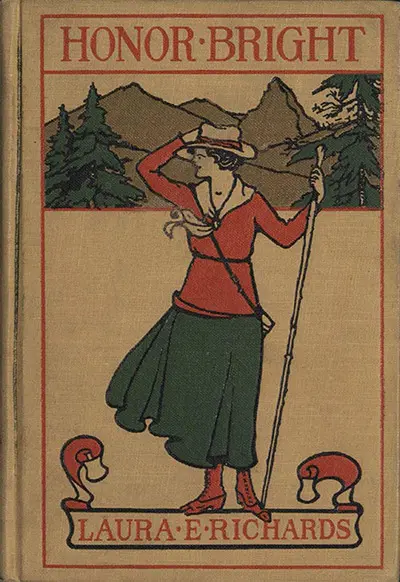
Laura Elizabeth Howe Richards
Laura Elizabeth Howe Richards
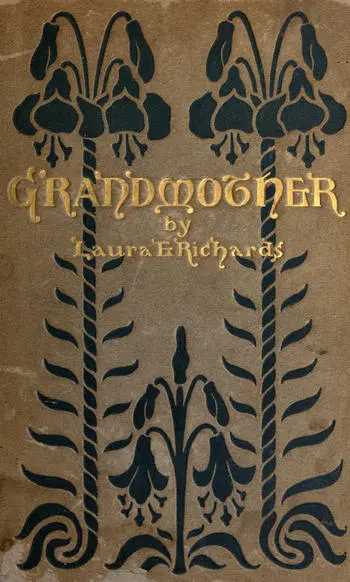
Laura Elizabeth Howe Richards
BEHIND THE BOOK
This eBook is for the use of anyone anywhere in the United States and most other parts of the world at no cost and with almost no restrictions whatsoever. You may copy it, give it away or re-use it under the terms of the Project Gutenberg License included with this eBook or online at www.gutenberg.org. If you are not located in the United States, you will have to check the laws of the country where you are located before using this eBook. Read the source licence.
The original source file, including credits and licence, is retained by this library. Request an original-format copy at no charge. Please include the book title and Project Gutenberg identifier #43898.
KEEP YOUR CURIOSITY GOING
Cécile Tormay

Moritz Busch
John L. Ransom
Frances Wright
Cécile Tormay

Mabel Potter Daggett