READ · DISCOVER · ENJOYClassic literature · Always free
THE CLASSIC COLLECTION✦FlamesRobert HichensCLASSIC FREE BOOKS

THE CLASSIC COLLECTION · 1897

Flames

"Flames" by Robert Hichens is a novel written in the late 19th century. The story revolves around Valentine Cresswell, a young man who grapples with the concept of virtue and desire. Set against the backdrop of modern London, Valentine is portrayed as almost saintly in his refinement, preferring intellectual pleasures over physical ones, and is often puzzled by the desires of his contemporaries. The narrative explores themes of existential longing, temptation, and the juxtaposition of good and evil through Valentine and his friend Julian Addison. The opening of the book introduces us to Valentine Cresswell, who is characterized by his asceticism and detachment from common vices. As he reflects on why he lacks the desires that seem to govern the lives of others, he expresses a sense of isolation in his pureness, feeling like a "saint" in modern society. His friendship with Julian Addison, who embodies the opposite temperament, sets the stage for deep conversations about morality, temptation, and the human experience. The two friends engage in an experiment to exchange souls, leading to a pursuit of greater understanding of each other's contrasting natures. This initial setup establishes the philosophical undertones and internal conflicts that will likely develop as the story progresses.

Introduction adapted from the source catalogue; source summaries may be automatically generated.

Start reading ↓

Free to read · English · 171,527 words · No account needed

MAKE TIME FOR A GOOD BOOK

Flames

On by default. Untick to stop anonymous reading totals. Each page counts after 10 seconds in view. How this works.

Anonymous counting is on unless you have switched it off.

Flames

Valentine did not reply to this. He only made her come to the front of the box, and placed a chair for her. She sat down feeling like a dog just whipped. The young men were on each side of her, and the band played an overture. Cuckoo peered out over the bar of the box, shifting ever so little away from the side on which Valentine sat. In his presence all her original and extreme discomfort returned, with an added enmity caused by her secret certainty that he thought her looking her worst. She peered from the box and strove to interest herself in the huge crowd that thronged the house, and in her own dignified and elevated position in it. For Valentine had taken one of the big boxes next the stage on the first tier, and Cuckoo had never been in such a situation before. She could survey the endless rows of heads in the stalls with a completeness of bird's-eye observation never previously attained. What multitudes there were. Endless ranks of men, all staring in the same direction, all smoking, all with handkerchiefs peeping out of their cuffs, and gold rings on their little fingers. Some of them looked half asleep, others, who had evidently been dining, threw themselves back in their stalls, roaring with laughter, and leaning to tell each other stories that must surely have teemed with wit. Most of them were young. But here and there an elderly and lined figure-head appeared among them, a figure-head that had faced many sorts of weather in many shifting days and nights, and that must soon face eternity--instead of time. Yet at the gates of death it still sipped its brandy and soda, smiled over a French song with tired lips, and sat forward with a pale gleam dawning in its eyes to reconnoitre the charms of a ballet. And if it looked aside at youth and was pierced by the sword of tragedy, yet it was too well bred or too conventional to let even one of the world around witness the wound. There is much secret bravery in social life. But these elderly figure-heads were fewer than usual to-night. Youth seemed to have usurped the playing-grounds of pleasure, to have driven old age away into the shadows. With flag flying, with trumpet and drum, it gaily held the field. The lady of the feathers, Valentine, and Julian leaned out from their box as from the car of a balloon and saw below them a world of youth hand in hand with the world of pleasure the gods offer to youth as wine. It was yet early in the evening, and the hours were only tripping along, as women trip in the pictures of Albert Moore. They had not begun to dance, although the band was playing a laughing measure from an opera of Auber that foams with frivolity. Men kept dropping in, cigar in mouth, walking to their seats with that air of well-washed and stiff composure peculiar to British youth, grim with self-consciousness, but affecting the devil-may-care with a certain measure of success. Some of them escorted ladies, but by far the greater number were in couples, or in parties of three or four. The rose of health, or, in many cases, of repletion, sat enthroned upon their cheeks; on the upper lips of many the moustaches were budding delicately. These were just getting up on the box and gripping the reins for the great coach-drive. Little wonder if the veins in their eager hands stood out. Little wonder if they flourished the whip with an unnecessary vehemence. But for them, too, so far the hours were only tripping, a slow and a dainty measure, a formal minuet. And they were but watching. Only later would they rise up and join the great dance of the hours, large, complicated, alluring, through whose measures the feet of eventual saints have trod, whose music rings in the ears of many who, long after, try to pray and to forget. Some who were with women made conversation jocosely, putting on travesties of military airs, and a knowingness of expression that might have put the wisdom of the Sphinx to shame. Nor did they hesitate to appear amorous in the public eye. On the contrary, their attitudes of attention were purposely assumed silently to utter volumes. They lay, to all intents and purposes, at the feet of their houris, as Samson lay shorn at the feet of Delilah. In loud young voices they told the secrets of their hearts, until even the clash of the music could scarcely keep them hidden. And Delilah, who had shorn the locks of so many Samsons, and who had heard so many secrets, gave ear with a clever affectation of interested surprise that deceived these gay deceivers and set them high on the peaks of their own estimation. Two or three family parties, one obviously French, seemed out of place, indecently domestic in the midst of such a throng, in which matrimony was a Cinderella before the ball, cuffed in curl-papers rather than kissed in crystal slippers. They sat rather silent. One consisted of a father, a mother and two daughters, the latter in large flowered hats. The father smoked. The mother looked furtive in a bonnet, and the two daughters, with wide open eyes, examined the flirtations around them as a child examines a butterfly caught in a net. One of them blushed. But she did not turn away her eyes. Nor were her girlish ears inactive. Family life seemed suddenly to become dull to her. She wondered whether it were life at all. And the father still smoked domestically. He knew it all. That was the difference. And perhaps it was his knowledge that made him serenely content with domesticity and the three women who belonged to him. Two boys, who had come up from a public school for the race, and had forgotten to go back, sat at the end of a row in glistening white collars and neat ties, almost angrily observant of all that was going on around them. For them the dance of the hours was already begun, and already become a can-can. They watched it with an eager interest and excitement, and the calm self-possession with which some of the men near them made jokes to magnificently dressed women with diamond earrings struck them dumb with admiration. Yet, later on, they too were fated to join in the dance, when the stars affected to sleep on the clouds and the moon lay wearily inattentive to the pilgrims of the night, like an invalid in a blue boudoir. On the thick carpet by the wall attendants stood loaded with programmes. One of them, very trim and respectable, in a white cap, was named Clara and offered a drink by an impudent Oxonian. She giggled with all the vanity of sixteen, happily forgetful of her husband and of the seven children who called her mother. Yet the dance of the hours was a venerable saraband to her, and she often wished she was in bed as she stood listening to the familiar music. In the enclosure set apart for the orchestra the massed musicians earned their living violently in the midst of the gaily dressed idlers, who heard them with indifference, and saw them as wound-up marionettes. The drummer hammered on his blatant instrument with all the crude skill of his tribe, producing occasional terrific noises with darting fists, while his face remained as immovable as that of a Punchinello. A flautist piped romantically an Arcadian measure, while his prominent eyes stared about over the chattering audience as if in search of some one. Suddenly he gave a "couac." He had seen his sweetheart in the distance with a youth from Christ Church. The conductor turned on the estrade in the centre of the orchestra and scowled at him, and he hastened to become Arcadian once again, gazing at his flute as if the devil had entered into it. In a doorway shrouded with heavy curtains two acting managers talked warily, their hands in retreat behind their coat-tails. They surveyed the house and mentally calculated the amount of money in it, raising their eyes to the more distant promenade, at the back of which large hats covered with flowers and feathers moved steadily to and fro. One of them curled his lips and murmured the word "Chant." Then they both laughed and strolled out to the bar. More men passed in. Many could not get seats, and these stood, smoking and exchanging remarks in the broad space between the stalls and the wall. Some of them leaned nonchalantly against it and criticised the appearance of the seated audience, or nodded to acquaintances. Others gathered round the bar, and a few looked at the drop-curtain as if they thought their ascetic glances would cause it to roll up and disappear. The overture at length ended. The stage was disclosed, and a man came forward with a smirk, and a wriggle of gigantic feet, to sing a song.

Your reading position is saved on this browser. Take it to another device with a library code. Reading pages adapt to text, rather than matching a printed edition.

More from this author

BEHIND THE WORDS

About Robert Hichens

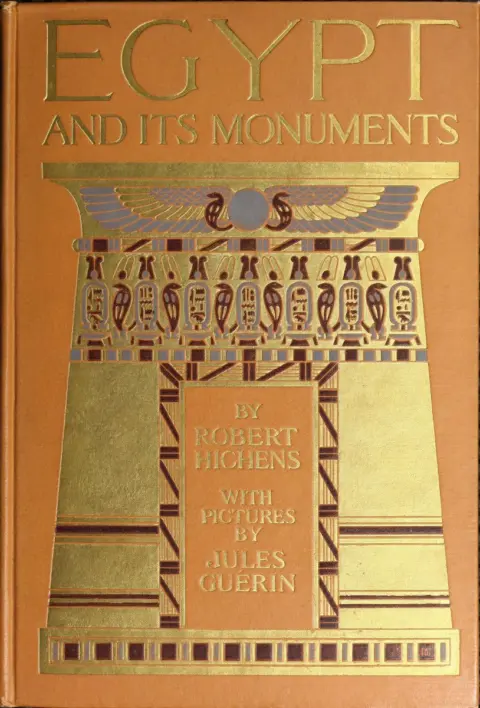
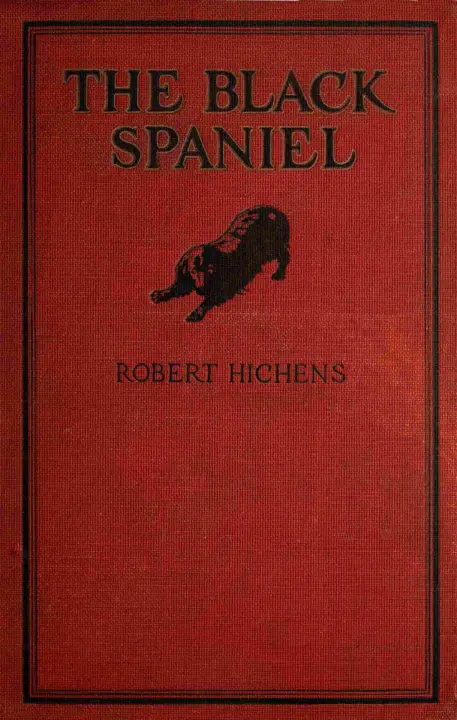
Robert Hichens (1864–1950). Explore The black spaniel, and other stories, Egypt and Its Monuments, Bye-Ways and other works in this collection. These books span classic fiction, history, travel & exploration.

Explore this author’s books →

THE READERS’ VERDICT

How did this story stay with you?

Not rated yet
Your rating for Flames

Be the first to share your verdict.

One rating per browser, which you can change or remove. A necessary browser identifier remembers your vote. How ratings work

A GOOD STORY DESERVES COMPANY

Pass this book along.

A great read is even better when it’s shared.

SEND A LITTLE INSPIRATION

Share this book

BEHIND THE BOOK

Edition & source details.

Title
Flames
Author
Robert Hichens
Publication year
1897
Digital edition publisher
Project Gutenberg
Gutenberg release date
2004-12-04
Language
English
Source edition imprint
Not stated in source catalogue
Source identifier
Project Gutenberg #14253
Contributors
No additional named contributors in source metadata

Public-domain source & licence

This eBook is for the use of anyone anywhere in the United States and most other parts of the world at no cost and with almost no restrictions whatsoever. You may copy it, give it away or re-use it under the terms of the Project Gutenberg License included with this eBook or online at www.gutenberg.org. If you are not located in the United States, you will have to check the laws of the country where you are located before using this eBook. Read the source licence.

Full source licence and obtaining an original copy

The original source file, including credits and licence, is retained by this library. Request an original-format copy at no charge. Please include the book title and Project Gutenberg identifier #14253.

the full Project Gutenberg License must appear
prominently whenever any copy of a Project Gutenberg work (any work
on which the phrase “Project Gutenberg” appears, or with which the
phrase “Project Gutenberg” is associated) is accessed, displayed,
performed, viewed, copied or distributed:

This eBook is for the use of anyone anywhere in the United States and most
other parts of the world at no cost and with almost no restrictions
whatsoever. You may copy it, give it away or re-use it under the terms
of the Project Gutenberg™ License included with this eBook or online
at www.gutenberg.org. If you
are not located in the United States, you will have to check the laws
of the country where you are located before using this eBook.

1.E.2. If an individual Project Gutenberg electronic work is
derived from texts not protected by U.S. copyright law (does not
contain a notice indicating that it is posted with permission of the
copyright holder), the work can be copied and distributed to anyone in
the United States without paying any fees or charges. If you are
redistributing or providing access to a work with the phrase “Project
Gutenberg” associated with or appearing on the work, you must comply
either with the requirements of paragraphs 1.E.1 through 1.E.7 or
obtain permission for the use of the work and the Project Gutenberg
trademark as set forth in paragraphs 1.E.8 or 1.E.9.

1.E.3. If an individual Project Gutenberg electronic work is posted
with the permission of the copyright holder, your use and distribution
must comply with both paragraphs 1.E.1 through 1.E.7 and any
additional terms imposed by the copyright holder. Additional terms
will be linked to the Project Gutenberg License for all works
posted with the permission of the copyright holder found at the
beginning of this work.

1.E.4. Do not unlink or detach or remove the full Project Gutenberg
License terms from this work, or any files containing a part of this
work or any other work associated with Project Gutenberg.

1.E.5. Do not copy, display, perform, distribute or redistribute this
electronic work, or any part of this electronic work, without
prominently displaying the sentence set forth in paragraph 1.E.1 with
active links or immediate access to the full terms of the Project
Gutenberg License.

1.E.6. You may convert to and distribute this work in any binary,
compressed, marked up, nonproprietary or proprietary form, including
any word processing or hypertext form. However, if you provide access
to or distribute copies of a Project Gutenberg work in a format
other than “Plain Vanilla ASCII” or other format used in the official
version posted on the official Project Gutenberg website
(www.gutenberg.org), you must, at no additional cost, fee or expense
to the user, provide a copy, a means of exporting a copy, or a means
of obtaining a copy upon request, of the work in its original “Plain
Vanilla ASCII” or other form. Any alternate format must include the
full Project Gutenberg License as specified in paragraph 1.E.1.

1.E.7. Do not charge a fee for access to, viewing, displaying,
performing, copying or distributing any Project Gutenberg works
unless you comply with paragraph 1.E.8 or 1.E.9.

1.E.8. You may charge a reasonable fee for copies of or providing
access to or distributing Project Gutenberg electronic works
provided that:

• You pay a royalty fee of 20% of the gross profits you derive from
the use of Project Gutenberg works calculated using the method
you already use to calculate your applicable taxes. The fee is owed
to the owner of the Project Gutenberg trademark, but he has
agreed to donate royalties under this paragraph to the Project
Gutenberg Literary Archive Foundation. Royalty payments must be paid
within 60 days following each date on which you prepare (or are
legally required to prepare) your periodic tax returns. Royalty
payments should be clearly marked as such and sent to the Project
Gutenberg Literary Archive Foundation at the address specified in
Section 4, “Information about donations to the Project Gutenberg
Literary Archive Foundation.”

• You provide a full refund of any money paid by a user who notifies
you in writing (or by e-mail) within 30 days of receipt that s/he
does not agree to the terms of the full Project Gutenberg™
License. You must require such a user to return or destroy all
copies of the works possessed in a physical medium and discontinue
all use of and all access to other copies of Project Gutenberg™
works.

• You provide, in accordance with paragraph 1.F.3, a full refund of
any money paid for a work or a replacement copy, if a defect in the
electronic work is discovered and reported to you within 90 days of
receipt of the work.

• You comply with all other terms of this agreement for free
distribution of Project Gutenberg™ works.


1.E.9. If you wish to charge a fee or distribute a Project
Gutenberg™ electronic work or group of works on different terms than
are set forth in this agreement, you must obtain permission in writing
from the Project Gutenberg Literary Archive Foundation, the manager of
the Project Gutenberg™ trademark. Contact the Foundation as set
forth in Section 3 below.

1.F.

1.F.1. Project Gutenberg volunteers and employees expend considerable
effort to identify, do copyright research on, transcribe and proofread
works not protected by U.S. copyright law in creating the Project
Gutenberg™ collection. Despite these efforts, Project Gutenberg™
electronic works, and the medium on which they may be stored, may
contain “Defects,” such as, but not limited to, incomplete, inaccurate
or corrupt data, transcription errors, a copyright or other
intellectual property infringement, a defective or damaged disk or
other medium, a computer virus, or computer codes that damage or
cannot be read by your equipment.

1.F.2. LIMITED WARRANTY, DISCLAIMER OF DAMAGES - Except for the “Right
of Replacement or Refund” described in paragraph 1.F.3, the Project
Gutenberg Literary Archive Foundation, the owner of the Project
Gutenberg™ trademark, and any other party distributing a Project
Gutenberg™ electronic work under this agreement, disclaim all
liability to you for damages, costs and expenses, including legal
fees. YOU AGREE THAT YOU HAVE NO REMEDIES FOR NEGLIGENCE, STRICT
LIABILITY, BREACH OF WARRANTY OR BREACH OF CONTRACT EXCEPT THOSE
PROVIDED IN PARAGRAPH 1.F.3. YOU AGREE THAT THE FOUNDATION, THE
TRADEMARK OWNER, AND ANY DISTRIBUTOR UNDER THIS AGREEMENT WILL NOT BE
LIABLE TO YOU FOR ACTUAL, DIRECT, INDIRECT, CONSEQUENTIAL, PUNITIVE OR
INCIDENTAL DAMAGES EVEN IF YOU GIVE NOTICE OF THE POSSIBILITY OF SUCH
DAMAGE.

1.F.3. LIMITED RIGHT OF REPLACEMENT OR REFUND - If you discover a
defect in this electronic work within 90 days of receiving it, you can
receive a refund of the money (if any) you paid for it by sending a
written explanation to the person you received the work from. If you
received the work on a physical medium, you must return the medium
with your written explanation. The person or entity that provided you
with the defective work may elect to provide a replacement copy in
lieu of a refund. If you received the work electronically, the person
or entity providing it to you may choose to give you a second
opportunity to receive the work electronically in lieu of a refund. If
the second copy is also defective, you may demand a refund in writing
without further opportunities to fix the problem.

1.F.4. Except for the limited right of replacement or refund set forth
in paragraph 1.F.3, this work is provided to you ‘AS-IS’, WITH NO
OTHER WARRANTIES OF ANY KIND, EXPRESS OR IMPLIED, INCLUDING BUT NOT
LIMITED TO WARRANTIES OF MERCHANTABILITY OR FITNESS FOR ANY PURPOSE.

1.F.5. Some states do not allow disclaimers of certain implied
warranties or the exclusion or limitation of certain types of
damages. If any disclaimer or limitation set forth in this agreement
violates the law of the state applicable to this agreement, the
agreement shall be interpreted to make the maximum disclaimer or
limitation permitted by the applicable state law. The invalidity or
unenforceability of any provision of this agreement shall not void the
remaining provisions.

1.F.6. INDEMNITY - You agree to indemnify and hold the Foundation, the
trademark owner, any agent or employee of the Foundation, anyone
providing copies of Project Gutenberg™ electronic works in
accordance with this agreement, and any volunteers associated with the
production, promotion and distribution of Project Gutenberg™
electronic works, harmless from all liability, costs and expenses,
including legal fees, that arise directly or indirectly from any of
the following which you do or cause to occur: (a) distribution of this
or any Project Gutenberg work, (b) alteration, modification, or
additions or deletions to any Project Gutenberg work, and (c) any
Defect you cause.

Section 2. Information about the Mission of Project Gutenberg

Project Gutenberg is synonymous with the free distribution of
electronic works in formats readable by the widest variety of
computers including obsolete, old, middle-aged and new computers. It
exists because of the efforts of hundreds of volunteers and donations
from people in all walks of life.

Volunteers and financial support to provide volunteers with the
assistance they need are critical to reaching Project Gutenberg’s
goals and ensuring that the Project Gutenberg collection will
remain freely available for generations to come. In 2001, the Project
Gutenberg Literary Archive Foundation was created to provide a secure
and permanent future for Project Gutenberg and future
generations. To learn more about the Project Gutenberg Literary
Archive Foundation and how your efforts and donations can help, see
Sections 3 and 4 and the Foundation information page at www.gutenberg.org.

Section 3. Information about the Project Gutenberg Literary Archive Foundation

The Project Gutenberg Literary Archive Foundation is a non-profit
501(c)(3) educational corporation organized under the laws of the
state of Mississippi and granted tax exempt status by the Internal
Revenue Service. The Foundation’s EIN or federal tax identification
number is 64-6221541. Contributions to the Project Gutenberg Literary
Archive Foundation are tax deductible to the full extent permitted by
U.S. federal laws and your state’s laws.

The Foundation’s business office is located at 41 Watchung Plaza #516,
Montclair NJ 07042, USA, +1 (862) 621-9288. Email contact links and up
to date contact information can be found at the Foundation’s website
and official page at www.gutenberg.org/contact

Section 4. Information about Donations to the Project Gutenberg
Literary Archive Foundation

Project Gutenberg™ depends upon and cannot survive without widespread
public support and donations to carry out its mission of
increasing the number of public domain and licensed works that can be
freely distributed in machine-readable form accessible by the widest
array of equipment including outdated equipment. Many small donations
($1 to $5,000) are particularly important to maintaining tax exempt
status with the IRS.

The Foundation is committed to complying with the laws regulating
charities and charitable donations in all 50 states of the United
States. Compliance requirements are not uniform and it takes a
considerable effort, much paperwork and many fees to meet and keep up
with these requirements. We do not solicit donations in locations
where we have not received written confirmation of compliance. To SEND
DONATIONS or determine the status of compliance for any particular state
visit www.gutenberg.org/donate.

While we cannot and do not solicit contributions from states where we
have not met the solicitation requirements, we know of no prohibition
against accepting unsolicited donations from donors in such states who
approach us with offers to donate.

International donations are gratefully accepted, but we cannot make
any statements concerning tax treatment of donations received from
outside the United States. U.S. laws alone swamp our small staff.

Please check the Project Gutenberg web pages for current donation
methods and addresses. Donations are accepted in a number of other
ways including checks, online payments and credit card donations. To
donate, please visit: www.gutenberg.org/donate.

Section 5. General Information About Project Gutenberg electronic works

Professor Michael S. Hart was the originator of the Project
Gutenberg concept of a library of electronic works that could be
freely shared with anyone. For forty years, he produced and
distributed Project Gutenberg eBooks with only a loose network of
volunteer support.

Project Gutenberg eBooks are often created from several printed
editions, all of which are confirmed as not protected by copyright in
the U.S. unless a copyright notice is included. Thus, we do not
necessarily keep eBooks in compliance with any particular paper
edition.

Most people start at our website which has the main PG search
facility: www.gutenberg.org.

This website includes information about Project Gutenberg,
including how to make donations to the Project Gutenberg Literary
Archive Foundation, how to help produce our new eBooks, and how to
subscribe to our email newsletter to hear about new eBooks.


KEEP YOUR CURIOSITY GOING

Your next chapter awaits.