THE CLASSIC COLLECTION✦A dead man’s diaryCLASSIC FREE BOOKS
A dead man’s diary
Coulson Kernahan
THE CLASSIC COLLECTION · 1875
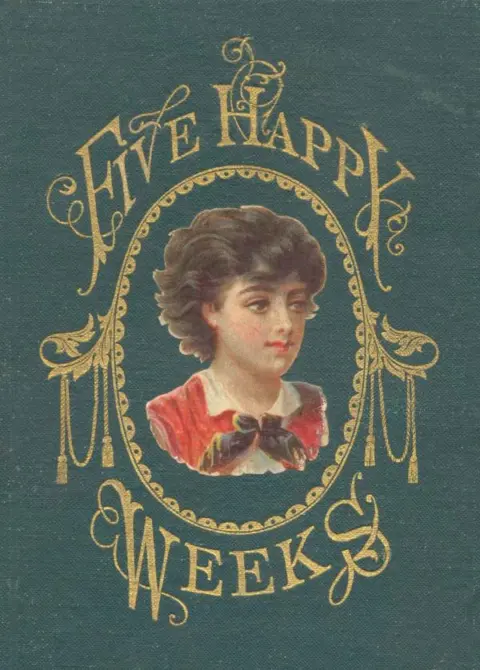
"Five Happy Weeks" by Margaret Elizabeth Munson Sangster is a children's narrative written in the late 19th century. This charming book delves into the adventures of young children as they navigate the joys and challenges of life while their mother seeks recuperation. The story captures a family’s journey filled with lessons on kindness, love, and the importance of finding happiness amidst adversity. The plot centers around the Evans children—Johnnie, Mabel, and Edith—who, after their mother falls ill, accompany her on a journey to recover her health. They are temporarily placed in the care of their Aunt Maria, where they discover the beauty of nature and the importance of generosity as they throw a picnic for children from a less fortunate neighborhood. Throughout their time with Aunt Maria, the children engage in various activities that highlight friendship, compassion, and the use of love to overcome difficulties. As the weeks progress, Edith and her siblings learn not only to support one another but also the value of lifting others' spirits, ultimately leading to a heartwarming reunion with their mother. The story resonates with themes of familial love and the enduring power of a positive outlook in the face of life's challenges.
Introduction adapted from the source catalogue; source summaries may be automatically generated.
Free to read · English · 6,815 words · No account needed
MAKE TIME FOR A GOOD BOOK
On by default. Untick to stop anonymous reading totals. Each page counts after 10 seconds in view. How this works.
Anonymous counting is on unless you have switched it off.
"'When thou makest a dinner or a supper, call not thy friends, nor thy brethren, neither thy kinsmen, nor thy rich neighbors, lest they also bid thee again, and a recompense be made thee.
"'But when thou makest a feast, call the poor, the maimed, the lame, the blind; and thou shalt be blessed, for they cannot recompense thee, for thou shalt be recompensed at the resurrection of the just.'"
"There," said Johnnie, "haven't we made a Bible feast?"
"Yes, my dears," Aunt Maria replied, "and I beg your pardon. The truth is, I have not been very much displeased with you, but thought I would try you a little. Now as you have had a good rest, you may all go out and play."
"I think Aunt Maria ith a naughty woman," said Mabel in a very low voice to Edith, as they left the room.
Rose, who had been present all the while, heard her, and so did Aunt Maria, but neither said a word, till the children were out of hearing. Then Rose said,
"I'm afraid I agree with little Mabel. Dear Mrs. MacLain, what made you pretend to be vexed, if you were not?"
"I am not obliged to explain my actions to every one, am I, Rose?" said the lady. "Children are a sort of a puzzle to me, never having had any of my own; and I don't believe I know how to bring them up. But these of Helen's are pretty good, especially Johnnie."
Aunt Maria had some very stylish friends who occasionally visited her. They sent word beforehand concerning their coming, and great preparations were made. On the day of their arrival, the little folks were arrayed in their very best, and Edith and Mabel took their dolls, and were seated in the parlor, that they might not get into the least disorder.
"Mrs. Featherfew is very particular," said Aunt Maria. "She will be sure to take notice, if you don't behave splendidly."
"I'll be glad when she's been and gone," remarked Johnnie.
Mrs. Featherfew however was quite different from what the children had been led to expect. She was a slender pretty looking lady, who seemed to float down the long parlor, she walked so lightly and gracefully, her long silk dress trailing behind her. The next day the two little girls amused themselves by playing "Mrs. Featherfew," Edith putting on a long gown of her aunt's for the purpose.
Your reading position is saved on this browser. Take it to another device with a library code. Reading pages adapt to text, rather than matching a printed edition.
BEHIND THE BOOK
This eBook is for the use of anyone anywhere in the United States and most other parts of the world at no cost and with almost no restrictions whatsoever. You may copy it, give it away or re-use it under the terms of the Project Gutenberg License included with this eBook or online at www.gutenberg.org. If you are not located in the United States, you will have to check the laws of the country where you are located before using this eBook. Read the source licence.
The original source file, including credits and licence, is retained by this library. Request an original-format copy at no charge. Please include the book title and Project Gutenberg identifier #17126.
KEEP YOUR CURIOSITY GOING
Coulson Kernahan

Maurice Baring
Frances Wright
Cécile Tormay

Frederic Jesup Stimson

W. H. P. (William Henry Pope) Jarvis