THE CLASSIC COLLECTION✦A dead man’s diaryCLASSIC FREE BOOKS
A dead man’s diary
Coulson Kernahan
THE CLASSIC COLLECTION · 1875
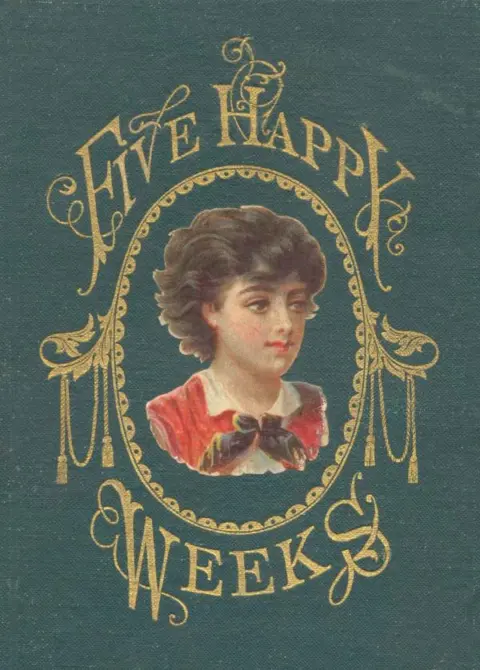
"Five Happy Weeks" by Margaret Elizabeth Munson Sangster is a children's narrative written in the late 19th century. This charming book delves into the adventures of young children as they navigate the joys and challenges of life while their mother seeks recuperation. The story captures a family’s journey filled with lessons on kindness, love, and the importance of finding happiness amidst adversity. The plot centers around the Evans children—Johnnie, Mabel, and Edith—who, after their mother falls ill, accompany her on a journey to recover her health. They are temporarily placed in the care of their Aunt Maria, where they discover the beauty of nature and the importance of generosity as they throw a picnic for children from a less fortunate neighborhood. Throughout their time with Aunt Maria, the children engage in various activities that highlight friendship, compassion, and the use of love to overcome difficulties. As the weeks progress, Edith and her siblings learn not only to support one another but also the value of lifting others' spirits, ultimately leading to a heartwarming reunion with their mother. The story resonates with themes of familial love and the enduring power of a positive outlook in the face of life's challenges.
Introduction adapted from the source catalogue; source summaries may be automatically generated.
Free to read · English · 6,815 words · No account needed
MAKE TIME FOR A GOOD BOOK
On by default. Untick to stop anonymous reading totals. Each page counts after 10 seconds in view. How this works.
Anonymous counting is on unless you have switched it off.
"Jim Cutts!" echoed Mrs. MacLain with a sigh. Then she answered,
"Yes, dear, have whom you please; but let your table be out under the
trees, on the lawn."
"That'll be splendid!" said Johnnie, running off.
They had ten or twelve little children at their party, and Dinah brought them sandwiches, cakes, and milk, and they had all the cherries they could eat. Edith taught them one of her Sunday-school hymns, and Johnnie made Luce perform all his most cunning tricks for their entertainment. Mabel lent her new doll to the poorest girl, to take home for the night, on the promise that it should surely come home next morning.
The promise was kept.
When the company had gone, Aunt Maria called them in, and made them take a thorough bath, and put on clean clothes all the way through. Then she bade each sit down, in the room with her, and read a chapter in the Bible. As Mabel could not read, she gave her a picture Bible to look at. She sat by, with so grave a face, and had so little to say, that they all began to feel uncomfortable, and wished themselves somewhere else. Edith's face was covered with blushes, Mabel began to swallow a lump in her throat, and Johnnie at last, growing angry, determined to stand it no longer. He shut up his Bible, and marched to Aunt Maria, who looked at him through her spectacles, and said:
"Well, sir? Who told you to shut up your book?"
"It does no good to read the Bible when anybody's mad with you," said Johnnie. "What have we done, Aunt Maria?"
"I did not say you had done anything."
"But you look so cross, and sit up so straight, and--who ever heard of reading the Bible, in the middle of the afternoon, on a week day?" said Johnnie with an air of assurance.
"Well, Johnnie, to tell the truth, I did not like your bringing all the riff-raff of the town to eat my nice cherries."
"But you said we might do it."
"I should think, Johnnie, you would have liked better to have such friends as Percival Lester and Reginold Randolph, or Maggie and Clara Vale, to play with. I fear you have low tastes, child."
At this charge, little Johnnie colored up, but he stood his ground.
"The reason we asked them was because they couldn't buy any fruit, if they wanted it ever so much; and we thought it would please them and make them happy."
Edith had been thoughtfully turning over the leaves of her Bible, and
now she said:
"Auntie, here are some verses I once read to mamma:
Your reading position is saved on this browser. Take it to another device with a library code. Reading pages adapt to text, rather than matching a printed edition.
BEHIND THE BOOK
This eBook is for the use of anyone anywhere in the United States and most other parts of the world at no cost and with almost no restrictions whatsoever. You may copy it, give it away or re-use it under the terms of the Project Gutenberg License included with this eBook or online at www.gutenberg.org. If you are not located in the United States, you will have to check the laws of the country where you are located before using this eBook. Read the source licence.
The original source file, including credits and licence, is retained by this library. Request an original-format copy at no charge. Please include the book title and Project Gutenberg identifier #17126.
KEEP YOUR CURIOSITY GOING
Coulson Kernahan

Maurice Baring
Frances Wright
Cécile Tormay

Frederic Jesup Stimson

W. H. P. (William Henry Pope) Jarvis