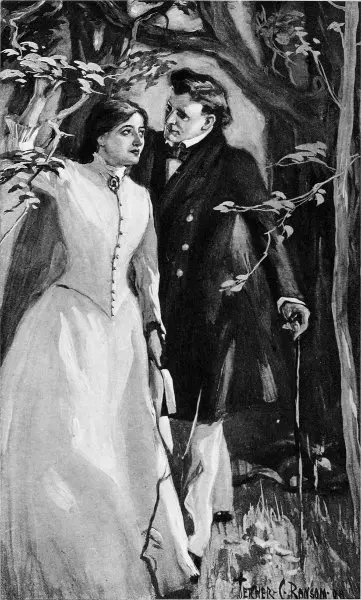
The diary of a superfluous man, and other stories
Ivan Sergeevich Turgenev
THE CLASSIC COLLECTION · 1904
"First love, and other stories" by Ivan Sergeevich Turgenev is a collection of short fiction first published in 1860. The title novella tells the story of a sixteen-year-old boy's infatuation with a capricious twenty-one-year-old neighbor. Turgenev considered it his most autobiographical work, drawing from a youthful episode involving a young princess who captured his heart. The tale explores the complexities of passion when Vladimir discovers unexpected truths about Zinaida's affections, creating a narrative that divided critics yet captivated readers, including the Russian emperor himself.
Introduction adapted from the source catalogue; source summaries may be automatically generated.
Free to read · English · 80,522 words · No account needed
MAKE TIME FOR A GOOD BOOK
On by default. Untick to stop anonymous reading totals. Each page counts after 10 seconds in view. How this works.
Anonymous counting is on unless you have switched it off.
From Márya Alexándrovna to Alexyéi Petróvitch
VILLAGE OF ... NO, May 20, 1840.
I have received your letter, Alexyéi Petróvitch, and do you know what feeling it aroused in me?--Indignation ... yes, indignation ... and I will immediately explain to you why it aroused precisely that feeling in me. One thing is a pity: I am not a mistress of the pen--I rarely write. I do not know how to express my thoughts accurately and in a few words; but you will, I hope, come to my aid. You yourself will try to understand me: if only for the sake of knowing why I am angry with you.
Tell me--you are a clever man--have you ever asked yourself what sort of a creature a Russian woman is? What is her fate, her position in the world--in short, what her life is like? I do not know whether you have ever had time to put that question to yourself; I cannot imagine how you would answer it.... I might, in conversation be able to communicate to you my ideas on that subject, but I shall hardly manage it on paper. However, it makes no difference. This is the point: you surely will agree with me that we women--at all events, those of us who are not satisfied with the ordinary cares of domestic life--receive our final education, all the same, from you--from the men: you have a great and powerful influence on us. Look, now, at what you do with us. I shall speak of the young girls, especially of those who, like myself, dwell in the dull places, and there are many such in Russia. Moreover, I do not know others, and cannot judge with regard to them. Figure to yourself such a young girl. Here, now, her education is finished; she is beginning to live, to amuse herself. But amusement alone is not enough for her. She demands a great deal from life; she reads, dreams ... of love:--“Always of love alone!” you will say.... Let us assume that that word means a great deal to her. I will say again that I am not talking of the sort of girl who finds it burdensome and tiresome to think.... She looks about her, waits for the coming of him for whom her soul pines.... At last he makes his appearance: she is carried away; she is like soft wax in his hands. Everything--happiness, and love, and thought--everything has invaded her together with him, all at once; all her tremors are soothed, all her doubts are solved by him; truth itself seems to speak by his mouth; she worships him, she is ashamed of her happiness, she learns, she loves. Great is his power over her at this period!... If he were a hero, he would kindle her to flame, he would teach her to sacrifice herself, and all sacrifices would be easy to her! But there are no heroes in our day.... Nevertheless, he guides her whithersoever he will; she devotes herself to that which interests him, his every word sinks into her soul: at that time, she does not know, as yet, how insignificant and empty and false that word may be, how little it costs him who utters it, and how little faith it merits! These first moments of bliss and hope are followed, generally--according to circumstances--(circumstances are always to blame)--are followed by parting. It is said that there have been cases where two kindred souls, on recognising each other, have immediately united indissolubly; I have heard, also, that they are not always comfortable as a result.... But I will not speak of that which I have not myself beheld--but that the very pettiest sort of calculation, the most woful prudence, may dwell in a young heart side by side with the most passionate rapture,--that is a fact which, unhappily, I know by my own experience. So, then, parting comes.... Happy is that young girl who instantly recognises that the end of all has come, who does not comfort herself with expectation! But you brave, just men, in the majority of cases, have neither the courage nor the desire to tell us the truth ... you find it more easy to deceive us.... I am ready to believe, however, that you deceive yourselves along with us.... Parting! It is both difficult and easy to endure parting. If only faith in him whom one loves were intact and unassailed, the soul would conquer the pain of parting.... I will say more: only when she is left alone does she learn the sweetness of solitude, not sterile but filled with memories and thoughts. Only then will she learn to know herself--will she come to herself, will she grow strong.... In the letters of the distant friend she will find a support for herself; in her own she will, perhaps, for the first time, express her mind fully.... But as two persons who have started from the source of a river along its different banks can, at first, clasp hands, then hold communication only with the voice, but ultimately lose sight of each other: so also two beings are ultimately disjoined by separation. “What of that?” you will say: “evidently they were not fated to go together....” But here comes in the difference between a man and a woman. It signifies nothing to a man to begin a new life, to shake far from him the past; a woman cannot do that. No, she cannot cast aside her past, she cannot tear herself away from her roots--no, a thousand times no! And so, a pitiful and ridiculous spectacle presents itself.... Gradually losing hope and faith in herself,--you can form no idea of how painful that is,--she will pine away and fade alone, obstinately clinging to her memories, and turning away from everything which life around her offers.... And he?... Seek him! Where is he? And is it worth while for him to pause? What time has he for looking back? All this is a thing of the past for him, you see.
Your reading position is saved on this browser. Take it to another device with a library code. Reading pages adapt to text, rather than matching a printed edition.
Ivan Sergeevich Turgenev
Ivan Sergeevich Turgenev
Ivan Sergeevich Turgenev
Ivan Sergeevich Turgenev
BEHIND THE BOOK
This eBook is for the use of anyone anywhere in the United States and most other parts of the world at no cost and with almost no restrictions whatsoever. You may copy it, give it away or re-use it under the terms of the Project Gutenberg License included with this eBook or online at www.gutenberg.org. If you are not located in the United States, you will have to check the laws of the country where you are located before using this eBook. Read the source licence.
The original source file, including credits and licence, is retained by this library. Request an original-format copy at no charge. Please include the book title and Project Gutenberg identifier #56878.
KEEP YOUR CURIOSITY GOING
Coulson Kernahan

Maurice Baring
Frances Wright
Cécile Tormay

Frederic Jesup Stimson

W. H. P. (William Henry Pope) Jarvis