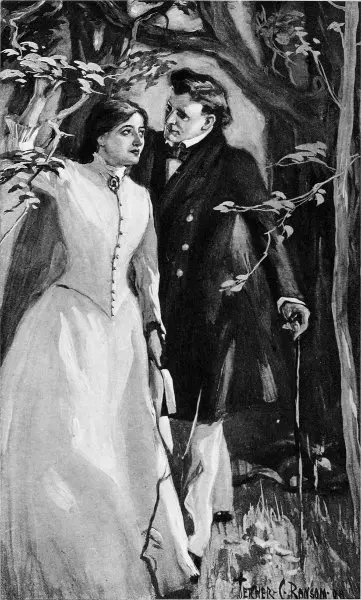
The diary of a superfluous man, and other stories
Ivan Sergeevich Turgenev
THE CLASSIC COLLECTION · 1904
"First love, and other stories" by Ivan Sergeevich Turgenev is a collection of short fiction first published in 1860. The title novella tells the story of a sixteen-year-old boy's infatuation with a capricious twenty-one-year-old neighbor. Turgenev considered it his most autobiographical work, drawing from a youthful episode involving a young princess who captured his heart. The tale explores the complexities of passion when Vladimir discovers unexpected truths about Zinaida's affections, creating a narrative that divided critics yet captivated readers, including the Russian emperor himself.
Introduction adapted from the source catalogue; source summaries may be automatically generated.
Free to read · English · 80,522 words · No account needed
MAKE TIME FOR A GOOD BOOK
On by default. Untick to stop anonymous reading totals. Each page counts after 10 seconds in view. How this works.
Anonymous counting is on unless you have switched it off.
[12] The Name-day--that is, the day of the saint after whom a person is named--is observed with feasting and congratulation, instead of the birthday. For ceremonious calls, no matter at what hour of the day, a man who has no official uniform must wear his evening suit, on penalty of being considered ignorant or rude, or (in official circles) of being refused admittance.--TRANSLATOR.
[13] A pun is intended: isprávno, regularly, in orderly manner; ispravnik, the chief of police in a rural district.--TRANSLATOR.
[14] Male serfs. The women and children did not figure on the revision
lists.--TRANSLATOR.
[15] Of different grades (civil and military), for the children of the nobility or gentry. They are not charities.--TRANSLATOR.
[16] In those days there was a great difference in the value of silver and paper money--hence the kind is usually specified.--TRANSLATOR.
[17] Literally, “dear little mother.”--TRANSLATOR.
[18] A little Russian song.--TRANSLATOR.
[19] The popular nickname among Great Russians for the Little
Russians.--TRANSLATOR.
[20] Literally, “dear little father”: the genuinely Russian mode of address to a man of any class, as mátushka (“dear little mother”) is for women of all classes.--TRANSLATOR.
[21] The poem, after describing the deadly qualities of the upas-tree, narrates how a potentate sent one of his slaves to bring him flowers from it. The slave, thoroughly aware of his danger, fulfilled his sovereign’s behest, returned with branches of the tree, and dropped dead.--TRANSLATOR.
[22] It should be Akím, popular for Iakínthos, Hyacinth.--TRANSLATOR.
[23] The unpoetical Russian name is “chicken-blindness”
(night-blindness).--TRANSLATOR.
[24] The eighth (out of fourteen) in Peter the Great’s Table of
Ranks.--TRANSLATOR.
[25] “S’,” a polite addition to sentences, equivalent to a contraction of the words for “sir” or “madam.”--TRANSLATOR.
[26] The fourth from the top in the Table of Ranks.--TRANSLATOR.
[27] The figures in the mazurka are like those in the cotillon (which is often danced the same evening), but the step is very animated and original.--TRANSLATOR.
[28] He uses an impromptu Russification of a foreign word:
intimidátziya.--TRANSLATOR.
[29] A mixed drink.--TRANSLATOR.
[30] A large collection of shops, under one roof, extending from the Névsky Prospékt to the Bolsháya Italyánskaya (“Great Italian Street”), in St. Petersburg.--TRANSLATOR.
[31] The Russian shows that a woman is addressed.--TRANSLATOR.
[32] “Macbeth,” Act V, scene v.
[33] How can one fail to recall at this point the words of
Mephistopheles in “Faust”:
“Er (Gott) findet sich in einen ew’gen Glanze,
Uns hat er in die Finsterniss gebracht--
Und euch taugt einzig Tag und Nacht.”
[34] This is in English in the original.--TRANSLATOR.
Your reading position is saved on this browser. Take it to another device with a library code. Reading pages adapt to text, rather than matching a printed edition.
Ivan Sergeevich Turgenev
Ivan Sergeevich Turgenev
Ivan Sergeevich Turgenev
Ivan Sergeevich Turgenev
BEHIND THE BOOK
This eBook is for the use of anyone anywhere in the United States and most other parts of the world at no cost and with almost no restrictions whatsoever. You may copy it, give it away or re-use it under the terms of the Project Gutenberg License included with this eBook or online at www.gutenberg.org. If you are not located in the United States, you will have to check the laws of the country where you are located before using this eBook. Read the source licence.
The original source file, including credits and licence, is retained by this library. Request an original-format copy at no charge. Please include the book title and Project Gutenberg identifier #56878.
KEEP YOUR CURIOSITY GOING
Coulson Kernahan

Maurice Baring
Frances Wright
Cécile Tormay

Frederic Jesup Stimson

W. H. P. (William Henry Pope) Jarvis