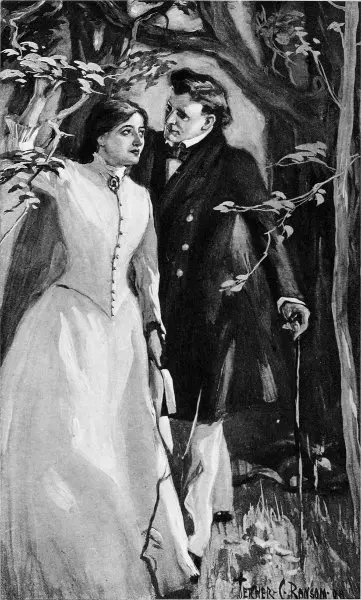
The diary of a superfluous man, and other stories
Ivan Sergeevich Turgenev
THE CLASSIC COLLECTION · 1904
"First love, and other stories" by Ivan Sergeevich Turgenev is a collection of short fiction first published in 1860. The title novella tells the story of a sixteen-year-old boy's infatuation with a capricious twenty-one-year-old neighbor. Turgenev considered it his most autobiographical work, drawing from a youthful episode involving a young princess who captured his heart. The tale explores the complexities of passion when Vladimir discovers unexpected truths about Zinaida's affections, creating a narrative that divided critics yet captivated readers, including the Russian emperor himself.
Introduction adapted from the source catalogue; source summaries may be automatically generated.
Free to read · English · 80,522 words · No account needed
MAKE TIME FOR A GOOD BOOK
On by default. Untick to stop anonymous reading totals. Each page counts after 10 seconds in view. How this works.
Anonymous counting is on unless you have switched it off.
“Very good, ma’am,”--said I; “only give me an equipage, for I am afraid to go home on foot now.”
She riveted her eyes on me. “Give, give him a calash, a carriage, a drozhky, whatever he wants,--anything, for the sake of getting rid of him as quickly as possible. Akh, what eyes! akh, what eyes he has!”--And with these words she flew out of the room, dealing a maid who was entering a box on the ear,--and I heard her go off into another fit of hysterics.--And you may believe me or not, gentlemen, but from that day forth I broke off all acquaintance with Nimfodóra Semyónovna; and, taking all things into mature consideration, I cannot but add that for that circumstance also I owe my friend Tresór a debt of gratitude until I lie down in my coffin.
Well, sir, I ordered a calash to be harnessed, placed Tresór in it, and drove off home with her. At home I looked her over, washed her wounds, and thought to myself: “I’ll take her to-morrow, as soon as it is light, to the wizard in Efrém County. Now this wizard was an old peasant, a wonderful man; he would whisper over water--but others say that he emitted serpents’ venom on it--and give it to you to drink, and your malady would instantly disappear. By the way, I thought, I’ll get myself bled in Efrémovo; ’tis a good remedy for terror; only, of course, not from the arm, but from the bleeding-vein.”
“But where is that place--the bleeding-vein?”--inquired Finopléntoff, with bashful curiosity.
Don’t you know? That spot on the fist close to the thumb, on which one shakes snuff from the horn.--Just here, see! ’Tis the very best place for blood-letting; therefore, judge for yourselves; from the arm it will be venal blood, while from this spot it is sparkling. The doctors don’t know that, and don’t understand it; how should they, the sluggards, the dumb idiots? Blacksmiths chiefly make use of it. And what skilful fellows they are! They’ll place their chisel on the spot, give it a whack with their hammer--and the deed is done!... Well, sir, while I was meditating in this wise, it had grown entirely dark out of doors, and it was time to go to sleep. I lay down on my bed, and Tresór, of course, was there also. But whether it was because of my fright or of the stifling heat, or because the fleas or my thoughts were bothersome, at any rate, I could not get to sleep. Such distress fell upon me as it is impossible to describe; and I kept drinking water, and opening the window, and thrumming the “Kamárynskaya”[46] on the guitar, with Italian variations.... In vain! I felt impelled to leave the room,--and that’s all there was to it. At last I made up my mind. I took a pillow, a coverlet, and a sheet, and wended my way across the garden to the hay-barn; well, and there I settled myself. And there things were agreeable to me, gentlemen; the night was still, extremely still, only now and then a breeze as soft as a woman’s hand would blow across my cheek, and it was very cool; the hay was fragrant as tea, the katydids were rasping in the apple-trees; then suddenly a quail would emit its call--and you would feel that he was taking his ease, the scamp, sitting in the dew with his mate.... And the sky was so magnificent; the stars were twinkling, and sometimes a little cloud, as white as wadding, would float past, and even it would hardly stir....
Your reading position is saved on this browser. Take it to another device with a library code. Reading pages adapt to text, rather than matching a printed edition.
Ivan Sergeevich Turgenev
Ivan Sergeevich Turgenev
Ivan Sergeevich Turgenev
Ivan Sergeevich Turgenev
BEHIND THE BOOK
This eBook is for the use of anyone anywhere in the United States and most other parts of the world at no cost and with almost no restrictions whatsoever. You may copy it, give it away or re-use it under the terms of the Project Gutenberg License included with this eBook or online at www.gutenberg.org. If you are not located in the United States, you will have to check the laws of the country where you are located before using this eBook. Read the source licence.
The original source file, including credits and licence, is retained by this library. Request an original-format copy at no charge. Please include the book title and Project Gutenberg identifier #56878.
KEEP YOUR CURIOSITY GOING
Coulson Kernahan

Maurice Baring
Frances Wright
Cécile Tormay

Frederic Jesup Stimson

W. H. P. (William Henry Pope) Jarvis