The diary of a superfluous man, and other stories
Ivan Sergeevich Turgenev
THE CLASSIC COLLECTION · 1917
"Fathers and Children" by Ivan Sergeevich Turgenev is a novel published in 1862. When university graduate Arkady returns home with his friend Bazarov, a self-proclaimed nihilist, their radical philosophy clashes with the older generation's values. Bazarov's rejection of tradition and emotion is tested when he meets the captivating Anna Odintsova. As romantic entanglements develop and tensions escalate between generations, the young men must confront whether their ideals can withstand the complexities of love, family, and mortality in nineteenth-century Russia.
Introduction adapted from the source catalogue; source summaries may be automatically generated.
Free to read · English · 76,870 words · No account needed
MAKE TIME FOR A GOOD BOOK
On by default. Untick to stop anonymous reading totals. Each page counts after 10 seconds in view. How this works.
Anonymous counting is on unless you have switched it off.
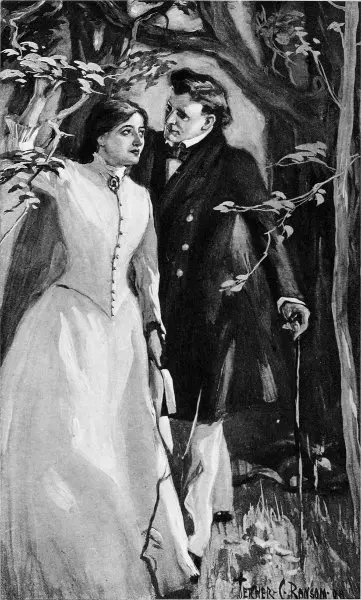
'Let's see what species of mammalia this specimen belongs to,' Bazarov said to Arkady the following day, as they mounted the staircase of the hotel in which Madame Odintsov was staying. 'I scent out something wrong here.'
'I'm surprised at you!' cried Arkady. 'What? You, you, Bazarov, clinging to the narrow morality, which ...'
'What a funny fellow you are!' Bazarov cut him short, carelessly. 'Don't you know that "something wrong" means "something right" in my dialect and for me? It's an advantage for me, of course. Didn't you tell me yourself this morning that she made a strange marriage, though, to my mind, to marry a rich old man is by no means a strange thing to do, but, on the contrary, very sensible. I don't believe the gossip of the town; but I should like to think, as our cultivated Governor says, that it's well-grounded.'
Arkady made no answer, and knocked at the door of the apartments. A young servant in livery, conducted the two friends in to a large room, badly furnished, like all rooms in Russian hotels, but filled with flowers. Soon Madame Odintsov herself appeared in a simple morning dress. She seemed still younger by the light of the spring sunshine. Arkady presented Bazarov, and noticed with secret amazement that he seemed embarrassed, while Madame Odintsov remained perfectly tranquil, as she had been the previous day. Bazarov himself was conscious of being embarrassed, and was irritated by it. 'Here's a go!--frightened of a petticoat!' he thought, and lolling, quite like Sitnikov, in an easy-chair, he began talking with an exaggerated appearance of ease, while Madame Odintsov kept her clear eyes fixed on him.
Anna Sergyevna Odintsov was the daughter of Sergay Nikolaevitch Loktev, notorious for his personal beauty, his speculations, and his gambling propensities, who after cutting a figure and making a sensation for fifteen years in Petersburg and Moscow, finished by ruining himself completely at cards, and was forced to retire to the country, where, however, he soon after died, leaving a very small property to his two daughters--Anna, a girl of twenty, and Katya, a child of twelve. Their mother, who came of an impoverished line of princes--the H----s-- had died at Petersburg when her husband was in his heydey. Anna's position after her father's death was very difficult. The brilliant education she had received in Petersburg had not fitted her for putting up with the cares of domestic life and economy,--for an obscure existence in the country. She knew positively no one in the whole neighbourhood, and there was no one she could consult. Her father had tried to avoid all contact with the neighbours; he despised them in his way, and they despised him in theirs. She did not lose her head, however, and promptly sent for a sister of her mother's Princess Avdotya Stepanovna H----, a spiteful and arrogant old lady, who, on installing herself in her niece's house, appropriated all the best rooms for her own use, scolded and grumbled from morning till night, and would not go a walk even in the garden unattended by her one serf, a surly footman in a threadbare pea-green livery with light blue trimming and a three-cornered hat. Anna put up patiently with all her aunt's whims, gradually set to work on her sister's education, and was, it seemed, already getting reconciled to the idea of wasting her life in the wilds.... But destiny had decreed another fate for her. She chanced to be seen by Odintsov, a very wealthy man of forty-six, an eccentric hypochondriac, stout, heavy, and sour, but not stupid, and not ill-natured; he fell in love with her, and offered her his hand. She consented to become his wife, and he lived six years with her, and on his death settled all his property upon her. Anna Sergyevna remained in the country for nearly a year after his death; then she went abroad with her sister, but only stopped in Germany; she got tired of it, and came back to live at her favourite Nikolskoe, which was nearly thirty miles from the town of X----. There she had a magnificent, splendidly furnished house and a beautiful garden, with conservatories; her late husband had spared no expense to gratify his fancies. Anna Sergyevna went very rarely to the town, generally only on business, and even then she did not stay long. She was not liked in the province; there had been a fearful outcry at her marriage with Odintsov, all sorts of fictions were told about her; it was asserted that she had helped her father in his cardsharping tricks, and even that she had gone abroad for excellent reasons, that it had been necessary to conceal the lamentable consequences ... 'You understand?' the indignant gossips would wind up. 'She has gone through the fire,' was said of her; to which a noted provincial wit usually added: 'And through all the other elements?' All this talk reached her; but she turned a deaf ear to it; there was much independence and a good deal of determination in her character.
Your reading position is saved on this browser. Take it to another device with a library code. Reading pages adapt to text, rather than matching a printed edition.
Ivan Sergeevich Turgenev
Ivan Sergeevich Turgenev
Ivan Sergeevich Turgenev
Ivan Sergeevich Turgenev
BEHIND THE BOOK
This eBook is for the use of anyone anywhere in the United States and most other parts of the world at no cost and with almost no restrictions whatsoever. You may copy it, give it away or re-use it under the terms of the Project Gutenberg License included with this eBook or online at www.gutenberg.org. If you are not located in the United States, you will have to check the laws of the country where you are located before using this eBook. Read the source licence.
The original source file, including credits and licence, is retained by this library. Request an original-format copy at no charge. Please include the book title and Project Gutenberg identifier #30723.
KEEP YOUR CURIOSITY GOING

David Patterson (Spirit) Hatch
Cécile Tormay

Moritz Busch
Coulson Kernahan
John L. Ransom

Ralph Waldo Emerson